
180 Years in Ishinomaki, Miyagi Prefecture. Suminoe Brewery
One of the seven breweries behind DATE SEVEN, and a brewery that overcame the Great East Japan Earthquake.
It is also the brewery that made the very first sake I drank after moving to Okinawa.
A brewery that uses only Miyagi Prefecture yeast in all of its sake.
And above all,
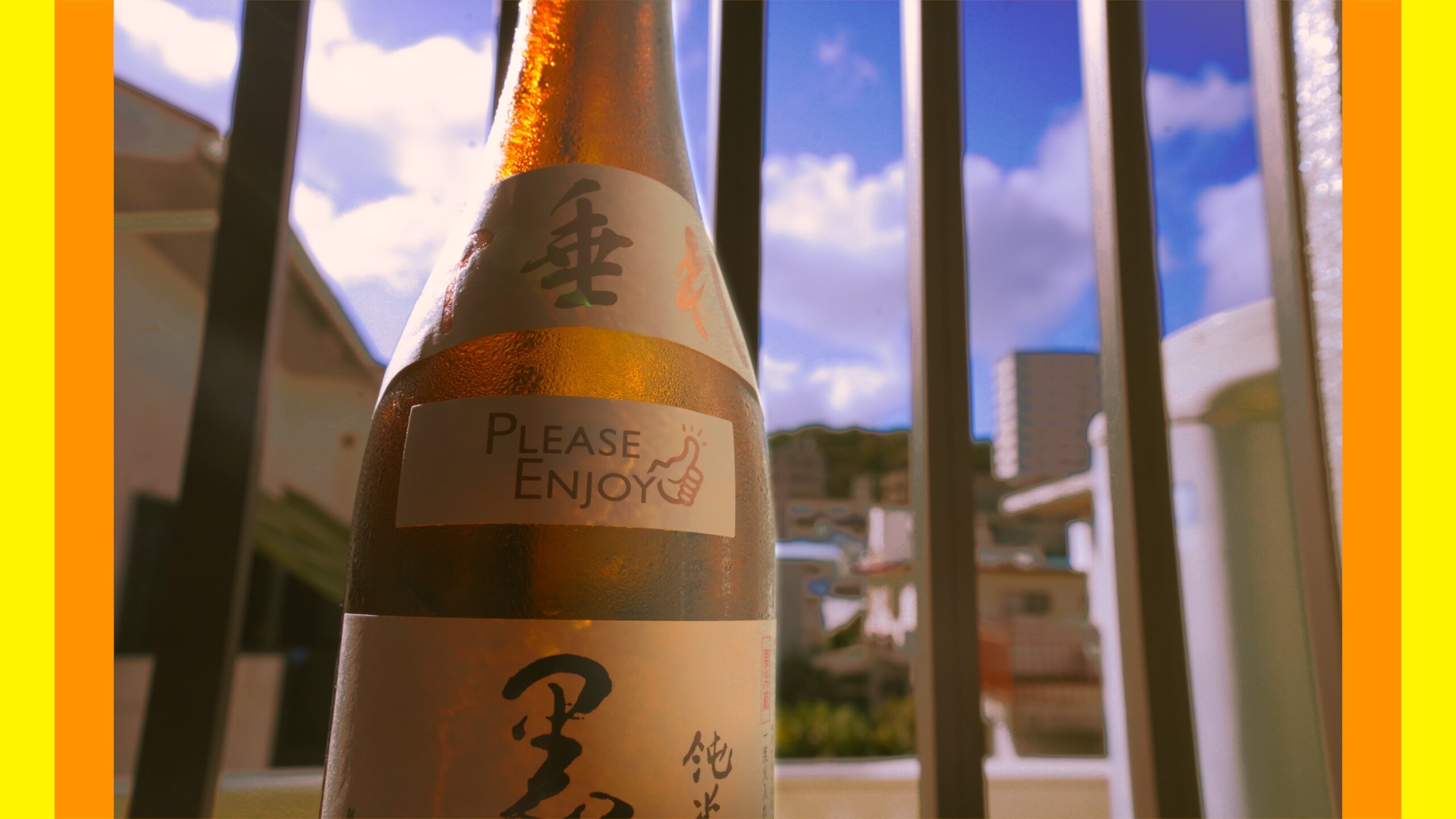
it’s the brewery that made the sake that paired perfectly with my very first meal on the balcony of my new home—grilled yakiniku and roasted vegetables.
Today, let’s take a look at Suminoe Brewery, the maker of the Miyagi sake, Suminoe.
History
1. The beginning
In 1845, in Ishinomaki, Miyagi Prefecture, a brewery was established by Mr. Sawaguchi, who had originally been a merchant.
At the time, Ishinomaki was both a fishing town and a port city. During the Edo period, it was a thriving commercial center where not only seafood but also rice and other food products from across Japan were traded.
(Even today, Ishinomaki is known for its abundant seafood and one of Japan’s highest fishing catches.)
Mr. Sawaguchi, who was engaged in commerce there, inherited a brewery from a brewer and entered the world of sake making. He named the brewery “Suminoe Brewery,” after the deity believed to protect the peace and safety of the sea.
I don’t think Mr. Sawaguchi took over the brewery with the ambition of changing his life through sake brewing.
Even after the acquisition, brewing remained a secondary source of income, while his primary business continued to be the wholesale trade of grain and seafood.
However, in 1928, a massive tsunami struck the coast, causing irreparable damage to the wholesale business. From that point on, sake brewing became the brewery’s primary source of income.
2. The Sixth-Generation Kuramoto, Yasunori Sawaguchi, and Nationwide Distribution
In 1989, Yasunori Sawaguchi, who still serves as the brewery’s kuramoto today, joined the brewery.
During his early years, he spent his time learning the business and preparing himself to succeed as the next head of the brewery, while also working to expand its distribution network.
Around 2000, he became actively involved in the brewing process itself and placed a strong emphasis on quality control.
At that time, Mr. Sawaguchi focused on the following principles:
- Use only yeast developed in Miyagi Prefecture.
- Use only sake-brewing rice (shuzo kotekimai).
- Express Suminoe’s individuality through the differences between sake rice varieties.
From roughly the 1980s through the 2000s, many regional breweries sought to enter larger markets by distributing their sake to cities such as Tokyo and Osaka.
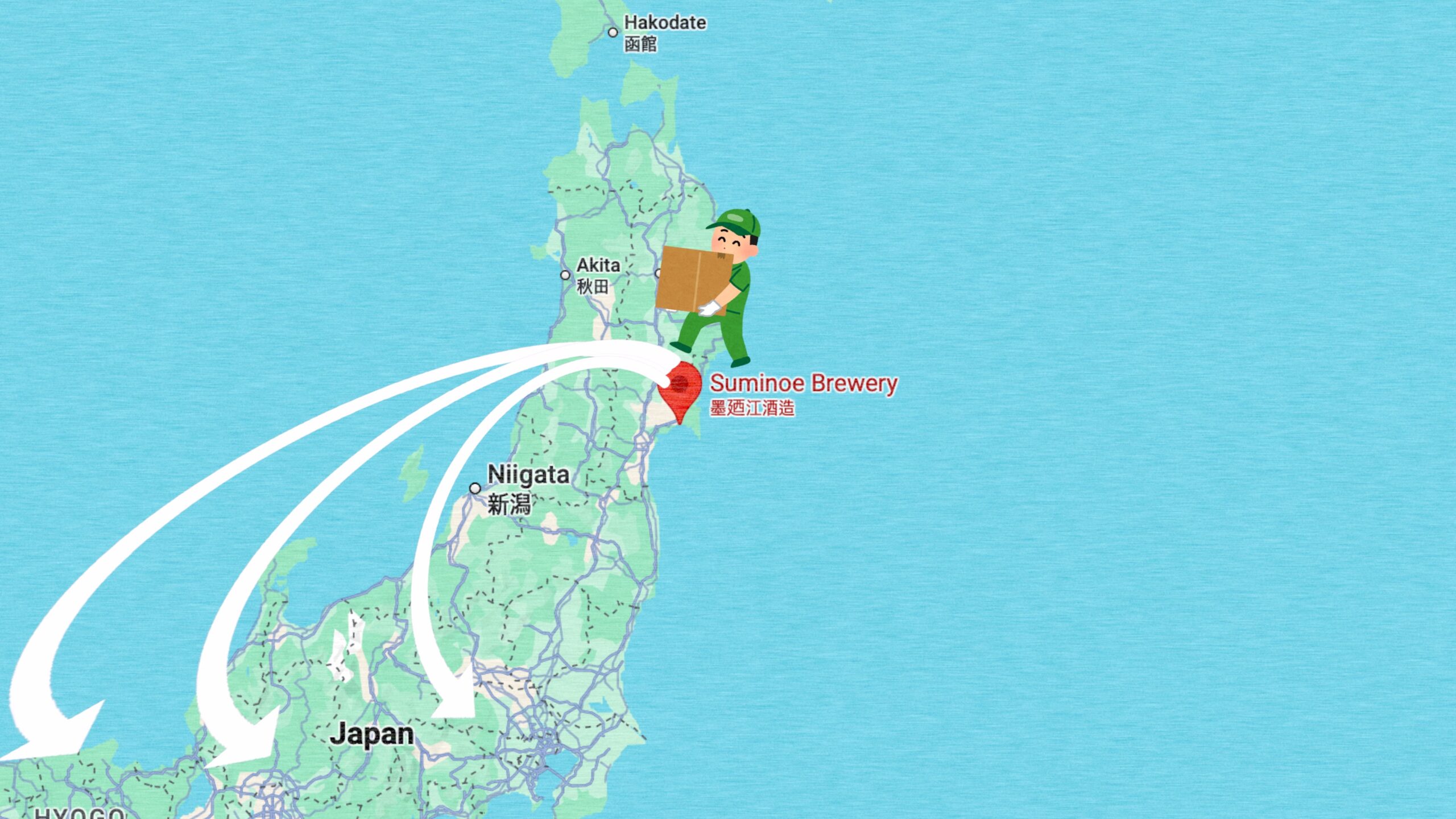
During this period, Mr. Sawaguchi also traveled to Tokyo, Osaka, and other major cities himself to expand the brewery’s distribution network.
3. In 2011, Most of the Brewery Was Destroyed by the Great East Japan Earthquake—Yet It Recovered in Just Six Months.
There are many breweries in Miyagi Prefecture that found hope in the midst of disaster. Suminoe Brewery is one of them.
In 2011, just before the earthquake and tsunami struck, the brewery was preparing to move from pressing the moromi into the bottling stage.
While they were working, the first earthquake hit.
Even as the brewery shook violently, the staff immediately shut down the boiler to prevent secondary disasters such as fire. Together, they checked the brewery and the sake to assess the damage.
Parts of the brewery had collapsed, and bottles of Suminoe stored in refrigerators had fallen out and shattered.
At that point, however, they still believed the damage was manageable. It seemed like the kind of damage that could be repaired within a few weeks.
Then, about thirty minutes later, a second, even stronger earthquake struck.
The damage became far more severe, and the staff evacuated in preparation for further aftershocks.
Then came the disaster they feared most—the tsunami—which engulfed the brewery located along the coast.
The brewery had large storage tanks for sake, so the staff climbed on top of them to escape. The tsunami rose all the way to where they were.
The wave was a dark wall of water about one meter high, but fortunately, it did not sweep over the top of the tanks.
By then, it was clear that the damage was far beyond something that could be repaired in a matter of weeks.
Electricity and running water were unavailable for two weeks, leaving them to rely solely on gas.
The moromi that had not yet been pressed, the sake that had been pressed but not bottled, and even the sake that had already been bottled—
all of it remained untouched for two weeks.
After electricity and water were restored, it took another week before they were finally able to resume work on the moromi that had been left unfinished.
Without temperature control, they feared the fermentation had progressed too far for the sake to be drinkable. But when they tasted it, it was in much better condition than expected. Of course, it could no longer be sold.
Mr. Yasunori Sawaguchi later said that this experience made him realize the resilience of sake.
After that, support arrived from all over Japan.
Within Miyagi Prefecture, they received direct assistance. Across the country, people also supported the recovery of the brewing industry in indirect ways, such as buying and drinking more sake.
Half a year later, Suminoe Brewery was able to begin brewing sake once again.
4. Today
Suminoe Brewery has always brewed sake with a “quality first” philosophy. However, after the earthquake, the brewery came to feel an even deeper sense of gratitude toward all the people who supported them.
To repay that kindness, the answer they arrived at as a kuramoto was simple: to make even better, even higher-quality sake.
That philosophy continues to this day.
Although it has already been 37 years since he joined the brewery, Mr. Yasunori Sawaguchi says that every brewing season feels like starting from scratch. That’s because the conditions for brewing—such as the quality of the rice, the climate, and even the microorganisms living in the brewery—change every year.
For that reason, rather than relying solely on standardized processes or fixed procedures, they focus on creating good sake through their own five senses.
They taste the sake themselves, make adjustments wherever necessary, and continue refining it until the final bottling stage.
Those bottles are then delivered to customers’ dining tables—and into their refrigerators.
And before long, the brewery’s distribution network had expanded tremendously…
Now I can even find Suminoe here in Okinawa (more specifically, at Izumiya Saketen) where I live.(Yay!)
What Makes Suminoe Unique
1.Flavor
Overall, Suminoe is a food-friendly style of sake built around a clean and refreshing profile.
As the brewery is located in a region famous for its seafood, it produces sake that pairs especially well with seafood dishes.
However, the bottle I tried this time, Suminoe Junmai Ginjo Nakadare, not only paired beautifully with seafood thanks to its clean taste, but also had enough body to go surprisingly well with yakiniku.
2. Made Exclusively with Miyagi Prefecture Yeast
Every sake produced by Suminoe uses only yeast from Miyagi Prefecture.
As I mentioned at the beginning of this article, Suminoe Brewery is one of the seven breweries behind DATE SEVEN. The 2026 edition of DATE SEVEN was built around the theme of “ALL Miyagi,” using only rice and yeast from Miyagi Prefecture—or ingredients developed there.
With that in mind, I can’t help but wonder whether Suminoe Brewery’s philosophy had a strong influence on this year’s concept. (Of course, I could be completely wrong.)
3. Small-Scale Production
Because the brewery prioritizes quality above all else and relies on the brewer’s five senses to create the best possible sake, it deliberately avoids mass production.
Its annual production is about 800 koku, which is roughly equivalent to 80,000 1.8-liter bottles per year.
As a result, not every label is difficult to find, but seasonal releases are produced in limited quantities and can sometimes be hard to get.
(If you enjoy dry sake, I highly recommend giving it a try.)
Conclusion (My Thoughts)
Thank you to everyone around the world who loves Nihonshu and has visited Sakagura Miyamoto. Sakagura Miyamoto was created to make Nihonshu more than just a drink with good taste and aroma — but something that lives in your memories. For those who want to turn Nihonshu from a simple alcoholic beverage into a medium that brings back moments and stories, and for those who want to describe Nihonshu in a deeper, more dimensional way, we invite you to join the Sakagura Miyamoto membership. The content below is for members only. Thank you.