
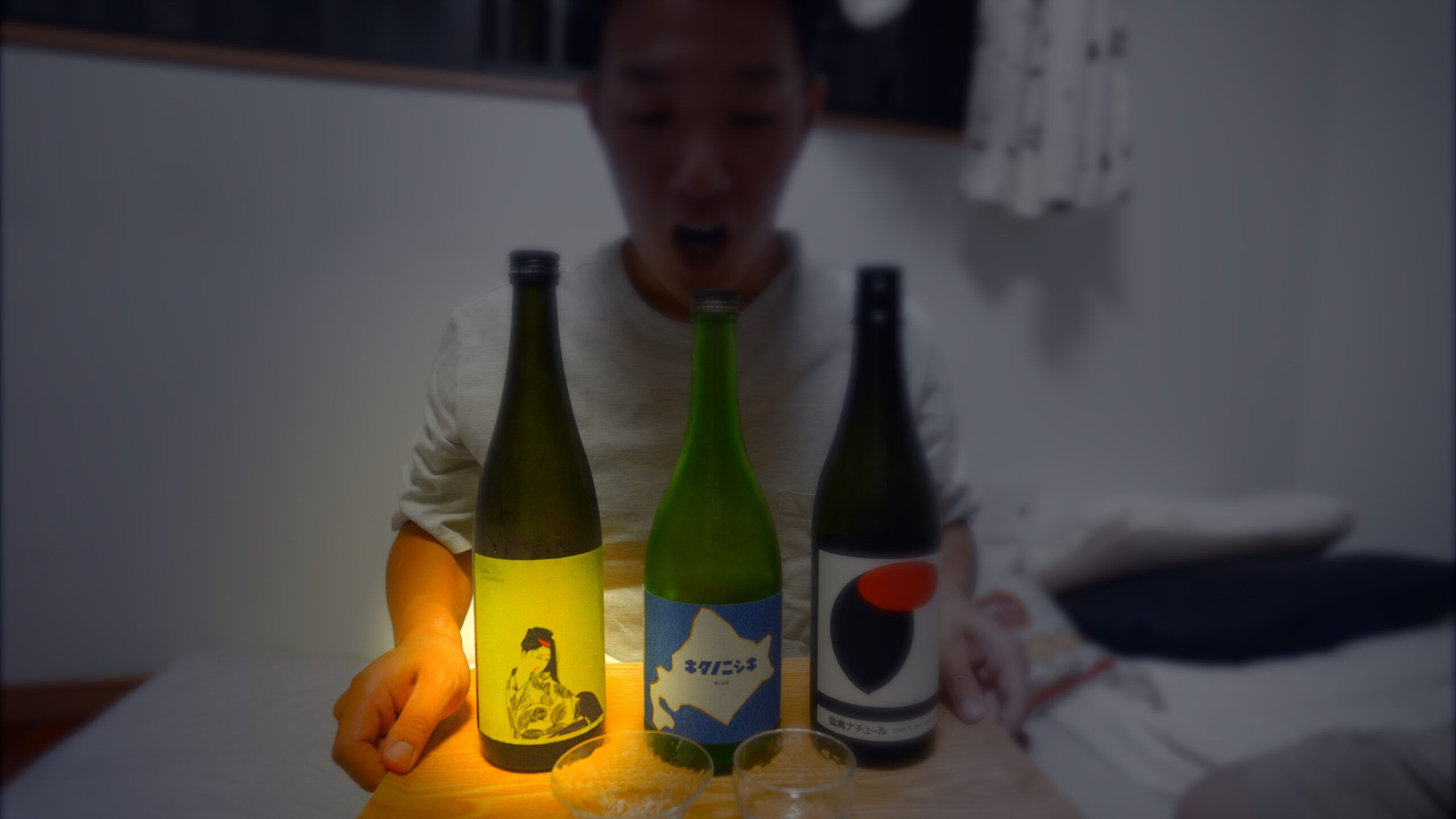
The reason I bought it was simply because the label was beautiful. Gakki Masamune (楽器正宗)
I bought the sake without any information about its taste, characteristics, the background of the brewery, or any recommendations from others.
The only factor that contributed to my decision to buy the sake was the label design.
Among the sake labels filled with kanji, the label featuring a woman dressed in Edo-period clothing and holding a musical instrument, with its strong saturation, was perfect for catching my attention.
On top of that, at “Izumiya Saketen” in Okinawa, where I bought the sake, about four or five types of Gakki Masamune were displayed, which made them stand out even more.
And when I drank it while filming Episode 6 of the podcast, I thought:
“I want to introduce this sake to more people in greater detail, and in a more interesting way.”
And so, the first nihonshu that Sakagura Miyamoto will introduce in September is Fukushima Prefecture’s “Gakki Masamune.”
History
1. From the founding of the brewery to the birth of the first “Gakki Masamune”: Inspired by someone who performed music for the royal family.
In 1865, just before the end of the Edo period (1603–1867), Ooki Daikichi Honten was established in Yabuki Town, Fukushima Prefecture.
Yabuki Town, where the brewery is located, was famous as a hunting ground, so even during the Meiji period (1868–1912), and later during the Taisho period (1912–1926), it was said to be a place frequently visited by the Imperial Family. And the fact that members of the Imperial Family visited the area would later become the direct reason why the name Gakki Masamune was given.
(Although it wasn’t directly named by the Emperor,,)
A member of the Imperial Family (whose name at the time was Asaka-no-miya), who visited Yabuki Town for hunting, apparently liked the sake made by Ooki Daikichi Honten.
Because of this, it is presumed that they had frequent interactions, and at the time, Oku Yoshiisa, who served as a court musician, left these words: “Sake and musical performances are the same in that both are things offered to God.”These words became the inspiration, and “gakki (楽器),” meaning musical instrument, was eventually used as the name of the sake that would soon be born.
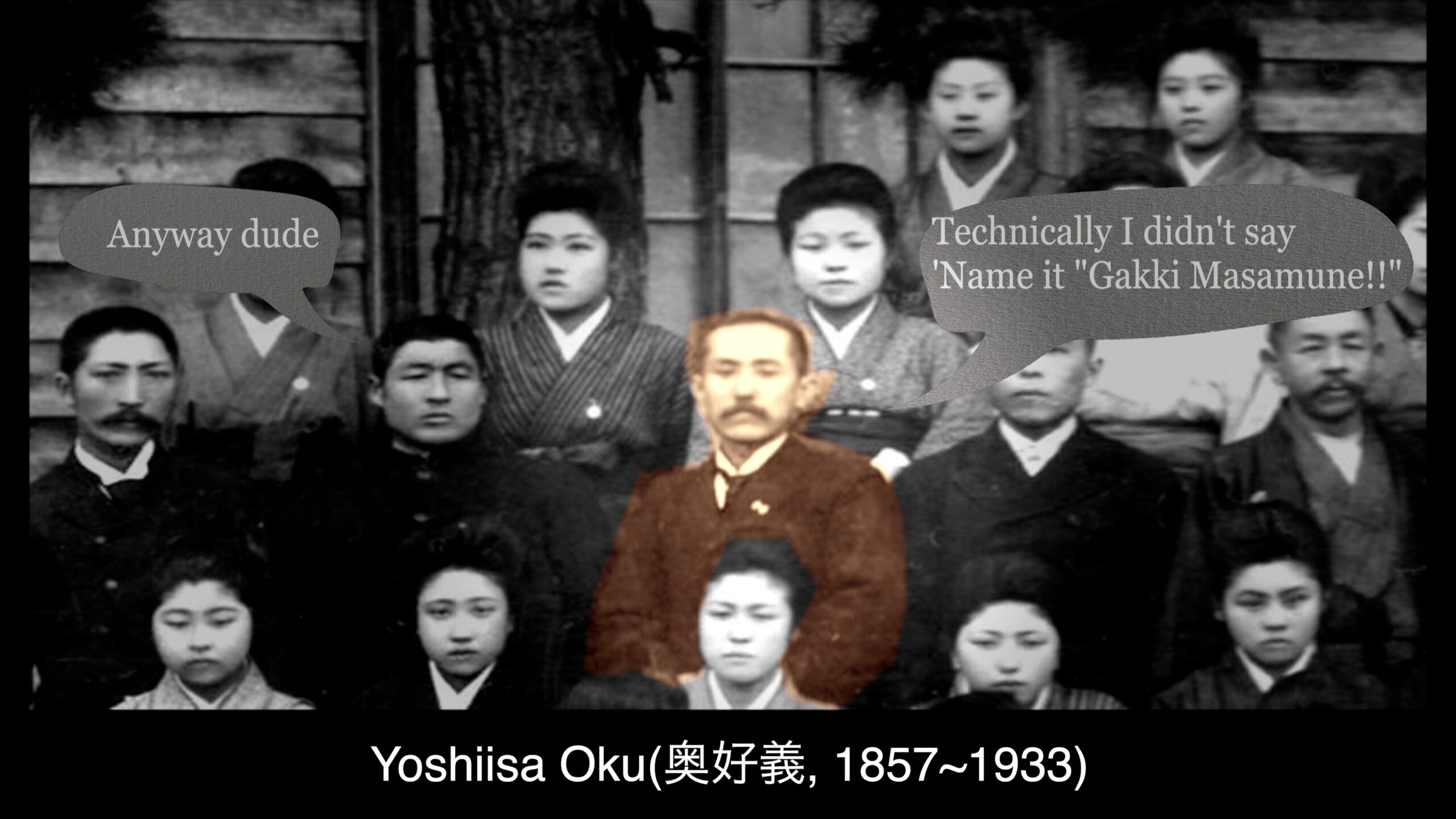
And so, while inspired by Oku Yoshiisa, Gakki Masamune first appeared in the world during the period when the second-generation kuramoto was in charge of the brewery.
2. The End of Gakki Masamune Season 1: Growing Pains Caused by the Shift Toward Junmai Sake Brewing
After Gakki Masamune was introduced, it was loved in the local area for a long time.
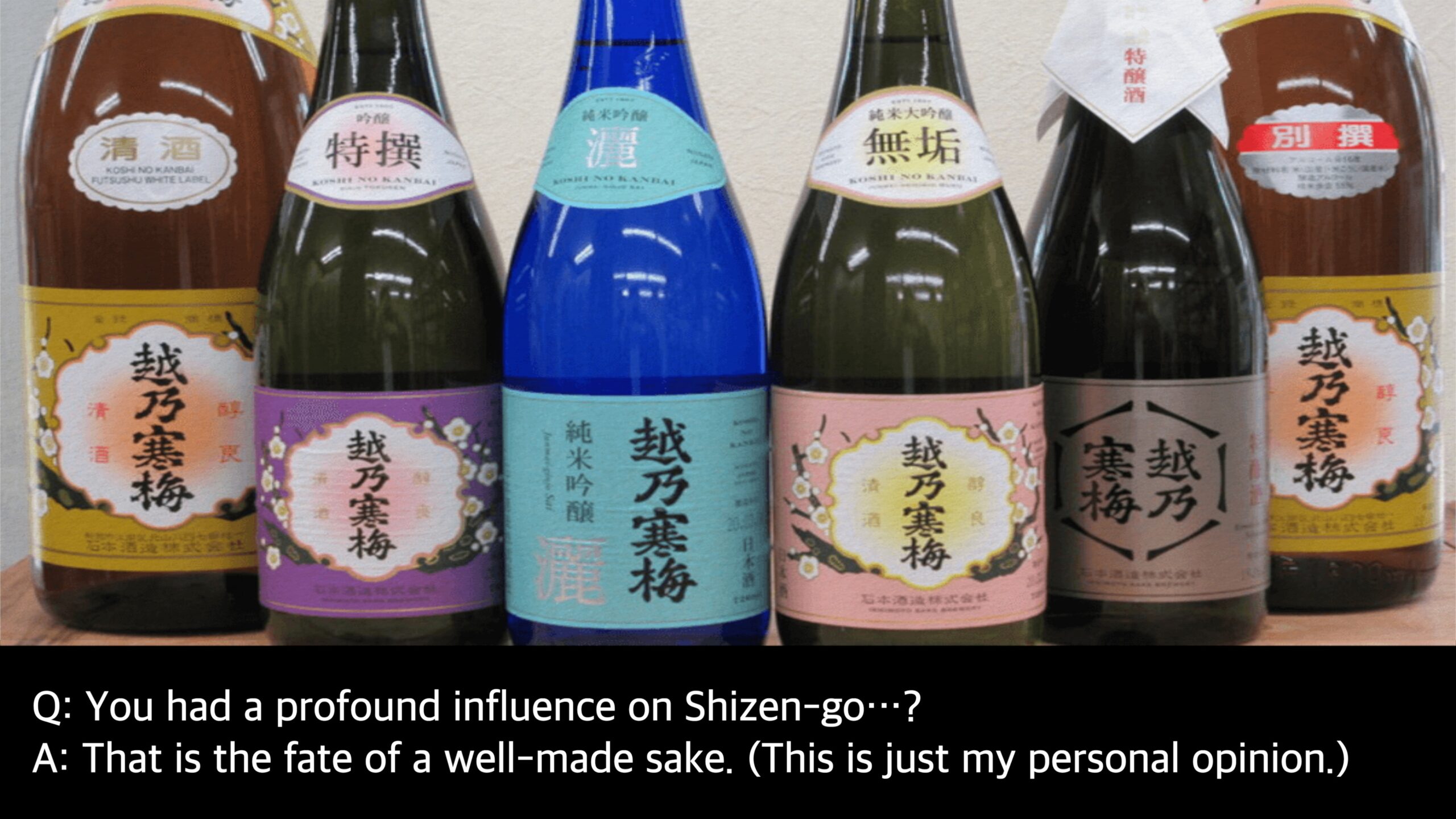
However, change came once again, and it began when the fourth-generation kuramoto happened to drink “Koshi no Kanbai” (越乃寒梅) from Niigata Prefecture.
In the early 1970s, when the grading system for nihonshu was not yet as clearly established as it is today, and even the term “junmai-shu” had not yet been created, the Koshi no Kanbai that the fourth-generation Ooki Daikichi drank completely overturned his existing understanding of nihonshu.
For the first time, he encountered a clean and dry taste that became the foundation of what is now known as “tanrei karakuchi.”
(According to the words of the fourth-generation Ooki Daikichi, nihonshu mass-produced by major brands was the mainstream at the time, and it was difficult to find a clear individuality in each sake.)
He wanted to make exactly that kind of sake, and began shifting the brewery’s focus toward “junmai-shu made with sake rice grown without pesticides.”
Compared with the overall flow of nihonshu history, it was a very quick decision and a very quick change.
I personally think that Ooki Daikichi did not make this decision simply by reading the trend, but because he instinctively understood the appeal of the sake he had tasted.
In 1974, as the early wind of junmai-shu began to blow through Ooki Daikichi Honten, a new label was born: the “Shizen-go (自然郷)” lineup, which is still being sold today.
Its most notable characteristic is that, as a principle, it uses only rice grown without pesticides through direct contracts with local farmers, and all of its sake is junmai-shu made without the addition of brewing alcohol.
There were also growing pains that inevitably came with the process of change.
In 2001, “Gakki Masamune,” which had originally been designed as honjozo, was forced to discontinue brewing, and this marked the end of Gakki Masamune Season 1.
(Spoiler: Season 2 begins in 2016.)
After that, as a pioneer of the junmai-shu boom and as a brewery that loves regional character, Shizen-go, filled with a desire to express the terroir of the region through sake, gained recognition in the nihonshu market, and the brewery’s production volume gradually increased.
4. Another Change, the 2011 Great East Japan Earthquake
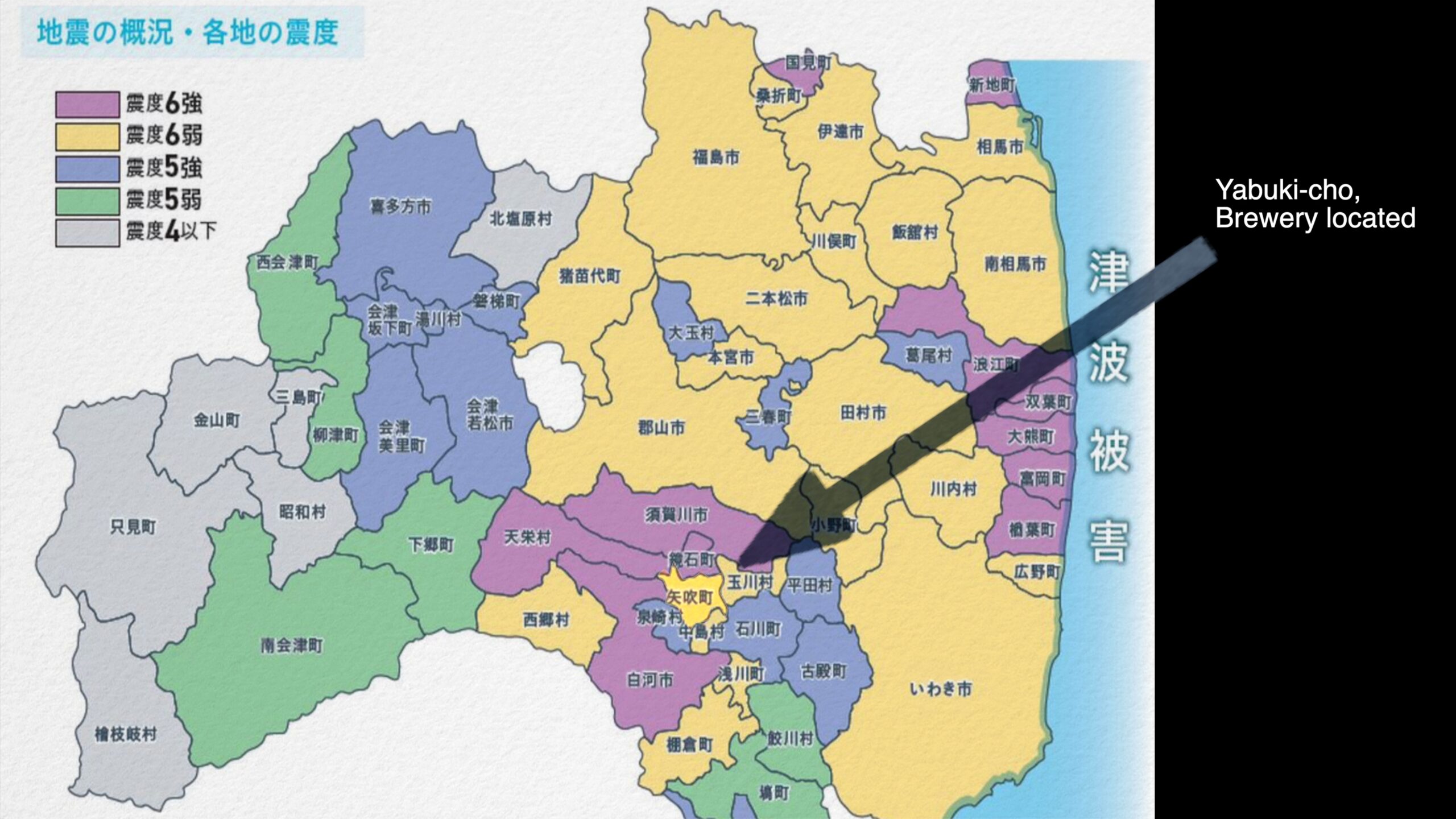
All of the breweries in Fukushima suffered enormous damage at the time.
The current fifth-generation kuramoto, Yuta Ooki, who was in the office together with the employees when the earthquake occurred.
When he went with the employees to check the condition of the brewery immediately after experiencing the earthquake, five out of the fourteen storehouses had already been completely destroyed. The amount of nihonshu lost in that short moment was approximately 10,000 liters, equivalent to 5,600 isshobin (1,800ml) bottles and 14,000 shigobin (720ml) bottles.
Not only the nihonshu that was lost because of the earthquake, but also the stigma of being a “radiation-exposed area” afterward became a reason that stopped people from purchasing the sake.
As a result, the brewery faced serious financial difficulties after the earthquake, but escaped the crisis through crowdfunding, loans from banks, and reforms within the brewery.
In order to build a new storehouse, fifth-generation kuramoto Yuta Ooki visited storehouses at breweries across Japan to broaden his knowledge. He then built a new storehouse, overturned the existing system, and eventually also took on the role of toji himself. (Serving as both kuramoto and toji.)
Along with this, Shizen-go, which had mainly been based around rice and koji aromas, also began releasing a new Shizen-go lineup with a lighter body and a slight acidity.
And in 2016, Gakki Masamune finally began Season 2.
Following the intentions of the second-generation kuramoto who gave birth to Gakki Masamune, it maintained its honjozo style while transforming into an easy-to-drink, modern-style sake.
The birth of the new Gakki Masamune was also apparently supported by advice from Takagi Shuzo, the brewery behind “Juyondai,” which has had no small influence on many of the breweries that are famous today.
(I don’t know whether it was because of the teachings of a brewery that makes the best-selling honjozo, Honmaru, but Gakki Masamune… despite being honjozo, it had a rather light body and a dangerous addictiveness that made it go down incredibly easily.)
4. From the Beginning of Gakki Masamune Season 2 to the Present.
Gakki Masamune was newly revived with the individuality it pursues in the modern era, successfully made its debut, and the damage caused by the earthquake was also completely restored.
As an additional piece of good news, it won several awards at the Annual Japan Sake Awards and the SAKE COMPETITION, gradually establishing its position and becoming a nationally famous nihonshu.
(Annual Japan Sake Awards: The longest-running sake competition in Japan.)
(Sake Competition: A competition that has been held since 2012 and is conducted through blind tasting.) → It is meaningful because the sake being judged is not specially submitted sake, but sake that is already commercially available.
And most recently, September 2026…
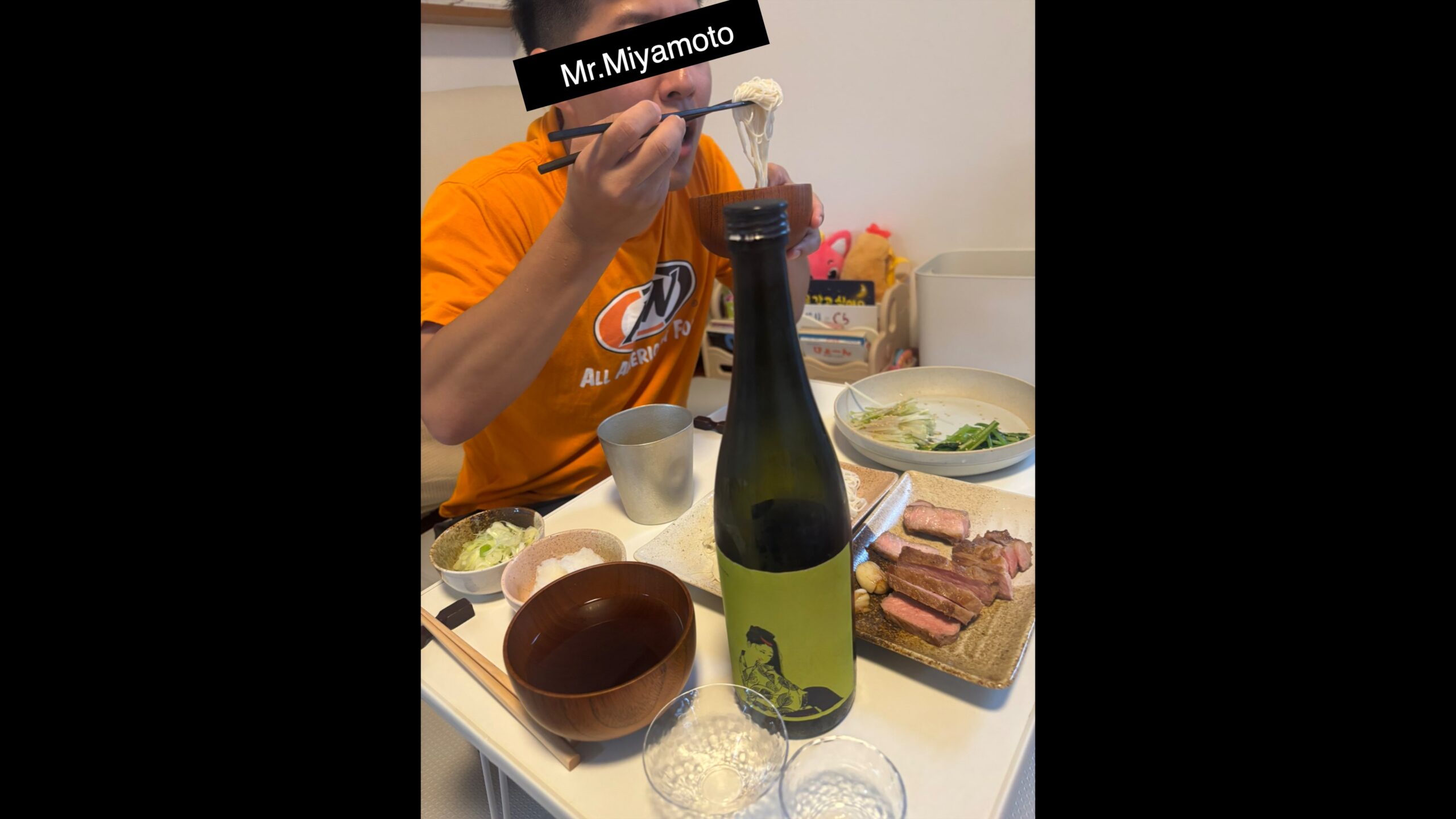
It has now also made its way onto my table.
It was a sake that went much better with light somen noodles than with a pork steak.
Whether enjoyed as an aperitif or with light food, it is the perfect sake to start a meal on a refreshing note.
A Brewery That Cares About Nature
When looking at the process of making junmai-shu, a sense of gratitude toward the surrounding natural environment naturally comes to mind.
Using the rivers flowing near the brewery and groundwater, rice grown around the brewery is steamed.
Koji is made using koji mold, and when fermentation is carried out according to the style the brewery prefers, sake is born.
If the water used in this process is soft water with a low mineral content, the resulting sake has the soft mouthfeel characteristic of soft water. If the mineral content is high, it produces a sharp, dry sake characteristic of hard water.
Different sake can be made depending on the skill of the toji, but basically, brewing nihonshu means working on the foundation provided by the surrounding environment.
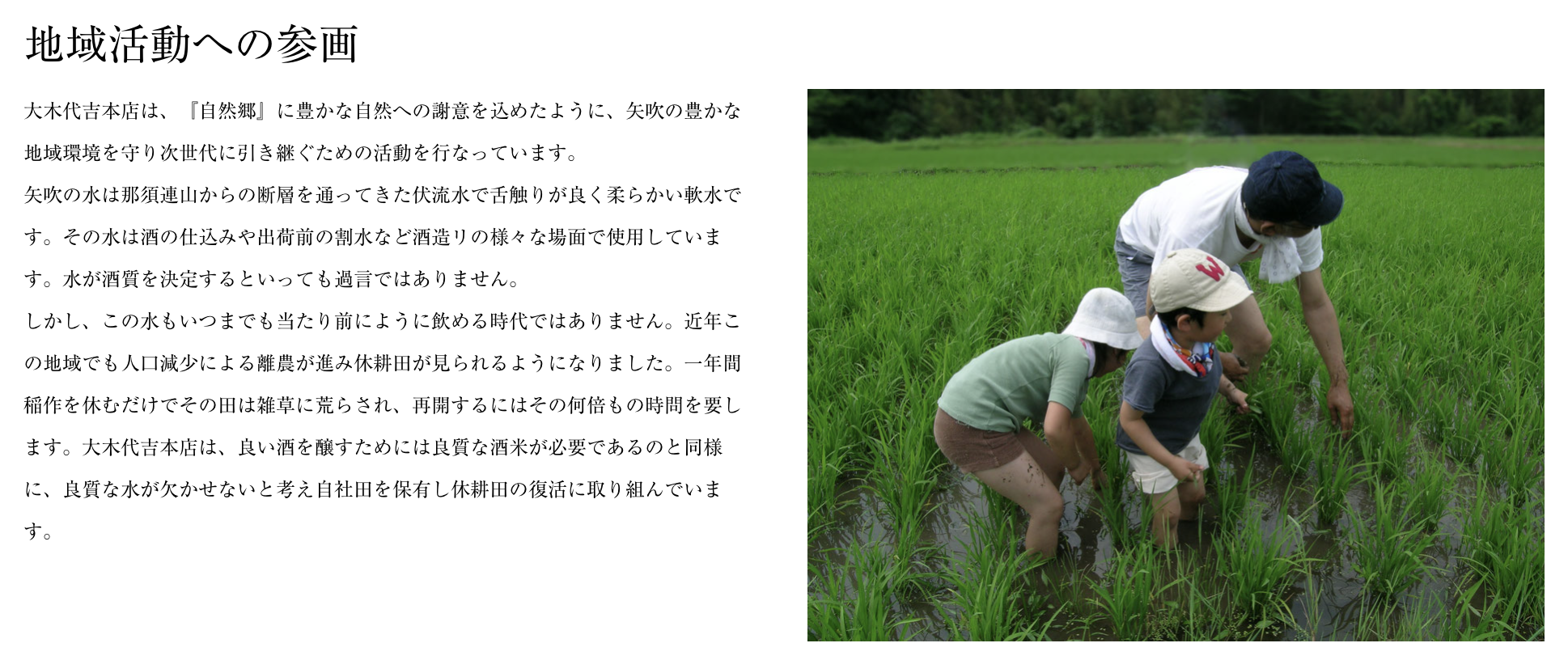
Because of this, many breweries dream of sustainable brewing that can continue for a long time while coexisting with the surrounding environment or local community, and Ooki Daikichi Honten is also taking steps to coexist with the local community and nature.
The water used by the brewery is groundwater that flows down from the mountains around the area, the Nasu Mountains.
However, as the number of areas where farming is practiced decreases, the amount of fallow farmland is increasing. The increase in fallow land is said to be directly related to a decrease in the total amount of groundwater and water pollution.
To prevent this trend from becoming more serious, the brewery is working to restore fallow farmland and coexist with the local community.
Closing (Private Thought)
Thank you to everyone around the world who loves Nihonshu and has visited Sakagura Miyamoto.
Sakagura Miyamoto was created to make Nihonshu more than just a drink with good taste and aroma —
but something that lives in your memories.
For those who want to turn Nihonshu from a simple alcoholic beverage
into a medium that brings back moments and stories,
and for those who want to describe Nihonshu in a deeper, more dimensional way,
we invite you to join the Sakagura Miyamoto membership.
The content below is for members only. Thank you.