
In addition to this, they are also applying kioke-jikomi (aging in wooden barrels rather than stainless steel) and yeast non-addition (no artificial yeast) in their brewing.
A brewery that loves Edo so dearly. Senkin
The moment when December 31, 2024 turned into January 1.
My wife and I had a delicious meal at the first party, and were having a second round of drinks at home.
At this time, there was a nihonshu I had been saving to drink, and that is exactly Senkin, which I’ll introduce today.
Among them, the Modern series’ Hatsubune Nakadori.
Although I got quite drunk at the first party and fell asleep without memory after a few glasses, my wife apparently enjoyed the night of January 1 alone before going to sleep.
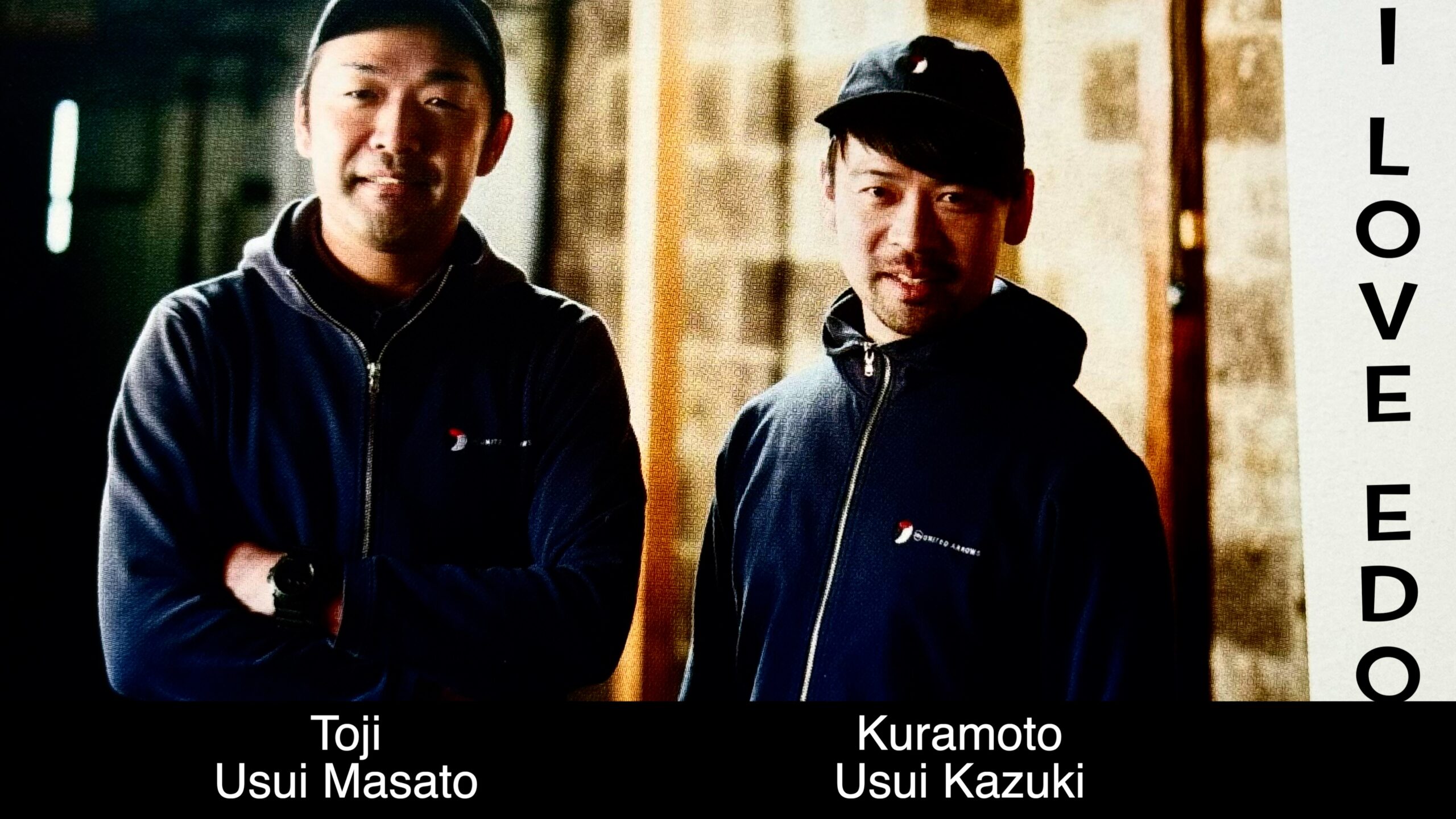
Even before this, Senkin was one of the delicious sakes I trusted to drink regardless of which label it was, and at its core were the brewery owner/toji brothers, Usui Kazuki and his younger brother Usui Masato, who brew while holding onto the strong core idea of “return to Edo.” ▼
History
1. From founding to the present-day Senkin.
In 1806, Senkin Shuzo was established in Sakura City, Tochigi Prefecture.
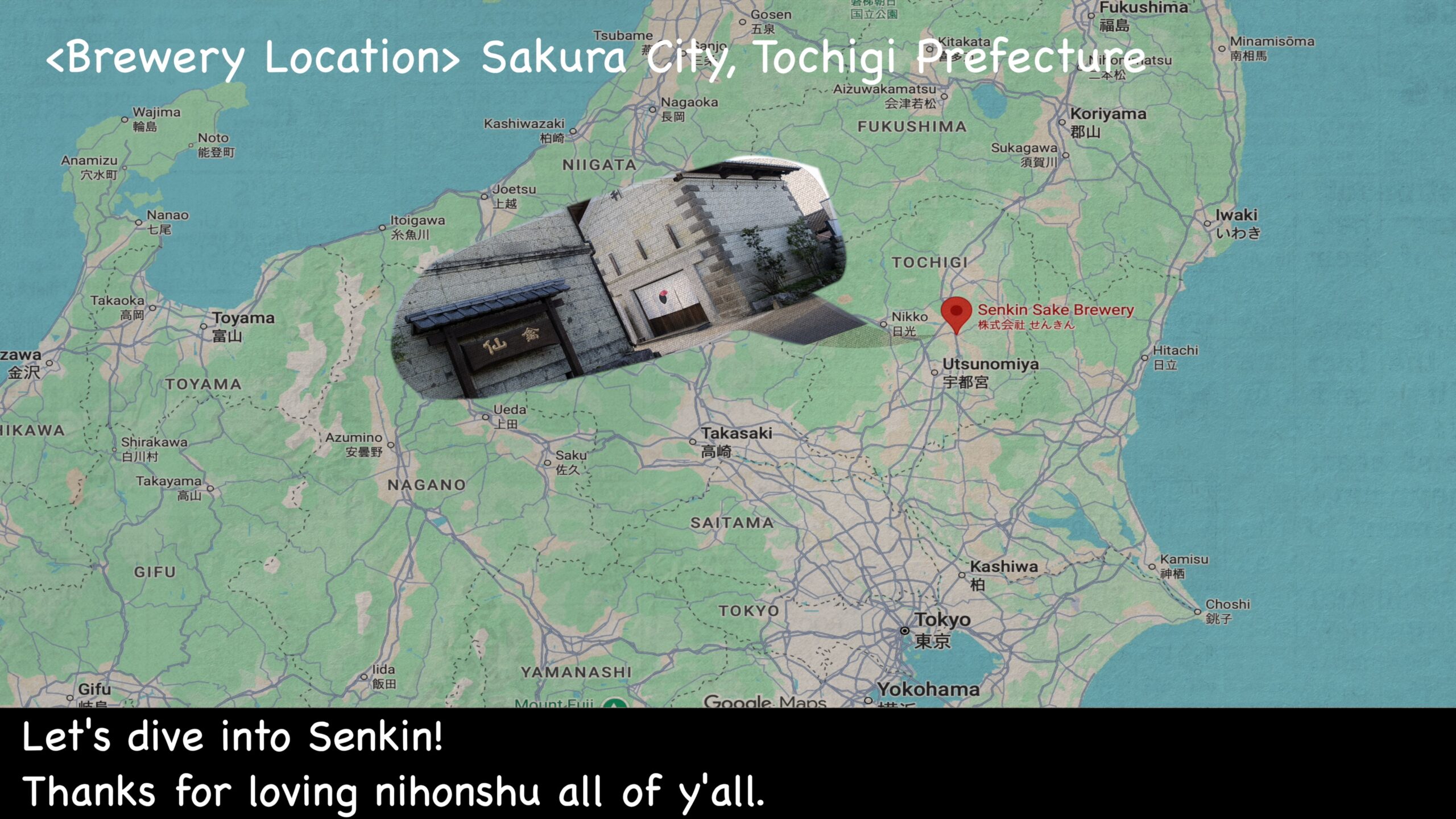
As of this year (2026), it has a long history of 220 years.
Senkin Shuzo, which currently produces Senkin, the sake representing Tochigi Prefecture, was not a brewery with nationwide recognition from the start.
Indeed, the nihonshu trend of that era was quantity over quality.
It was alcohol to drink simply when one wanted to get drunk, rather than for fine dining.
Since the concept of pairing did not exist at the time, it was difficult to expect delicacy from the sake.
As time passed, it was only around the late 1900s that nihonshu suited to Japanese cuisine became the mainstream of nihonshu, so Senkin Shuzo also made sake suited to washoku (traditional Japanese cuisine) in line with this. However, at this time too, Senkin had not yet been born, and the nihonshu sold by the brewery had no name, with its source of income being simply nihonshu sold in bulk to large breweries.
In such a situation, there was no way income through nihonshu could be high, and the brewery was always in deficit with profits continuing to decline.
In this precarious situation, a suddenly halted transaction was a major crisis for the brewery, and the brewery was liquidated.
In 2008, at the same time the brewery was liquidated, the Usui brothers changed the brewery as it was into “Senkin Co., Ltd.” and began a full-scale renewal.
At last, it entered the stage of brewing that prioritizes quality over quantity.
2. 2008, the brothers' first sake, Senkin is born: Was the acidity a Red Flag🚩?
The characteristic of the first Senkin made by the older brother Usui Kazuki and the younger brother Usui Masato was “intentional acidity.”
Kazuki, who had known the appeal of “acidity” that brings out white wine while working as a sommelier at the time, sought to bring out acidity befitting this in nihonshu as well.
In this way, he made a sweet-and-sour sake with pronounced acidity, and this sweet-and-sour characteristic remains, even now, one of the representative tastes that come to mind when thinking of Senkin.
However, until 2008, strong acidity in nihonshu was a red flag.
This was because strong acidity was, at the time, considered one of the indicators of over-fermentation or insufficient technique or design.
It is said that the father (the previous generation’s kuramoto) and older sake fans, who tasted the new Senkin, did not receive it very favorably.
Considering that clean, dry sake suited to Japanese cuisine was mainstream at the time, the sweet-and-sour sake may have felt out of place.
(To understand the mainstream sake taste of the time, it’s easy to think of Dassai or Kubota.)
However, at tasting events, Senkin gained favorable reviews from young women.
For them, gaining favorable reviews from “young women,” who were not originally the main target of the nihonshu market, carried great significance, and became one of the reasons that allowed the brothers to proceed in the direction they had set.
3. 2024, Senkin Co., Ltd.'s core idea. Edogaeri (江戸帰り)
Senkin Co., Ltd.’s challenge began in earnest in 2024, two years ago from now.
Armed still with the aggressive sweet-and-sourness unique to Senkin from the Heisei era, the Usui brothers set “Edogaeri (江戸帰り),” meaning “let’s return to Edo,” as the brewery’s goal.
The Edo period was an era in which brewing technology developed dramatically — the era in which the “kimoto (生酛)” method, which is the prototype of the sokujo method used by over 90% of breweries today, was established and became widely used, and also the era in which “kanzukuri (寒造り),” brewing during the cold season to prevent over-fermentation and stably craft the taste of nihonshu, was used.
Reference
The techniques that were newly developed or became widespread during the Edo period are representatively as follows.
1. Kimoto (生酛): The work of stirring steamed rice mixed with koji with a wooden pole to crush the rice and make it porridge-like. It is a method that creates an environment in which the microbes naturally residing in the brewery can easily participate in fermentation.
2. Kanzukuri (寒造り): A method of proceeding with fermentation in cold weather or cold regions in order to ferment stably.
3. Sandan-shikomi (3段仕込み): A method of fermenting by adding steamed rice, koji, and water in three separate additions during the fermentation process. This ferments far more stably than putting in the entire desired amount at once, and can protect the fermentation process from unnecessary miscellaneous bacteria not needed for fermentation.
There may be various other characteristics unique to the Edo period besides these, but the part into which the Usui brothers poured the most of their own energy is precisely “kimoto.”
They themselves were so serious about kimoto that they even called it “kimotogaeri (let’s return to kimoto),” and began making all the sake they produce using the kimoto method.
Simply adhering to kimoto alone is not something the brothers, or sake fans, would acknowledge as Edogaeri.
Their effort to pursue the originality of brewing is not limited to the production method alone, but also affects the sake rice.
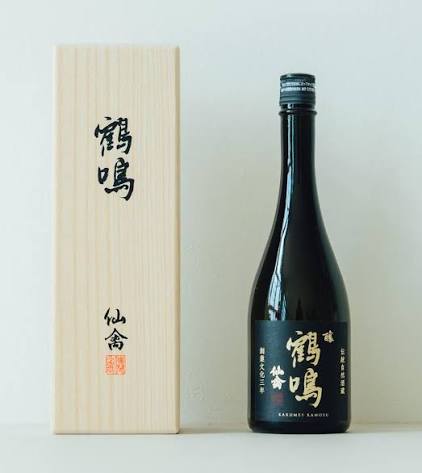
They have contracted with farms that practice only organic cultivation, and use only three types of rice — Yamada Nishiki, Omachi, and the original strain Kamenoo — in their brewing. (An explanation of the original strain Kamenoo is below.)
And the series “Kamosu,” made by evenly blending these three types of rice. If I ever get the chance to buy it, I definitely want to.
What is the original strain Kamenoo?
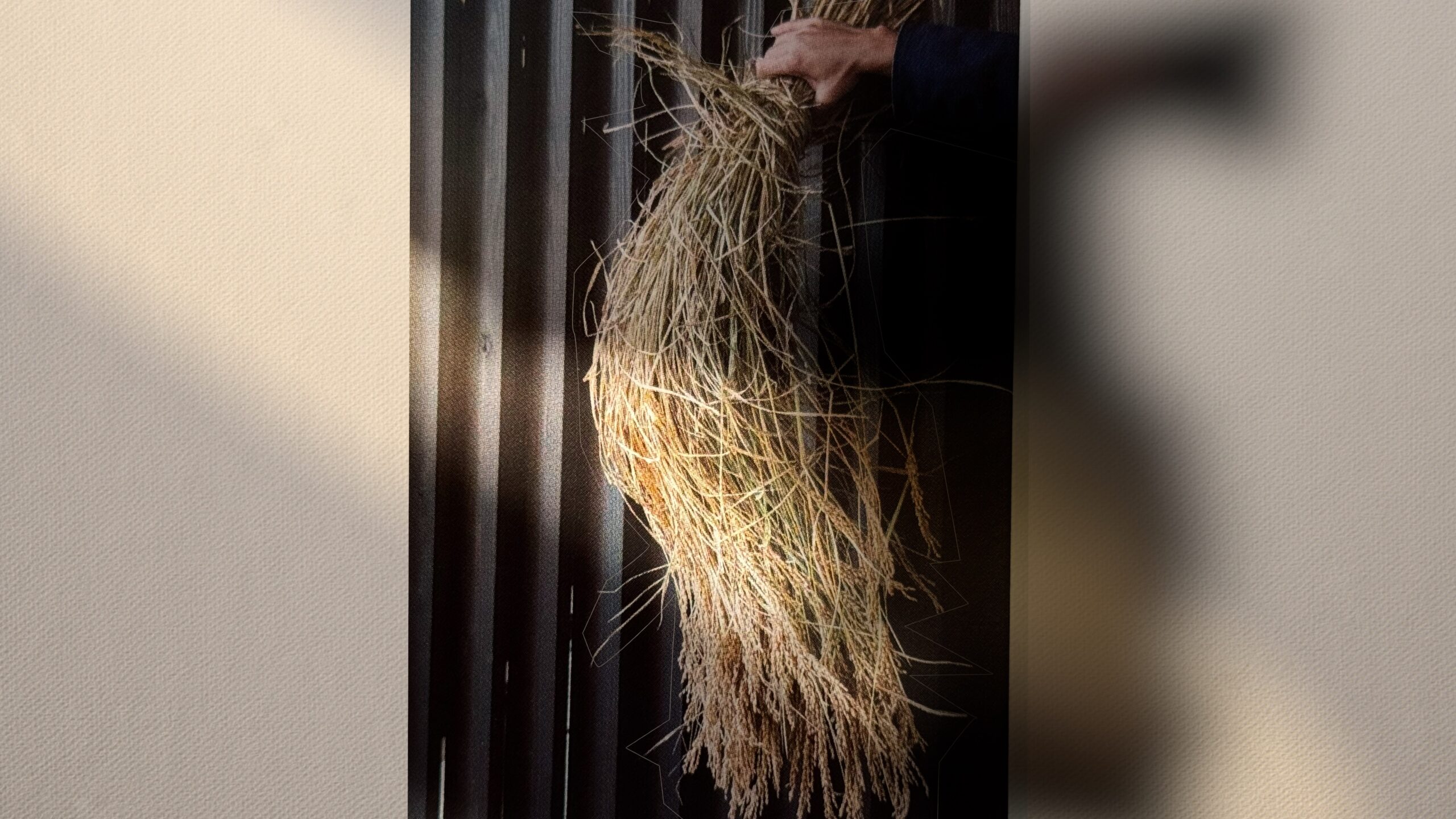
Among rice suited for brewing, there is a sake rice called Kamenoo.
It is known as a rice variety discovered in Yamagata Prefecture in the early Meiji era and came to be widely used, but since that was not a period when seed management was done strictly and thoroughly, by the time the present era arrived, the appearance of the earliest Kamenoo had already become difficult to find, and the appearance of the original Kamenoo gradually became diluted, ending up being used in its current form.
Kazuki thought that finding this “original Kamenoo,” which originates in the Edo period, was the priority for the Edogaeri project, and in collaboration with the state-run seed bank GENE BANK, after 8 years of effort, succeeded in completely restoring the DNA of the original Kamenoo, which had already become diluted by that time, and went on to register it with the Ministry of Agriculture, Forestry and Fisheries.
The Dream of the Two Brothers
Edogaeri is currently in progress.
Kazuki sees the completion and success of the Edogaeri project as being when the Edo period has completely permeated the brewery, so that following full kimoto production, all of it is brewed using kioke-jikomi, yeast non-addition (using naturally occurring yeast), and the original strain Kamenoo across the entire volume — and he has reportedly set 2028, the brewery’s 222nd anniversary, as the cutoff line.
Furthermore, it is said that the ultimate goal is to expand the organic cultivation through contracted farms, which is currently limited to rice, to the entire region where the brewery is located, building an “Edo Town” run entirely on organic cultivation — for the rice people eat, for vegetables, and for fruit as well.
Indeed, in the actions of a person whose compass direction is fixed, there is ambition, there is courage, and there is fragrance.
Today, I want to add my strength to the wooden pole they stir.
In Closing (My Thoughts)
Thank you to everyone around the world who loves Nihonshu and has visited Sakagura Miyamoto. Sakagura Miyamoto was created to make Nihonshu more than just a drink with good taste and aroma — but something that lives in your memories. For those who want to turn Nihonshu from a simple alcoholic beverage into a medium that brings back moments and stories, and for those who want to describe Nihonshu in a deeper, more dimensional way, we invite you to join the Sakagura Miyamoto membership. The content below is for members only. Thank you.