Shichida: Bringing the Flavor of Rice to Life in Saga
I took a bottle of nihonshu out of the fridge. I’d bought it at a sake shop on August 2, 2026, and left it refrigerated for about four days.
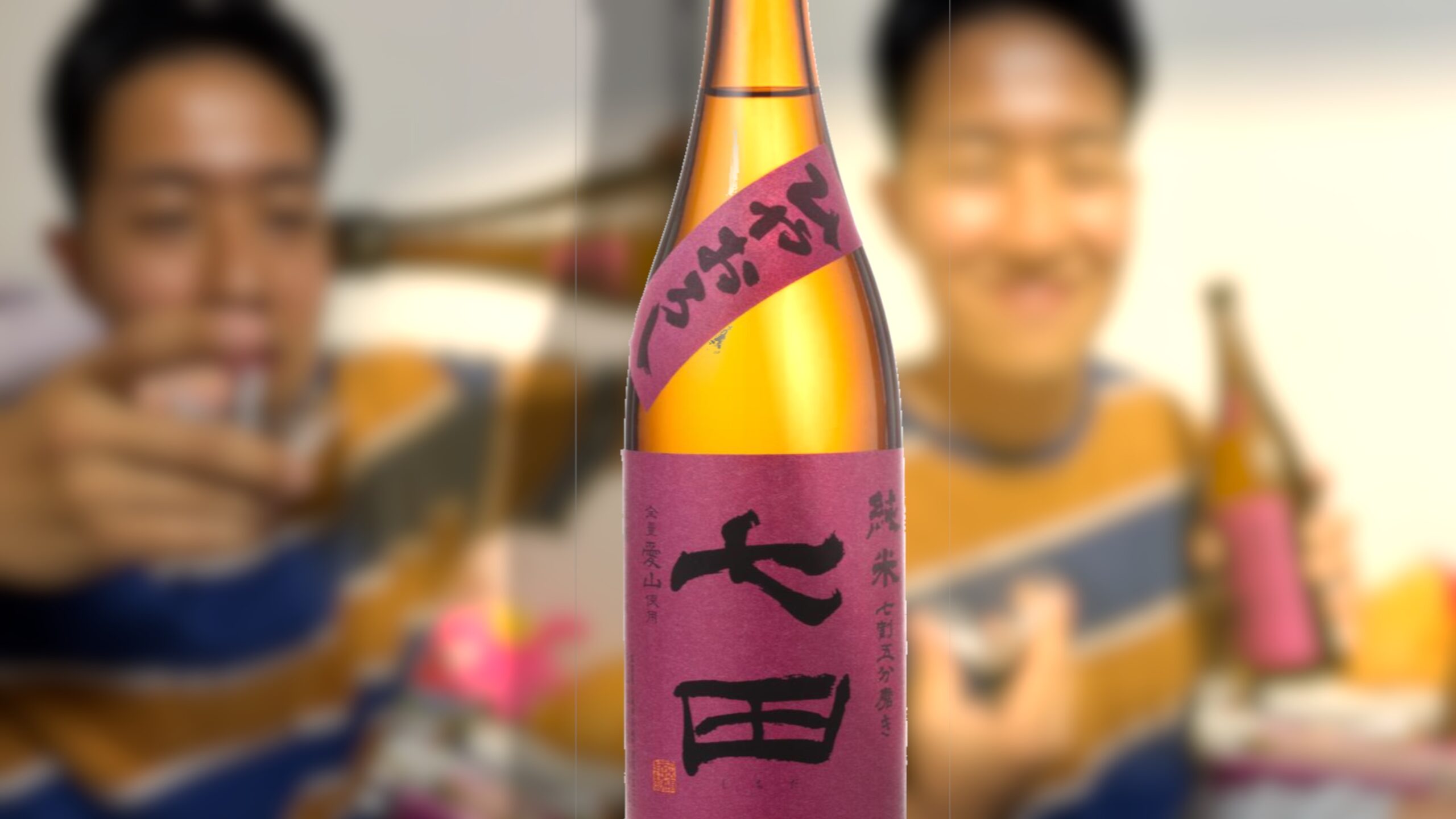
The bottle was Shichida 75% Aiyama Hiyaoroshi.
The day I opened it.
The umami was really satisfying. I had a little with a simple Japanese set meal of miso soup and meat, and the pairing worked quite well.
Day two.
Again, I had a little with a meal.
Both the umami and sweetness were still there in generous amounts.
It paired well with the food, and its substantial body as it went down left an impression.
Day three.
This was the day I enjoyed Shichida the most.
Maybe it had something to do with being pasteurized, but this little guy… had become even tastier.
The umami was still there, while the flavor as a whole felt rounder and softer.
I felt like I understood why the brewery had deliberately chosen a rice polishing ratio as high as 75%.
To be a little honest—and this might hurt its feelings—Shichida’s label isn’t really my style. So even though I saw it regularly at the sake shop, I rarely reached for it. I had tried it by the glass a few times at izakayas, though…
I couldn’t keep walking past it forever, so this time I finally bought a bottle. But if it’s going to taste this good, how am I supposed to stop buying it?
…From that day on, I knew I’d be buying Shichida now and then. And when I picked up a bottle at the sake shop, I wanted to feel a little flutter of excitement. To make that happen, I thought it would help to get to know the other party—Shichida—a little better.
S O…
What I’m trying to say is: today, we’re getting to know Shichida. ↓
History
1. From the Brewery’s Founding to the Birth of Shichida: A Family of Farming Enthusiasts?
In 1875, the eighth year of the Meiji era, Tenzan Brewery—the brewery behind Shichida—was founded in Ogi, Saga Prefecture.
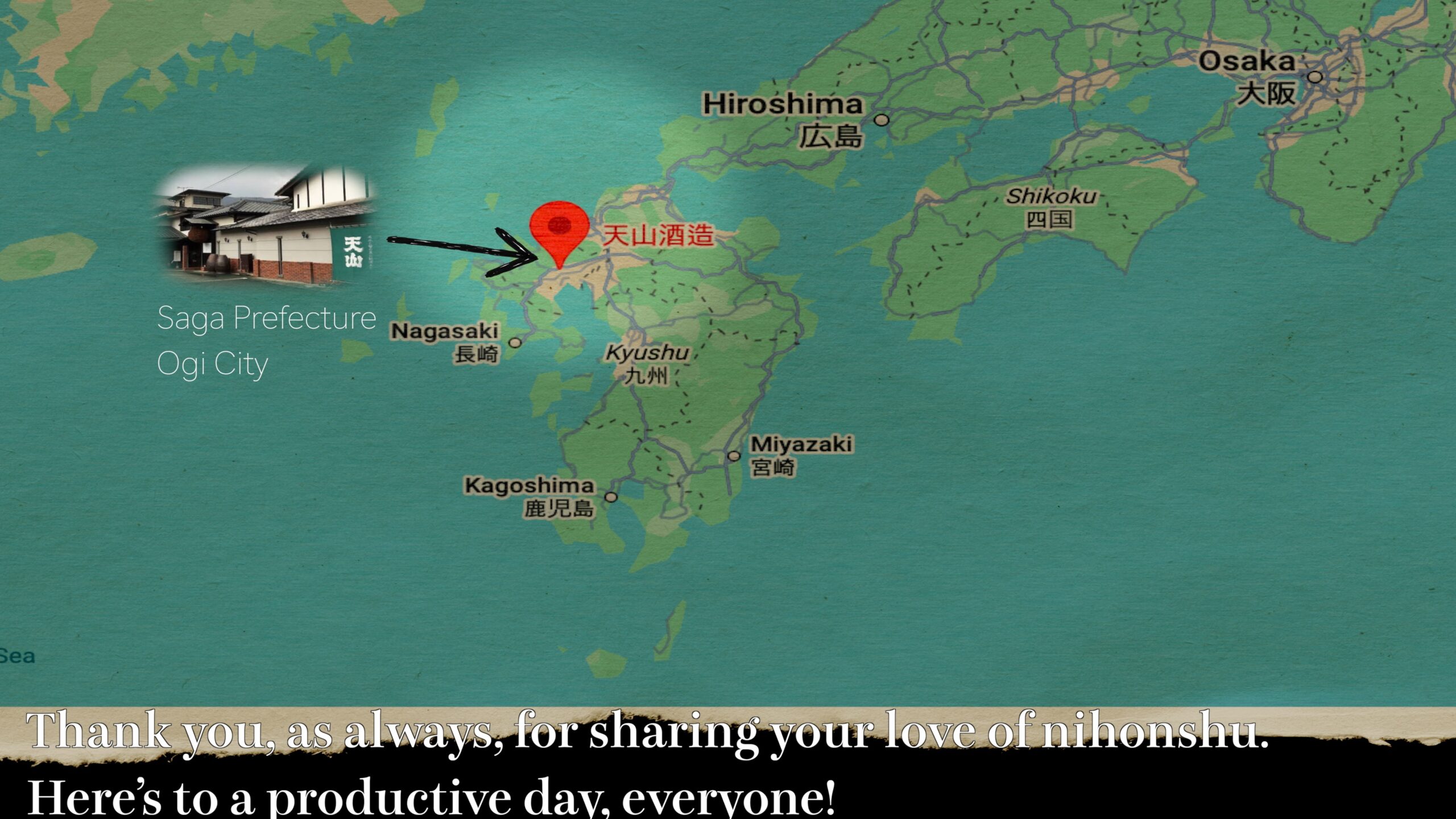
Before entering the brewing business, the Shichida family used waterwheels to polish rice and mill wheat in Saga.
Their journey into nihonshu began in 1875, when they purchased a nearby brewery that was about to close.
As the brewery passed to the second and third generations in the early 1900s, Tenzan established a sawmill without seeking a profit, employed craftspeople, and became involved in construction. At the same time, the family supported the local community through efforts such as donating facilities to elementary schools.
They also established an agricultural school to train the next generation of local farmers. In 1955, they began growing Omachi—a sake rice variety that was rare at the time—in their own paddies. From the brewery’s early days, the Shichida family showed a particular interest in agriculture, devoting considerable time and effort to it.
In the 1970s, futsushu and honjozo, both made with added brewing alcohol, dominated the sake industry. Yet Tenzan began making junmai sake and joined an association dedicated to it, taking a leading role in the movement toward junmai brewing.
Miyamoto’s comment:
I couldn’t help wondering whether Tenzan Brewery’s devotion to rice began around this time. After all, that deep love of rice is also reflected in the story behind Shichida’s creation. (I’ll explore this further when we get to Shichida later in the article.)
2. The Birth of Shichida: Beyond Kyushu, On to Tokyo!
Before telling the story of how Shichida came to be, let me share a little background.
(1) At the time, Kyushu was strongly associated with shochu—made from sweet potatoes, barley, rice, and other ingredients.
(2) The nihonshu market had been declining since its peak in 1973.
…
…
Time passed, and today’s central figure, Kensuke Shichida—the man behind Shichida—returned to the brewery.
When he launched Shichida, Kensuke had yet to take over as the brewery’s owner, but he was already thinking about its future.
Nihonshu’s share of the alcoholic beverage market was gradually shrinking. Meanwhile, the brewery was making only its Tenzan lineup, sold mainly within Saga Prefecture.
The time had come for a new lineup that could reach more customers.
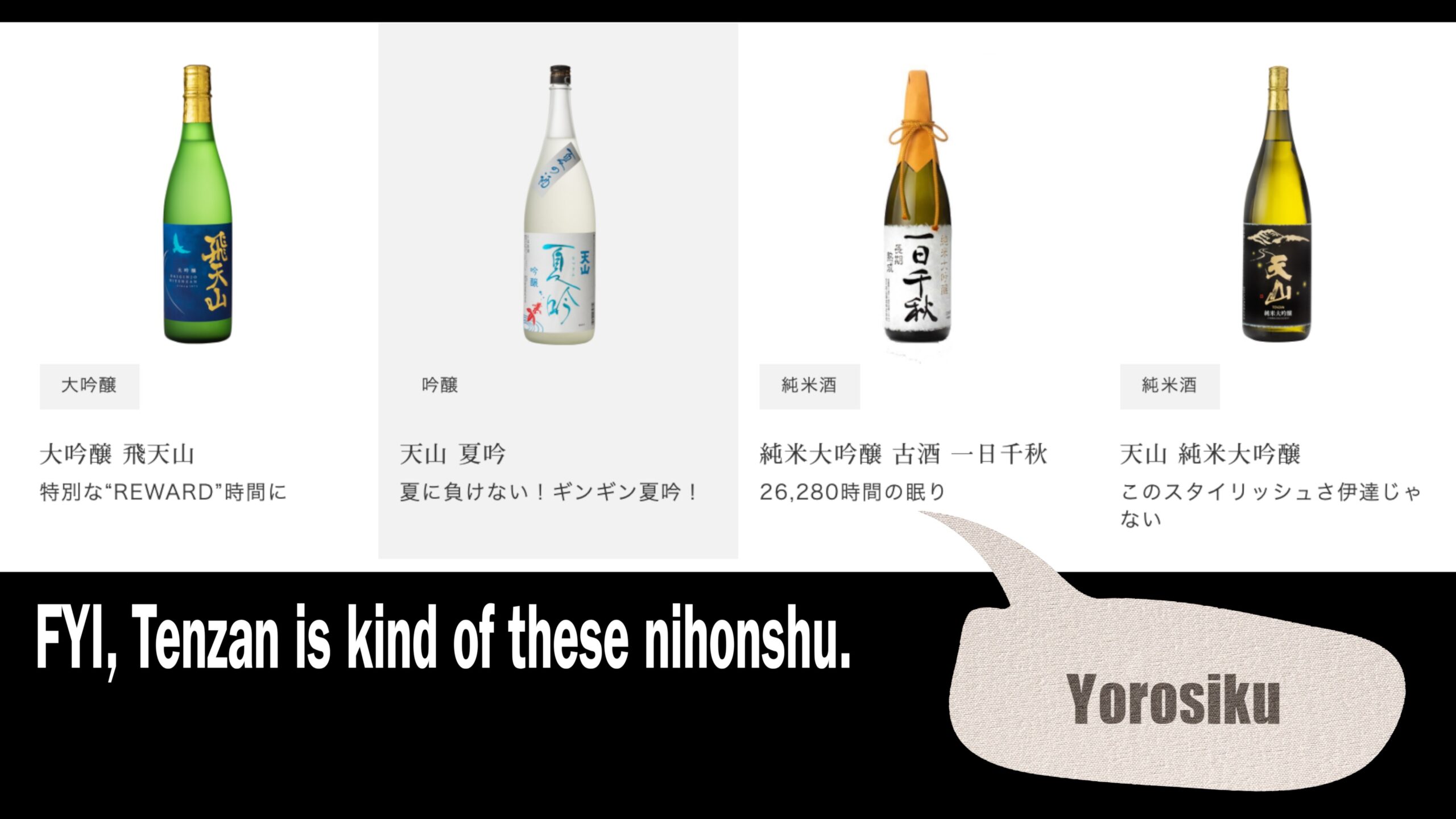
Kensuke turned his attention to Tokyo.
He wanted to introduce Saga’s sake to the capital. The nihonshu he envisioned was Shichida: a sake that brought out the umami of rice while staying true to Tenzan Brewery’s character.
Since the lineup was created to win people over through rice umami, it consisted entirely of junmai styles, with no added brewing alcohol, from the very beginning. That approach continues today, in 2026.
And so Shichida arrived in Tokyo and took the city by storm…
Well, not quite. But it steadily made a name for itself.
3. After Shichida’s Birth: Beyond Tokyo, Out into the World?
Shichida went on sale in Tokyo in 2001 and gradually gained recognition.
Meanwhile, sake from Saga, including Shichida, was finding itself in the international spotlight more and more often.
One notable example came in 2011, when Nabeshima, also from Saga, won the top award in the sake division of the IWC (International Wine Challenge). More awards for Saga’s sake followed.
In 2017, Shichida Junmai Ginjo Omachi 50 won the top award at Kura Master, a sake competition held in France. That same year, Shichida Junmai and Shichida Junmai Ginjo also received awards, helping the brand build recognition both in Tokyo and overseas.
In 2025, a sommelier who runs a sake bar in New York approached the brewery about importing its sake. Shichida has continued actively expanding its export reach in recent years.
For the Flavor of Rice in Nihonshu: The 75% Series (Rice Polishing Through Thesis, Antithesis, and Synthesis)
Shichida has several lineups, but the one I want to focus on today is the 75% series—the one I recently tried.
As the 1980s gave way to the 1990s, a junmai ginjo boom arrived in the nihonshu market.
That momentum has continued to this day, drawing in many new fans both in Japan and overseas. Like bees searching for nectar, these newcomers tended to go looking for
more expressive aromas,
more delicate flavors,
more pronounced fruit notes.
One slightly disappointing consequence was that the “flavor of rice” found in less-polished rice became harder to experience than before.
Yes—where there is a thesis, an antithesis emerges. From there comes a synthesis, opening up a new future.
Shichida launched its 75% series as a carrier pigeon, delivering Saga’s rice flavor to the people of Tokyo.
Perhaps Tenzan Brewery felt that a rice polishing ratio of 75% struck the right balance: expressing the rice’s umami fully while keeping unwanted flavors in check.

Perhaps their carrier pigeon successfully delivered its message to Tokyo.
Shichida went from strength to strength, and its 75% series became available across Japan. Thanks to that, even here in Okinawa, I can enjoy Shichida’s rice flavor.
That makes me happy.
When I tried the 75% series this time, the strength of its umami stood out, just as I’d expected.
The combination of substantial body and satisfying umami in nihonshu made with less-polished rice always makes me want something to eat alongside it.
Something well seasoned or a meat dish, rather than lighter fare.
Or perhaps cheese and olives, as you might have with wine. I could easily imagine those working beautifully, too…
It was the kind of sake that invited me to imagine all these possibilities.
…
…
Incidentally, I think the thesis–antithesis–synthesis sparked by the junmai ginjo boom has now largely reached the synthesis stage. Today’s nihonshu market offers such a range of flavors and styles that rice polishing ratios alone tell us very little. Quality has also become consistent enough that this no longer feels like a transitional period. We’re living in a time when so many nihonshu have both a distinctive personality and the appeal to succeed as products.
Closing Thoughts
Thank you to everyone around the world who loves Nihonshu and has visited Sakagura Miyamoto.
Sakagura Miyamoto was created to make Nihonshu more than just a drink with good taste and aroma —
but something that lives in your memories.
For those who want to turn Nihonshu from a simple alcoholic beverage
into a medium that brings back moments and stories,
and for those who want to describe Nihonshu in a deeper, more dimensional way,
we invite you to join the Sakagura Miyamoto membership.
The content below is for members only. Thank you.