
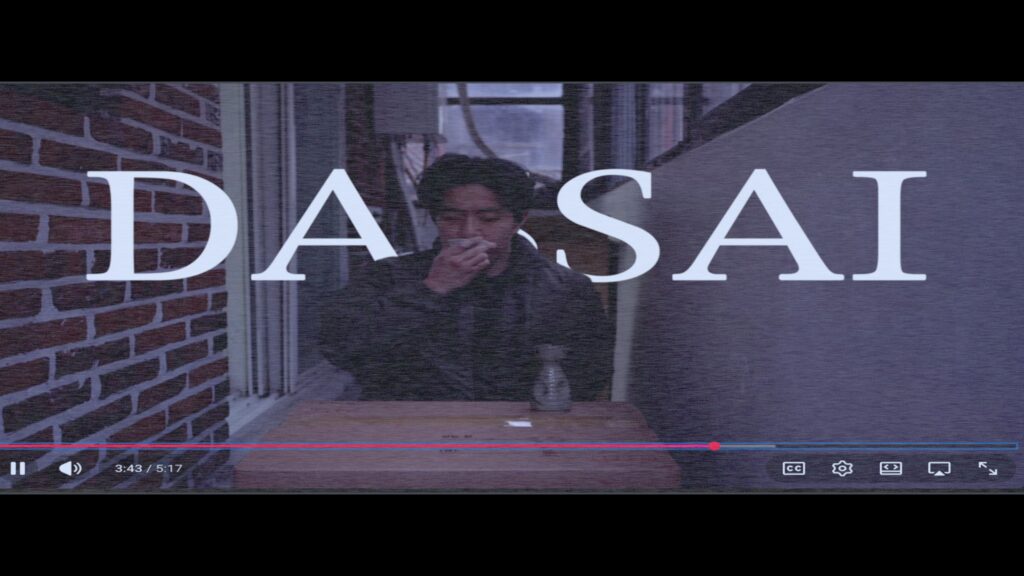
DASSAI, Unforgettable Nihonshu
If someone were to ask me which sake I will never forget,
last year, this year, next year, and even the year after that,
my answer would always be the same: Dassai.
Today, I want to tell the story of why Dassai has remained so deeply etched in my memory.
And through this story, I hope you, too, will think of your own special nihonshu—
a sake that walks alongside your time and your life.
The story goes back four years, to when I was still working as a nurse.
In 2022, I was a newly graduated nurse who had just started working.
As for alcohol, my experience was limited to soju, beer, makgeolli, and the occasional glass of wine.
I worked rotating shifts, and when my evening shift ended, I usually got home around 11 p.m.
On the way home, there was a liquor store selling all kinds of alcohol, and I often stopped by.
Most of the time, I bought beer.
If I considered something different, boxed sake and wine were relatively cheap,
but I never really liked boxed sake, so I usually chose wine instead.
Bottled sake cost at least 40,000 won, even at the cheapest,
so it never felt like something I could casually buy.
Then, in July 2022,
for reasons I still can’t clearly remember,
I paid 69,000won for a bottle of Dassai 45.
Was it payday? I’m not sure.
At the time, I had never tried nihonshu before,
and I believed that sake was something you drank warm.
I didn’t even know what a tokkuri was,
so I put the bottle directly into a pot and heated it.
I had no idea about temperature—
I think I just left it in boiling water for about five minutes and drank it.
Looking back now,
it feels like an unforgivable crime.
But that carelessly consumed nihonshu
ended up changing the direction of my life.
Until then, alcohol had been something you drank to get drunk,
or to have fun with friends.
Through nihonshu, I realized that alcohol could be something else entirely—
something to savor, to feel the atmosphere,
and to enjoy while thinking about how it pairs with food.
Dassai was delicious whether it was warm or cold.
At the time, I didn’t even know the concept of pairing.
I was simply hungry, so I ate it with roasted sweet potatoes,
but the combination was surprisingly good.
As I drank nihonshu, I thought that watching a Japanese film might suit the mood better,
so I put on The Great Passage.
It turned out to be a wonderful film.
That solitary drinking session—about three hours spent with a movie—
is still vividly etched in my memory.
Even while preparing to become a nurse,
I was never fully convinced that this was the path I truly wanted.
I had entered nursing school, so naturally I became a nurse,
but I couldn’t grasp what books meant when they said,
“what truly matters is invisible,”
nor could I understand the meaning of life itself.
But as my perspective on alcohol changed,
and I began to find direction in the voyage called life,
the things I needed to do started to reveal themselves, one by one.
From that point on,
I decided that my dream was to work with nihonshu.
I believed that to truly learn about it, I had to go to Japan.
And so, I began studying Japanese.
Thank you to everyone around the world who loves Nihonshu and has visited Sakagura Miyamoto. Sakagura Miyamoto was created to make Nihonshu more than just a drink with good taste and aroma — but something that lives in your memories. For those who want to turn Nihonshu from a simple alcoholic beverage into a medium that brings back moments and stories, and for those who want to describe Nihonshu in a deeper, more dimensional way, we invite you to join the Sakagura Miyamoto membership. The content below is for members only. Thank you.
To the version of me who will drink Dassai again.
When I drank my first Dassai,
I didn’t even own a sake glass, so I drank it from a soju shot glass.
I didn’t know what a tokkuri was either,
so I submerged the bottle directly into a pot and heated it.
I knew nothing about nihonshu—
not even that different temperatures have different names.
By the time I drank my third Dassai,
I had visited a sake brewery in person,
and I was driving around Japan with my girlfriend—
who is now my wife.
When I drank my fifth Dassai,
I had begun seriously studying video editing,
and just as I had imagined when I drank my first Dassai—
I should work in something related to nihonshu—
I was doing exactly that.
At a kaiseki restaurant,
I handled storytelling and pairings for nihonshu,
and my explanations, pairings, and service
were praised through restaurant reviews
and even directly by customers.
For the first time, I could say
I was producing real results in the world of nihonshu.
So what will I look like
when I drink my sixth Dassai?
Well, at the very least,
the version of me today can do more than I could
when I drank my fifth.
I can build websites now.
I can hold conversations in both Japanese and English
at a functional level.
I can express my thoughts through video
in ways that feel engaging and true to myself.
In daily life,
I try to live honestly,
grounding my moral standards in the Bible.
And each night,
I fall asleep beside the most precious wife in the world
and our child.
When I drink my sixth Dassai,
I’m sure I’ll start wondering about what comes next.
What kind of person will I be
when I drink my tenth Dassai?
What kind of work will I be doing
when I drink my twentieth?
Days filled with that kind of anticipation
are waiting for me.
And no matter what label the bottle carries,
when each person reading this thinks of their own “Dassai,”
I wonder—
Who were you when you drank your first glass?
And who will you be
when you drink your tenth?
I find myself curious
about what kinds of stories
the sake of each reader quietly holds within it.
Fin