
Big Poppa of Rare sake, Juyondai(十四代)
History
The brewery behind Juyondai, Takagi Shuzo, was founded in Yamagata Prefecture in 1615.
Juyondai was created in 1994 by Akitsuna Takagi, who inherited the brewery as its 15th-generation master — more than 300 years after its founding.
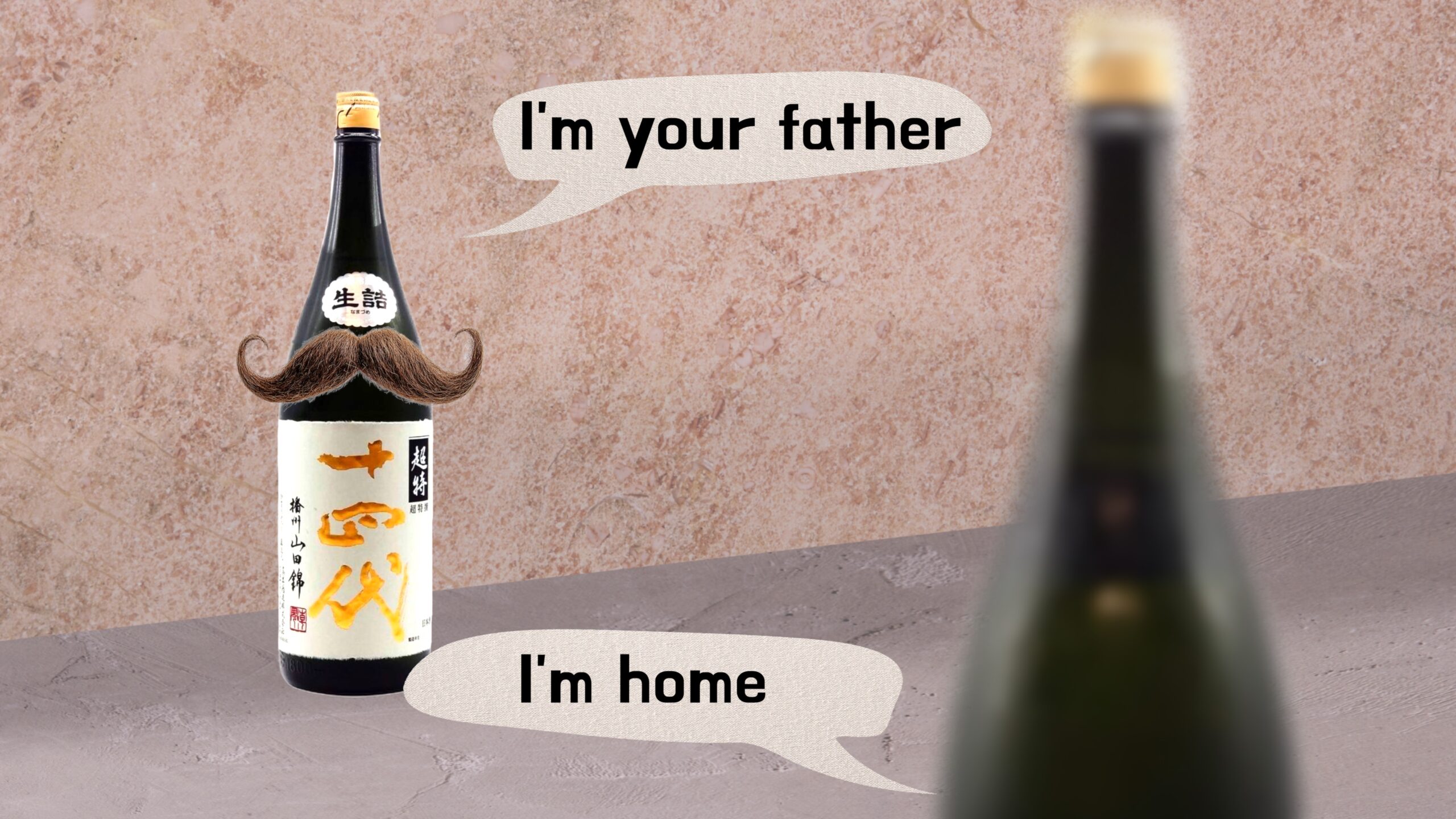
Although he was the 15th generation, the sake was named after the 14th (十四代, “Juyondai”). The story goes that Akitsuna took the koshu (aged sake) his father — the 14th-generation kuramoto — had carefully crafted, and developed it into a fresh new style of shinshu (new sake). He named it in honor of his father.
The lineup began with the first release, Juyondai Nakadori Junmai, followed a year later by what is now the brand’s signature label, Honmaru. Today the range extends to ultra-premium expressions like Souko — made with Yamadanishiki rice polished down to 35% — and Ryugetsu.
Before Juyondai arrived, Takagi Shuzo was a brewery that operated quietly, doing small-scale trade with local retailers within Yamagata Prefecture without seeking wider recognition. Its rise to national prominence began after 1994.
The Road to Juyondai
In 1993, Akitsuna Takagi received a phone call while working in Tokyo. It was his father — the 14th-generation master running the brewery — calling to say that their toji, who had worked alongside them for over 30 years, was retiring. What did Akitsuna want to do?
That single phone call set him on a path that would define the rest of his life.
Thrown suddenly into the role of head brewer, he worked around the clock. The result was Juyondai — and it earned high praise from its very first year.
Sato, the owner of Izumiya, a sake retailer in Fukushima Prefecture that has been doing business with Takagi Shuzo since Juyondai’s debut in 1994, tasted the Nakadori Junmai Ginjo before it was officially released and said this:
“The moment I took a sip, the aroma and flavor exploded in my mouth — like biting into a fresh piece of fruit. The balance of sweetness, acidity, and fragrance was exquisite. It was genuinely delicious. I had never experienced a shock like that before.”
At the time — before 2000 — the prevailing current in Japanese sake ran through Niigata and Hyogo: tanrei karakuchi, the clean, dry style that finishes crisply in the mouth. That was what was popular.
But as umakuchi and amakuchi sakes like Juyondai and Aramasa began earning recognition among sake fans, the market shifted. Today, whether dry or sweet, what matters is simply whether it tastes good.
Today
Takagi Shuzo has brewed on a small scale since its founding. Even before the current wave of popularity, the kuramoto personally visited retailers to negotiate deals, and the toji continues to brew by hand — tasting each batch without relying on machinery. That approach places a natural ceiling on production volume, which is why distribution has always been relatively limited compared to other breweries.
Outstanding sake, few retailers, limited supply — the scarcity this creates seems to be exactly what drives sake fans into a frenzy.
Juyondai’s influence has extended beyond consumers. It has served as inspiration for a generation of young toji and kuramoto: the team behind Jikon at Kiyasho Shuzo, the makers of Nifudazake at Kamonishiki Shuzo, and Hiroki Shuzo, home of Hiroki, among others.
My personal view is that Juyondai was ahead of its time — forging its own style of exceptional umakuchi and amakuchi before the market was ready for it. Over time, the young toji it inspired went on to craft even better sake of their own. Juyondai, I think, played a major role in setting that virtuous cycle in motion.
On Premium Sake
Takagi himself is clearly aware of the problem: Juyondai regularly changes hands on the resale market at very high prices. But he worries that increasing production to address this would dilute the brand’s identity. What makes Juyondai what it is, after all, is the sensibility of the kuramoto and toji — and mass production risks changing that sensibility fundamentally.
So perhaps it is simply the way of things. Like Rolex, like the Nike x Travis Scott collab, like Chanel and Hermès — scarcity is part of what defines a luxury item, and the market forces that exploit that scarcity are an unavoidable consequence.
Closing Thoughts
In an earlier post titled “Don’t Chase the Label,” I shared some thoughts on Juyondai, Jikon, and Aramasa.
At sake izakayas in Japan, you can often spot visitors who make it their mission to work through every variety of Juyondai, Jikon, and Aramasa — documenting each one for the ‘gram. My point then was that there is so much other great sake out there, and I hoped people would open themselves up to exploring more of it.
That feeling hasn’t changed. When I go to a sake izakaya, I still try to drink as broadly as possible. (Though I’ll admit — Aramasa’s Kamaekaeru and Nilgame are two I’m genuinely fond of.)
That said, I do think Juyondai’s value is something genuinely premium.
A sake that inspires other brewers. Isn’t that something?
I’ve been rewatching Breaking Bad from the start lately, and every episode reminds me why it’s a masterpiece. Each installment is packed with devices designed to pull the viewer deeper into the story — and yet none of it feels forced. You can sense the craft in how invisibly it all works. And masterpieces like that have a way of inspiring other creators.
The same goes for The Office, which might be my favorite American sitcom. Every episode makes me think: this is what a sitcom is supposed to be. I believe The Office has been a genuine source of inspiration for anyone working in the genre.
Juyondai, I think, occupies that same kind of position in the world of sake. There are plenty of delicious sakes out there — but how many of them inspire others?
And maybe that’s part of what turns sake fans into Juyondai fans.
Fin