
A broken Shinkansen has returned to Hakata Station.
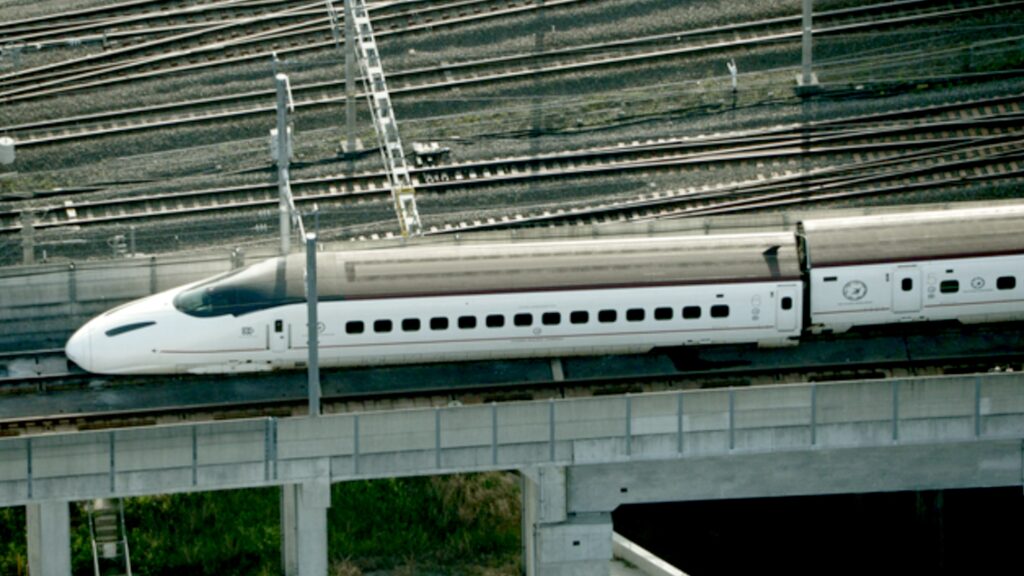
A broken Shinkansen has returned to Hakata Station.
From April 10th to April 19th, the lead car of the Shinkansen “Tsubame” is on display in the plaza in front of Hakata Station. Since I pass by Hakata Station almost every day, it did catch my eye — but having no interest in trains to begin with, I just kept walking.
About three days after it was installed, I saw the story of Tsubame on the news.
In 2016, a magnitude 7 earthquake struck Kumamoto. The driver at the time described how the shaking was violent enough to throw his body into the air before slamming it back down. (Fortunately, the train was on a non-revenue run back to the depot at the time, so there were no passengers on board.)
The train derailed. Of the six cars in total, three sustained severe damage and were scrapped. The remaining three are still being used in Kumamoto as training equipment for staff. The lead car spent about ten years sitting in storage at the Kumamoto depot, before being freshly repainted and sent on its way to the plaza in front of Hakata Station on April 10th — under the theme “The Great Adventure of Tsubame,” commemorating the 15th anniversary of the Kyushu Shinkansen’s full opening.
Along with the story, the news showed a short clip of the lead car arriving in Fukuoka by ship in the middle of the night, then being loaded onto a truck and making its way to the plaza. That journey was enough to move my heart, just a little — even for someone who had never cared about trains at all.
The next day, I walked past Hakata Station the same as always. The station itself was no different from any other day, but there was one thing that had changed — the way I looked at Tsubame. The story the news had told me somehow made me feel something I hadn’t expected: I found Tsubame almost endearing. And before I knew it, I was doing exactly what everyone else was doing — taking a photo.
(click)
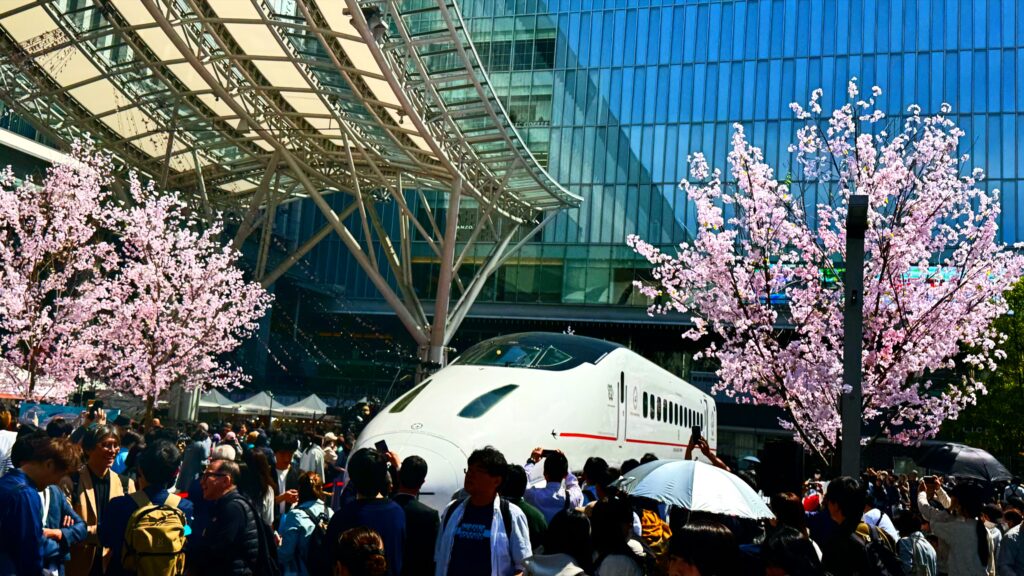
The reason I’m writing about Tsubame today is not because I’ve become a train enthusiast. Honestly, my interest in trains hasn’t changed much from before.
It’s simply that the moment I was able to see “Tsubame” — standing right there in the plaza in front of Hakata Station — through new eyes felt exactly like the moment I fell in love with nihonshu. That’s why I felt compelled to write this. This, I believe, is the power of narrative.
There are breweries that were completely destroyed by earthquakes, deemed impossible to rebuild, and yet — with the help of fellow brewers — managed to recover faster than anyone expected. There are others that built new facilities in a different region and returned to brewing without ever giving up.
And there are those that came to the brink of closure due to poor sales, only to become one of the most celebrated breweries in the world.
What they all have in common is that they continue, to this day, to produce sake of breathtaking quality. Perhaps those who have overcome adversity are granted some kind of extraordinary force — something that propels them higher than before.
In any case, what makes nihonshu special and what made Tsubame special are connected at the root. When you want to enjoy something more deeply, more richly, more dimensionally — narrative is one of the most powerful tools you have.
When you fall for someone, you start to find charm even in their smallest, most ordinary details. And once you love even those small things, you find yourself drawn in deeper and deeper. It’s the same with sake. It’s the same with Tsubame.
To know the story behind something you love. Or if you want to love it even more — create your own story with it.
When your own narrative becomes layered onto something, you’ll be able to enjoy your passion in a way that’s more personal, and more special, than anyone else’s.
That’s how it was for me when I started my sake journey with Dassai. And it’s what I felt again, seeing Tsubame this time — a thought that belongs only to me.
Fin
Source: