
The world is too small to hold this sake. Dassai.
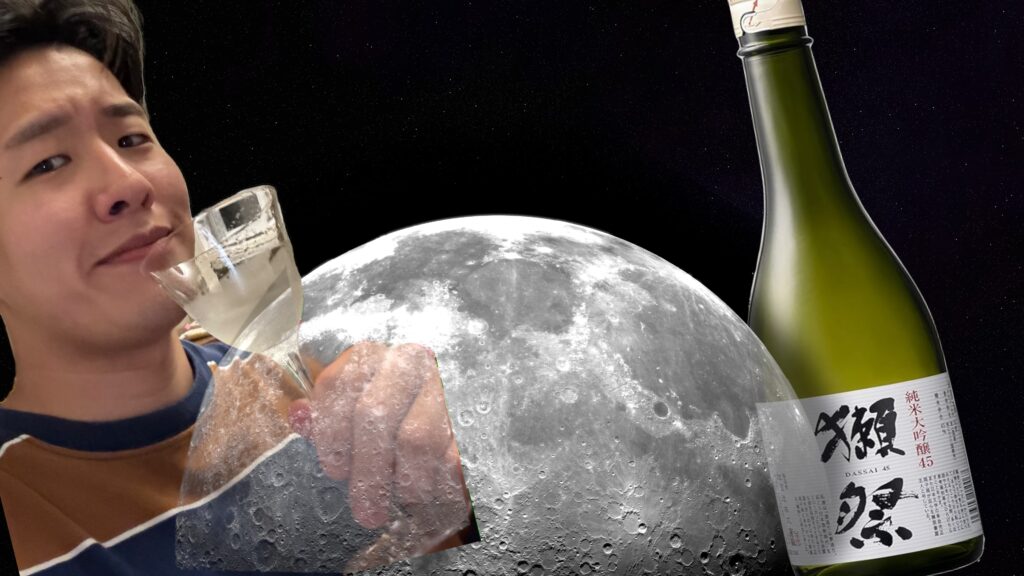
The sake that got me hooked on nihonshu — the first one I ever drank properly — and yet I’m only introducing it now, far too late.
The world is too small to hold this sake.
The one that has even pushed into fermenting in outer space.
The number-one sake souvenir pick at duty-free shops, and the one you can find (probably) at Don Quijote stores across the country.
That sake — none other than Juyondai——
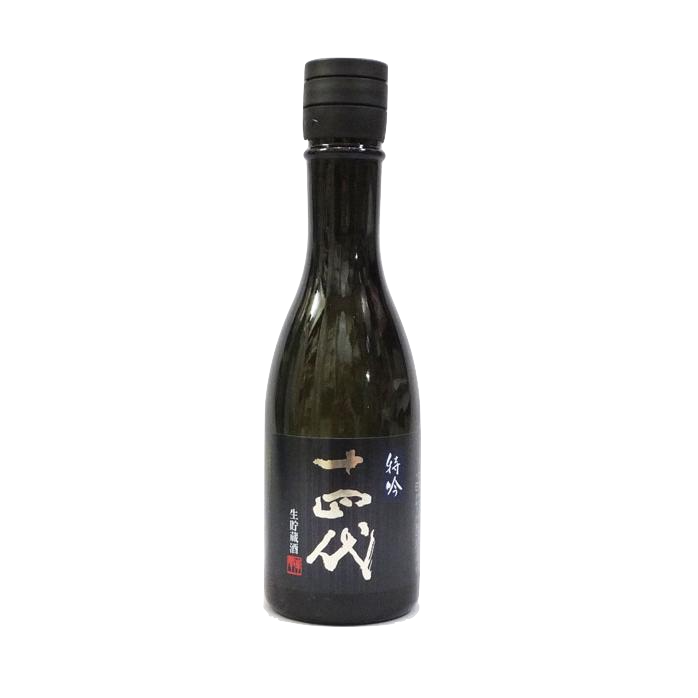
Just kidding.
The sake I’m introducing today is Dassai.
Today, let’s talk about Dassai — from its beginnings to where it stands now, and what I personally think about it.
The History of Dassai
Asahi Shuzo, the brewery behind Dassai, traces its origins to a brewery built in 1770. In 1910, a man named Sakurai Kiichi acquired it and renamed it Sakurai Sakaba. After World War II, in 1948, Sakurai Sakaba was renamed once more — this time to Asahi Shuzo, the name it carries today. (And apparently, that name has caused confusion ever since — people still ask whether they’re somehow connected to the beer company, or perhaps to the newspaper group.)
It was never always the nationally celebrated brewery it is today — much like any other brewery starting out. Back then, they produced an ordinary sake called Asahi Fuji, and sales weren’t bad, riding the wave of Japan’s postwar economic boom. But when the Oil Shock hit in 1973, Asahi Shuzo began to slide. Then, in 1976, a man who would become the third-generation kuramoto — and the driving force behind Dassai’s rise — returned to the brewery. That man was Sakurai Hiroshi. (Note: He hadn’t taken over yet at this point. The second-generation kuramoto was still his father, Sakurai Hiroji. Not a typo — Hiroji for the second generation, Hiroshi for the third.) (Personal note: I’d love to try Asahi Fuji someday.)

The Birth of Dassai — The Third-Generation Kuramoto Takes the Helm
Hiroshi returned to the brewery to help save the family business during its darkest period.
But his father Hiroji held firmly to the sales strategies of the economic boom years — the ones that had worked before the Oil Shock — and clashed repeatedly with Hiroshi, who believed the brewery could only survive by changing course.
Eventually, Hiroshi left. The rift between father and son was never fully healed.
It wasn’t until Hiroji passed away that Hiroshi was finally able to step in — becoming the third-generation kuramoto in 1984. By the time he took over, sales had fallen to a third of what they had been a decade earlier, and nationwide sake consumption was in steady decline.
*It was an inevitable tide — shochu, wine, whisky, and beer were all growing, while sake was shrinking.
The dominant sake of the era was futsushu — the everyday category with lower rice polishing ratios and added brewer’s alcohol — and Asahi Fuji was no exception.
Sakurai Hiroshi understood that futsushu was the mainstream.
But he also understood that the mainstream was in decline. Rather than investing in a falling market, he decided to carve out a new one.
What he created was Dassai — a brand where every single product in the lineup is junmai daiginjo. He used only Yamadanishiki, the rice variety most prized for sake brewing, across all products.
And rather than targeting the local market, he set his sights on Tokyo from the very beginning. He also moved away from terroir-dependent brewing, instead adopting a model driven by science and systematic management — one that could produce sake of consistent quality year-round.
The result, as everyone now knows: Dassai became virtually the only Japanese sake sold across the entire world.
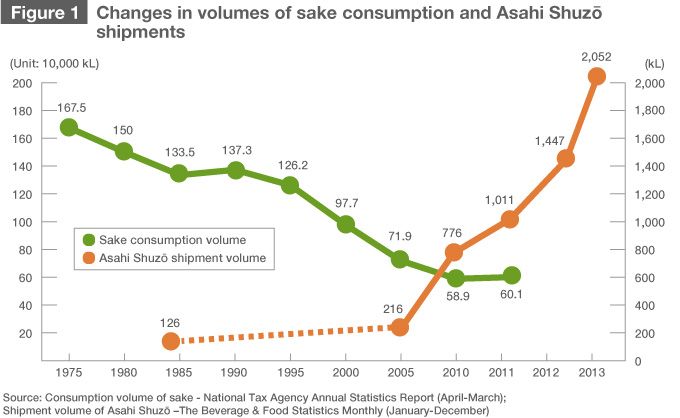
Source: https://www.nippon.com/en/features/c00618/
Today
In 2016, Sakurai Hiroshi handed the reins to his son, Sakurai Kazuhiro, as the fourth-generation kuramoto — though “chairman” might be the more accurate title now, given that the operation has grown well beyond a traditional brewery into a full corporation.
Where Hiroshi overhauled the lineup from futsushu to junmai daiginjo and built Dassai’s name from Tokyo outward across Japan, Kazuhiro has focused on taking Dassai beyond Japan entirely — out into the world.
He built a brewery in New York dedicated to producing Dassai Blue, and opened a restaurant in the heart of Paris serving Dassai.
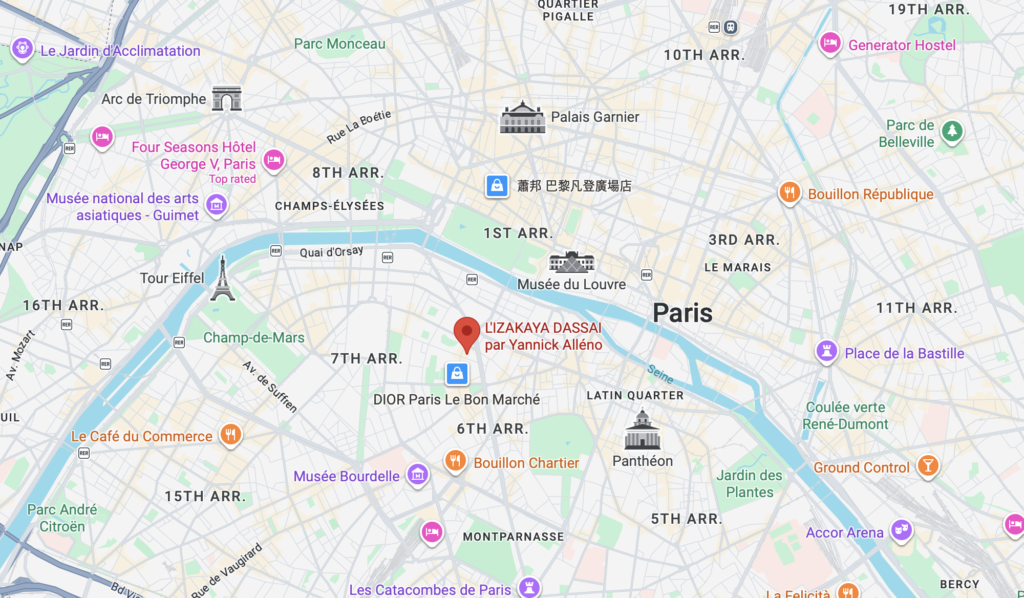
Today, Dassai is exported to roughly 40 countries, with global sales accounting for around 40% of total revenue — a figure that speaks to just how central overseas markets have become to the company.
(China leads, followed by the United States, then Europe.)
And just recently — he left a comment on my post on NOTE.

Revenue of ¥97 million in 1984 grew to ¥1.3 billion by 2010, surpassed ¥16 billion in 2022, and exceeded ¥21.3 billion in 2025 — a growth trajectory that speaks for itself.
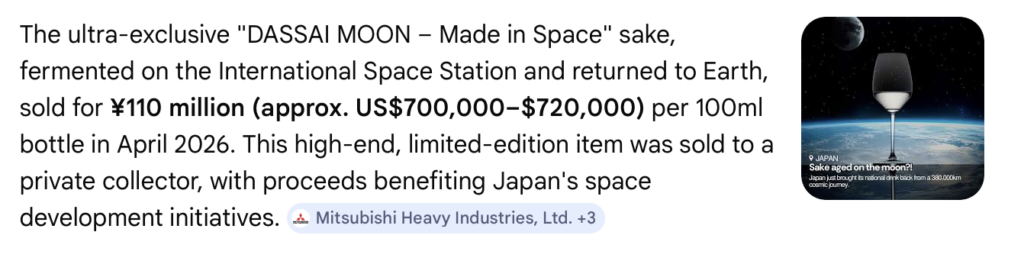
And most recently, with an eye toward a future where humanity might one day live in space — building breweries on the moon or elsewhere, much like Dassai Blue in New York — Asahi Shuzo conducted a demonstration experiment: fermenting rice in space.
The result was Dassai Moon, successfully brewed. (Fermentation through the moromi stage was completed aboard the International Space Station; the moromi was then returned to Earth, where pressing and bottling took place in Japan.)
On the way home from buying lunch with my wife, I spotted an ad on the side of a bus. “Think we could drink that someday?” I said. Then I saw the price. “Hmm!” And promptly forgot about it.
Closing Thoughts
As I’ve mentioned before, Dassai is the sake that helped set the direction of my life.
There was a period when I was working as a nurse, carrying a vague but persistent feeling that spending my whole life in nursing wasn’t quite it — that something else was out there for me.
It was a glass of Dassai after a shift that nudged me onto the path of sake, which led to studying Japanese, which led to diving deeper into nihonshu.
And somewhere along that path, I met the woman who is now my wife, got married, and had a child. To say all of that was thanks to Dassai would be a stretch.
But there’s no question that Dassai steadied my drift, at least for a while. That’s how much weight it carried for me back then.
The more sake I drank, the more breweries I discovered — and every time, the sake those breweries made was worth it. Even sake I received as gifts, knowing nothing about where it came from, was delicious. These experiences stacked up, and nihonshu kept getting better and better.
This is actually the first time I’ve sat down and properly researched Asahi Shuzo in depth — and as I suspected, it’s a genuinely compelling brewery.
There are others that commercialized junmai daiginjo around the same era — Kokuryu comes to mind. But what sets Dassai apart is what I’d call the Sakurai Spirit: the boldness to scrap everything — the lineup, the system, the whole approach — and aim squarely at Tokyo, at the mainstream, at the world. I think it’s that spirit that made Asahi Shuzo into the brewery that could produce something like Dassai.
That’s why it became the most recognized Japanese sake overseas. Dassai 23 in particular has firmly established itself as a marker of premium sake — when I was in Korea, wealthy business owners would often bring a bottle of Dassai 23 corkage when entertaining important guests. (Kubota Manju made appearances too.)
One person’s conviction in 1984 multiplied the brewery’s revenue 220 times over 40 years. He imagined a future, then went and built it. And in 2025, Hiroshi wrote in his diary on the brewery’s website that the next goal is ¥10 billion in revenue. I can’t help but wonder how far Dassai will go.
As for me — I didn’t get to try Dassai Moon this time, but… Maybe next time? Oh, I’ll definitely drink it!!
Sources:
https://dassai.com/us/diary/005931.html (History of Dassai) https://www.nippon.com/en/features/c00618/ (Sake consumption data, background on Dassai’s founding)