
Jumaiginjo:1972, Urakasumi(浦霞).
<Warning: Personal Story Ahead 🚨>
When people think of Miyagi Prefecture, the sake that immediately comes to my mind is Miyakanbai.
It’s a sake that both my wife and I love, and since “Miyagi” and “Miyakanbai” sound a bit similar, hearing “Miyagi Prefecture” makes me think of it almost reflexively.
And when talking about Miyakanbai, you can’t leave out the story of how it overcame the Great East Japan Earthquake. Maybe because it’s from the same prefecture, there’s another brewery with a very similar experience.
That brewery is the one behind Urakasumi, the sake we’re talking about today. It’s an ultra-cool brewery that successfully overcame the disaster. (“Ultra-cool” meaning extremely awesome, haha.)
So, let’s start with the history of Urakasumi.
History
In 1724, a brewery was founded in Shiogama City, Miyagi Prefecture.
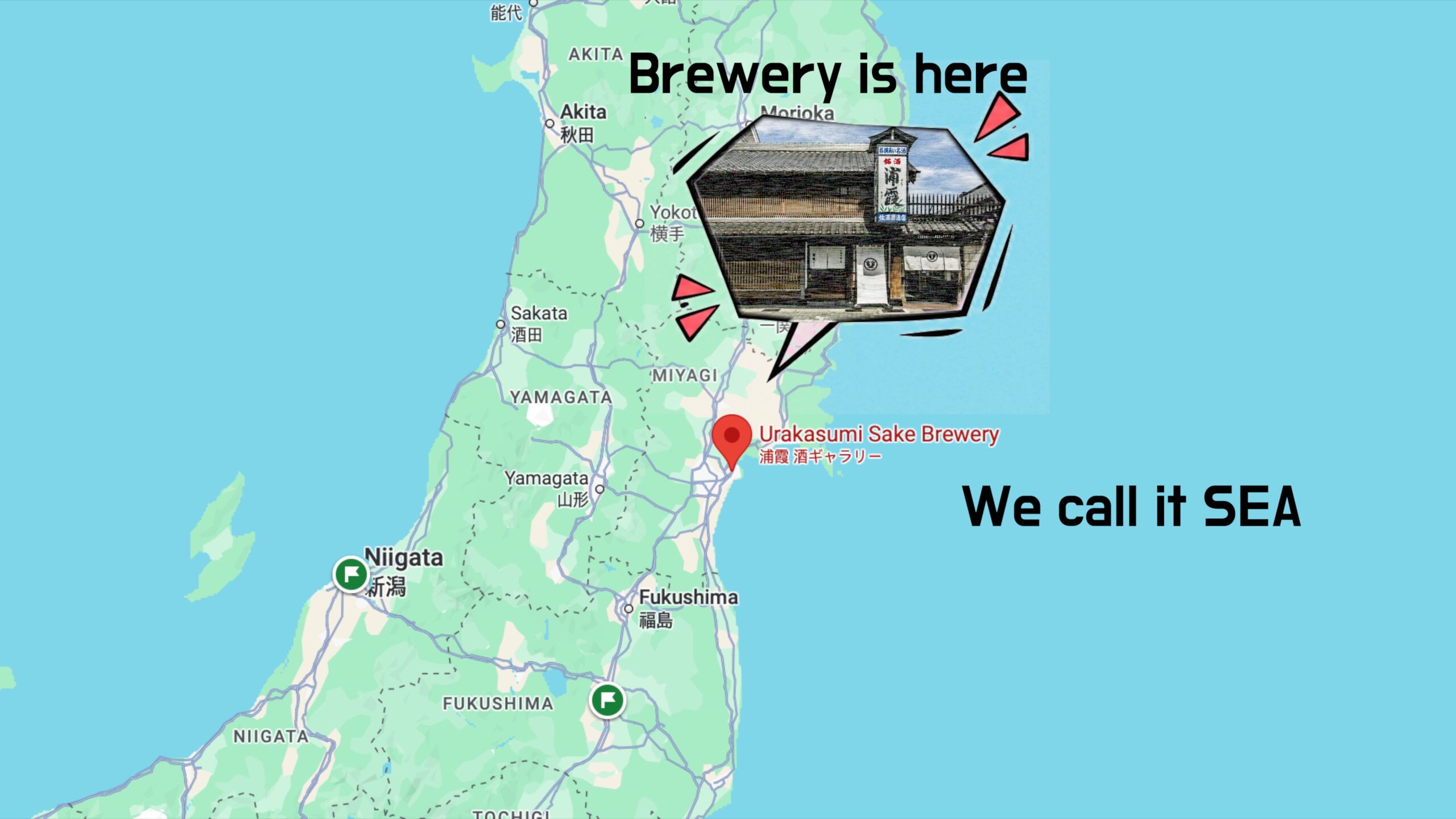
This brewery, now over 300 years old, is the very brewery behind Urakasumi, the sake we know today.
→ Its official name is not “Urakasumi Brewery” or “Urakasumi Shuzo,” but Saura Co., Ltd. (Brewer of Urakasumi). However, for the sake of smoother reading, I’ll refer to it simply as “Urakasumi Brewery” throughout this article.
Just as Imanishi Shuzo, the brewery behind Mimurosugi in Nara Prefecture, has close ties to Omiwa Shrine, the birthplace of seishu (clear sake), the prototype of modern Japanese sake, breweries have long shared an inseparable relationship with shrines and religion.
(There are even theories that people in those days believed being intoxicated was the state in which one came closest to the gods.)
Then, in the late Meiji period of the 1800s, the brewery was ordered by the Date clan of Miyagi to produce sake for shrine offerings, and that tradition has continued all the way to the present day.
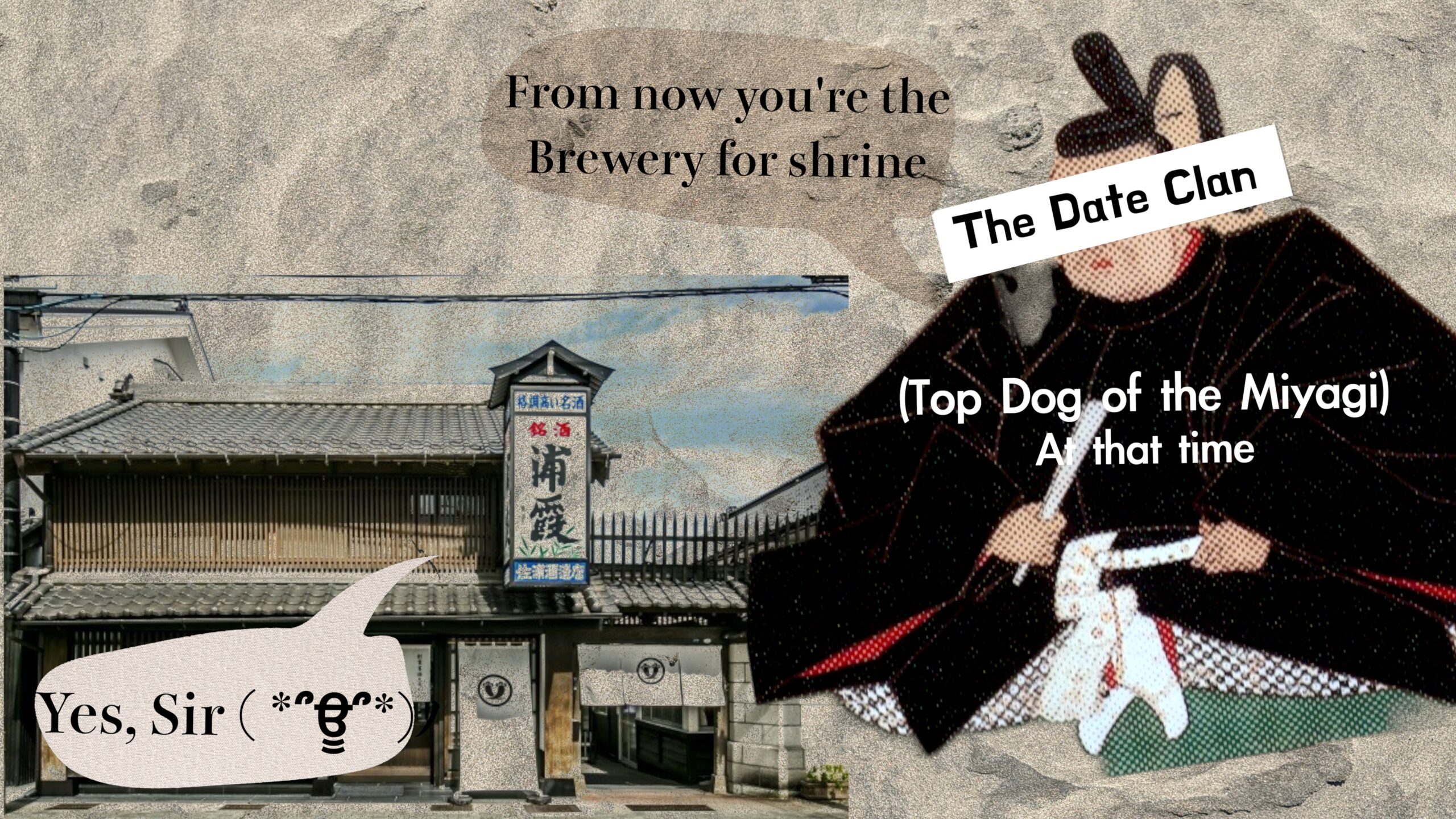
At the time, the region we now know as Miyagi Prefecture was called the Sendai Domain (Sendai-han), and the Date clan that ruled it began with none other than Date Masamune.
Because Date Masamune highly valued shrines and actively promoted sake, he took a strong interest in local breweries and invested considerable time, money, and effort into improving brewing techniques throughout the region.
(Considering the historical context, it was likely because sake was regarded as a sacred offering to the gods.)
During the Edo period, the most famous sake-producing areas were places like Nara and Hyogo, which are part of today’s Kansai region.
To raise the level of brewing in his domain, Date Masamune invited brewing specialists from Nara and had the people of Miyagi learn what was, at the time, cutting-edge sake-making technology.
(When you remember that Nara is considered the birthplace of seishu—the clear sake that became the foundation of modern Japanese sake—it becomes easier to understand why Miyagi sought expertise from there.)
And keep in mind: this was an era without cars or airplanes. Bringing even one specialist all that way would have been no small task.
That’s pretty impressive!
The Great Shiogama Fire of 1867, and then...
At the time, a massive fire broke out in the Shiogama area where the brewery was located, and many people lost their homes.
In response, the brewery provided timber for rebuilding houses and also supplied rice to those in need.
Noblesse oblige.
Isn’t that cool?
The area that the Saura family (the family that has continued operating the brewery) helped at that time is now called Saura-cho.
In Korean terms, it would be something like Admiral Yi Sun-sin District.
In American terms… maybe Washington, D.C.?
Then, 150 years later, in 2011.
About 150 years later, in 2011, just like Kanbai Shuzo, Urakasumi Brewery suffered major damage from the earthquake.
Even though the brewery itself was heavily affected, they contributed to the region’s recovery through what they did best: brewing sake.
(I’d like to explain things chronologically, so I’ll go into more detail about 2011 a little later.)
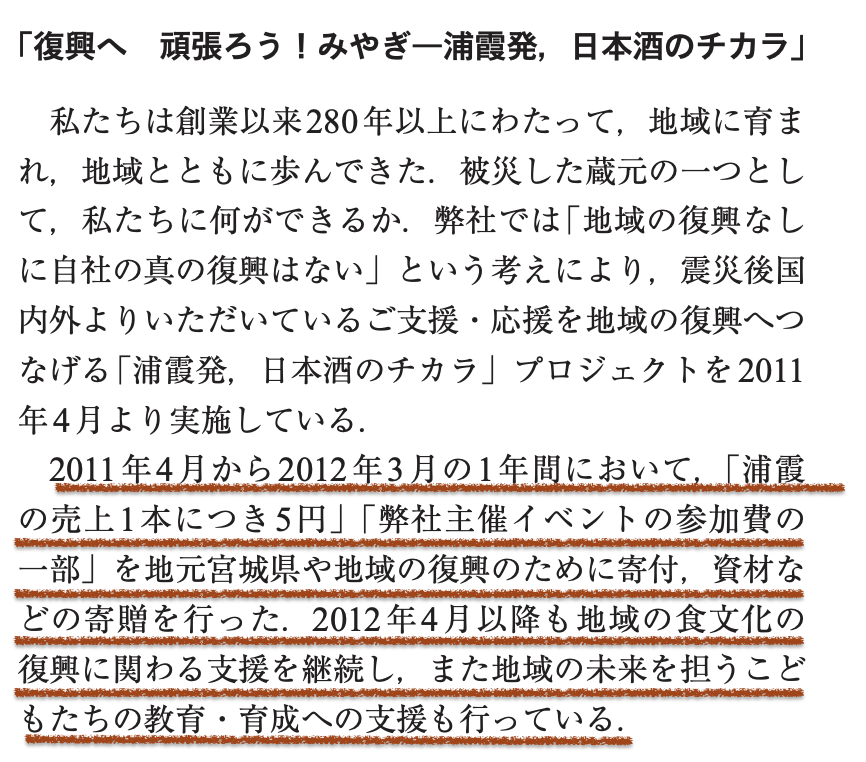
(For one year, from April 2011 to March 2012, the brewery donated 5 yen for every bottle of Urakasumi sold, as well as a portion of the participation fees from events it organized, to support the recovery of Miyagi Prefecture and local communities. It also donated various materials and supplies. Furthermore, after April 2012, it continued supporting the revival of local food culture and has remained committed to educational and developmental programs for children who will lead the region’s future.)
In 1949, Mr. Sagoro Hirano was appointed as the toji (master brewer).
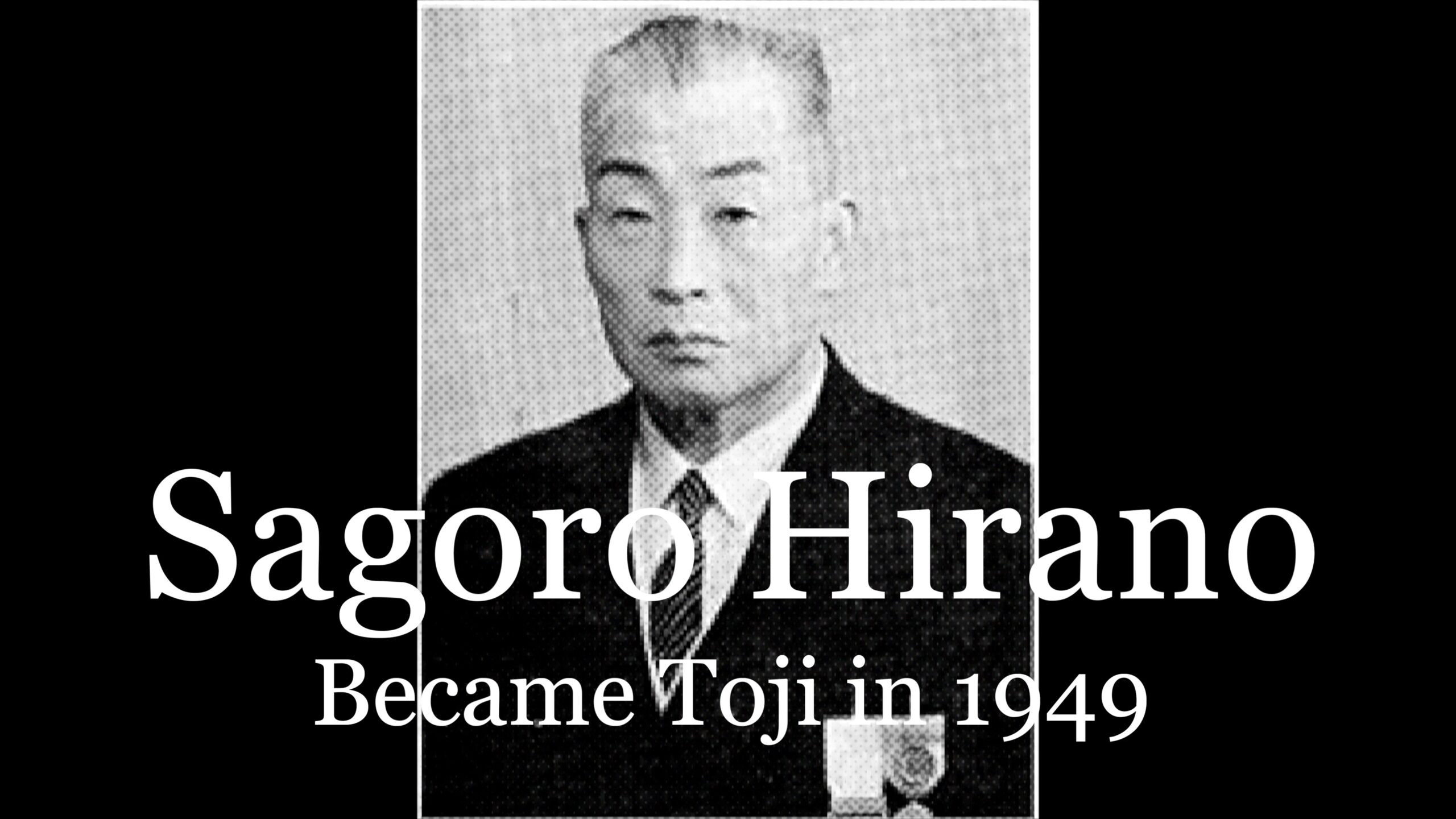
The toji who laid the foundation for Urakasumi’s brewing style—one that continues to this day—and who led the brewery to its first national award was Sagoro Hirano, who became Urakasumi Brewery’s master brewer.
He reviewed everything from A to Z, from brewery cleanliness and employees’ attire and attitude to the brewing methods themselves.
As a result, Urakasumi went on to win recognition at a national competition.
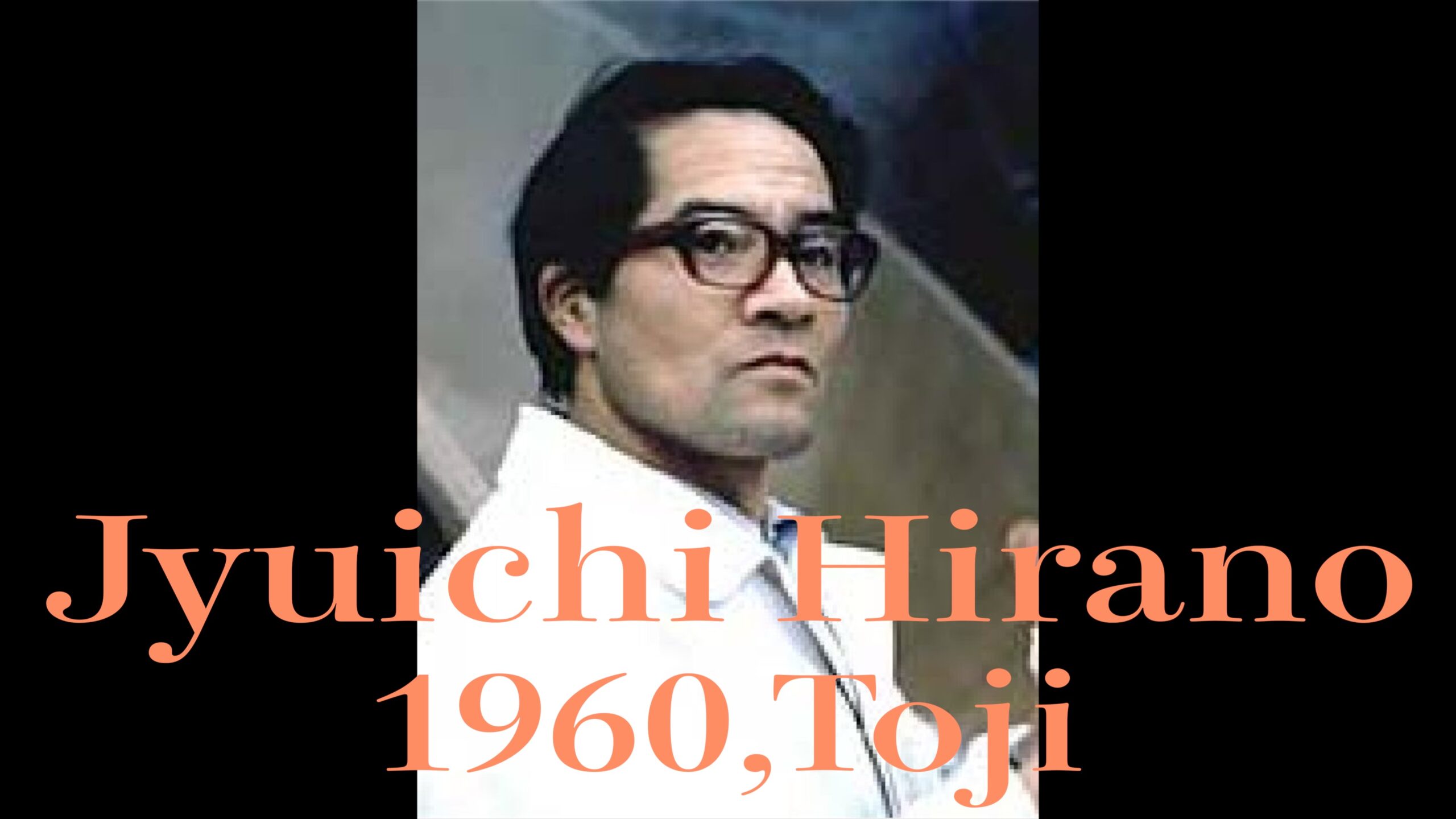
Following him, Sagoro Hirano’s nephew, Shuichi Hirano, became the toji in 1960. (I guess color photography had become common around this time.)
Mr. Shuichi served as Urakasumi Brewery’s toji from 1960 to 2007, earning numerous awards at national competitions during that period.
He also achieved the remarkable feat of creating Urakasumi Zen, Urakasumi’s flagship sake and one of the pioneers that sparked the junmai ginjo boom in Japan.
(Meanwhile, Mr. Sagoro continued working as the brewery’s technical advisor and also served as chairman of the Miyagi Toji Association and the Nanbu Toji Association, dedicating himself to training the next generation of brewers.)
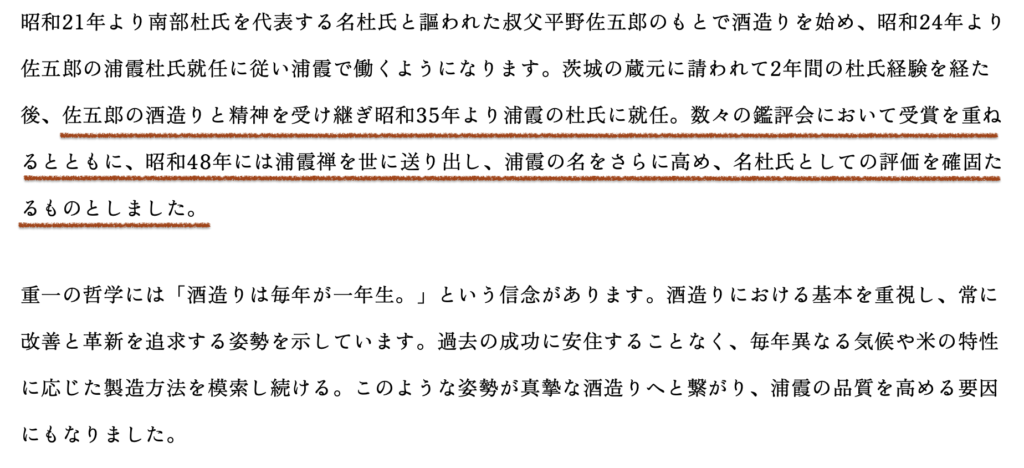
Following Mr. Sagoro, he became the toji in Showa 35 (1960) and later released Urakasumi Zen in Showa 48 (1973).
He believed that “in sake brewing, you are a first-year student every year.”
→ Even when using the same rice variety and the same brewing methods, the climate during the brewing season changes slightly from year to year, and the condition of the rice also varies. Therefore, brewers must value the fundamentals and approach each brewing season with a fresh mindset, as if starting anew every year.
In 1972, Urakasumi Zen, a flagship sake of Urakasumi that continues to be sold to this day, was born in defiance of the trends of its time.
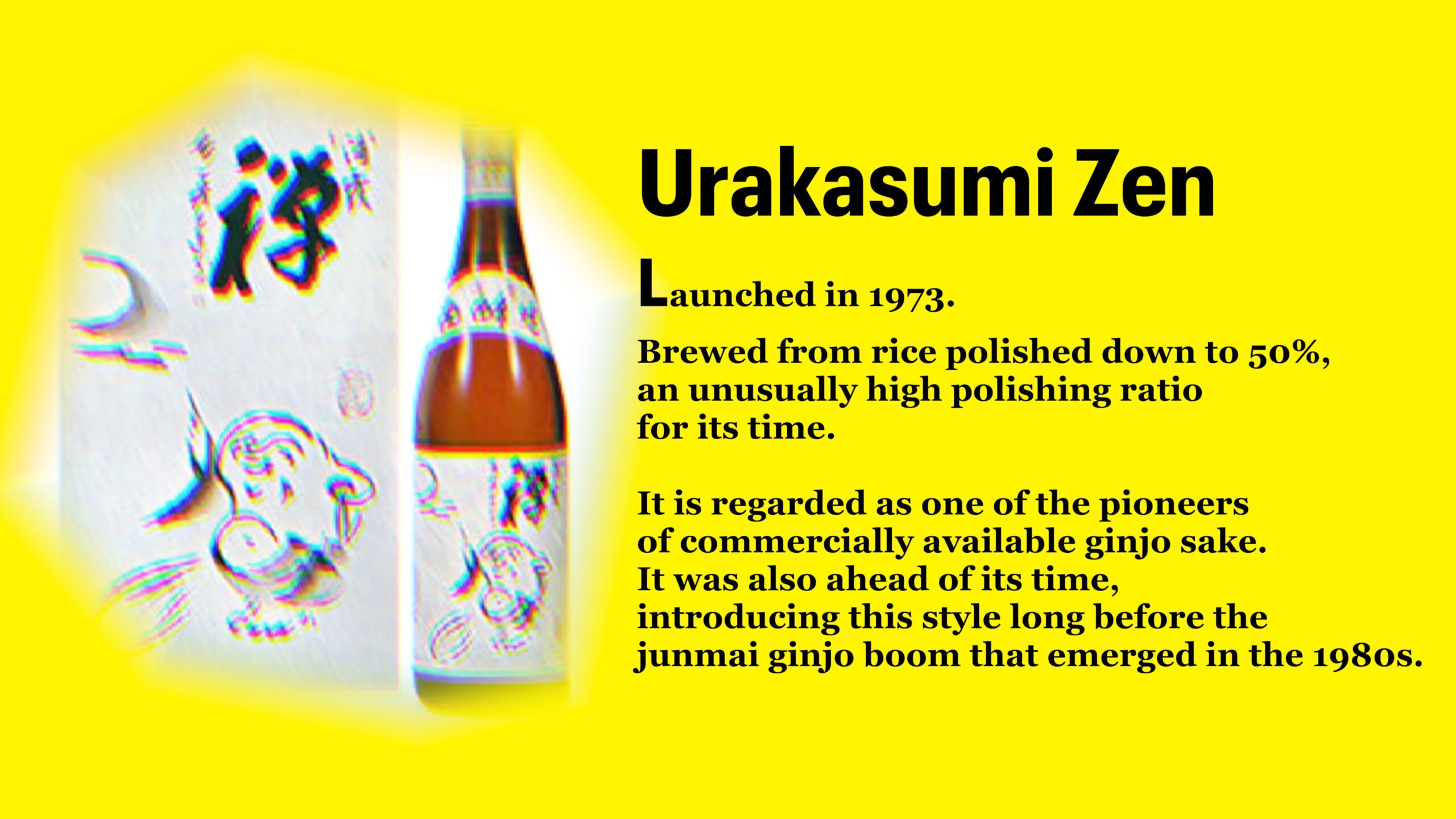
Of course, at the time, sake polished to this extent was virtually unheard of, and many people criticized it as being “too aromatic.”
However, as if proving that truly great sake ultimately survives, a junmai ginjo boom began to sweep through the sake world. Urakasumi Zen also gained recognition and gradually spread through word of mouth among sake enthusiasts.
(A short side story: Zen was originally developed for export to France. However, because exporting to France was difficult at the time, it eventually ended up being sold in Japan instead.)
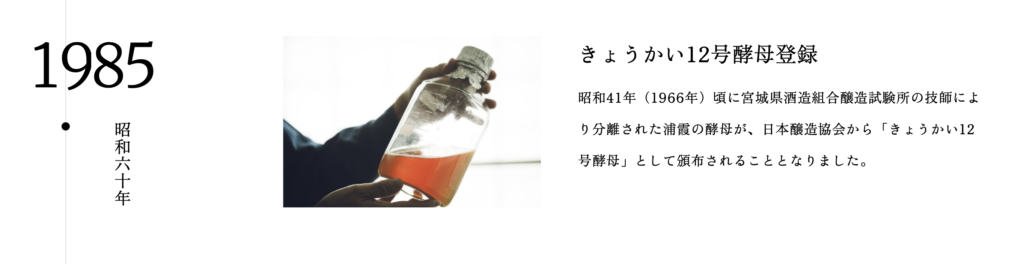
The finishing touch: A yeast strain discovered at Urakasumi Brewery was registered as an official Kyokai yeast.
In 2011, the Great East Japan Earthquake struck.
The earthquake itself did not cause severe damage, but the tsunami that followed flooded the brewery, rendering more than 30,000 bottles of inventory, electrical control panels, filtration equipment, and various other machines unusable.
As a result, the brewery could do little more than watch over the 32 fermentation tanks that were active at the time.
The moromi that missed their intended processing window continued fermenting for too long and were no longer able to deliver their intended performance.
However, even under those circumstances, wild bacteria did not enter the moromi and completely ruin the fermentation.
I wondered why, and it turns out there was an interesting explanation. ⬇️
You’ve probably heard at least once about the importance of the microorganisms living in our gut.
The idea is that when the beneficial microorganisms naturally present in the gut are healthy, they help support overall recovery and well-being.
According to one explanation:
“A brewery may work in much the same way. Because microorganisms beneficial to sake fermentation were already spread throughout the brewery, there may have been little room for harmful bacteria to take hold.”
(See the PDF file in Source No. 5.)
Afterward, just like Kanbai Shuzo in the same prefecture, the brewery successfully rebuilt.
Urakasumi eventually expanded beyond Japan and succeeded in exporting its sake worldwide, and it is now said to be exported to 20 countries.
In South Korea, imports are handled by Nihonshu Korea, and judging from posts that can still be found from eight years ago, it appears that the brand has been imported there for quite some time.
In Closing (My Thoughts)
Thank you to everyone around the world who loves Nihonshu and has visited Sakagura Miyamoto. Sakagura Miyamoto was created to make Nihonshu more than just a drink with good taste and aroma — but something that lives in your memories. For those who want to turn Nihonshu from a simple alcoholic beverage into a medium that brings back moments and stories, and for those who want to describe Nihonshu in a deeper, more dimensional way, we invite you to join the Sakagura Miyamoto membership. The content below is for members only. Thank you.