

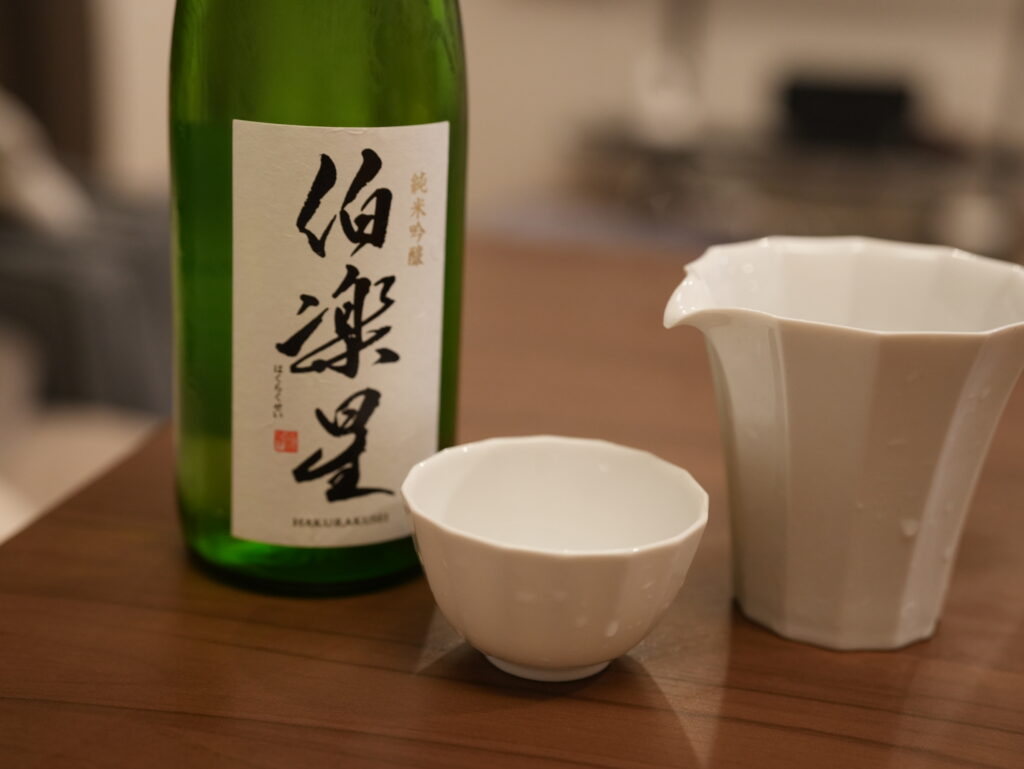
When You Can't Pick the Right Sake for Dinner, There's Hakurakusei
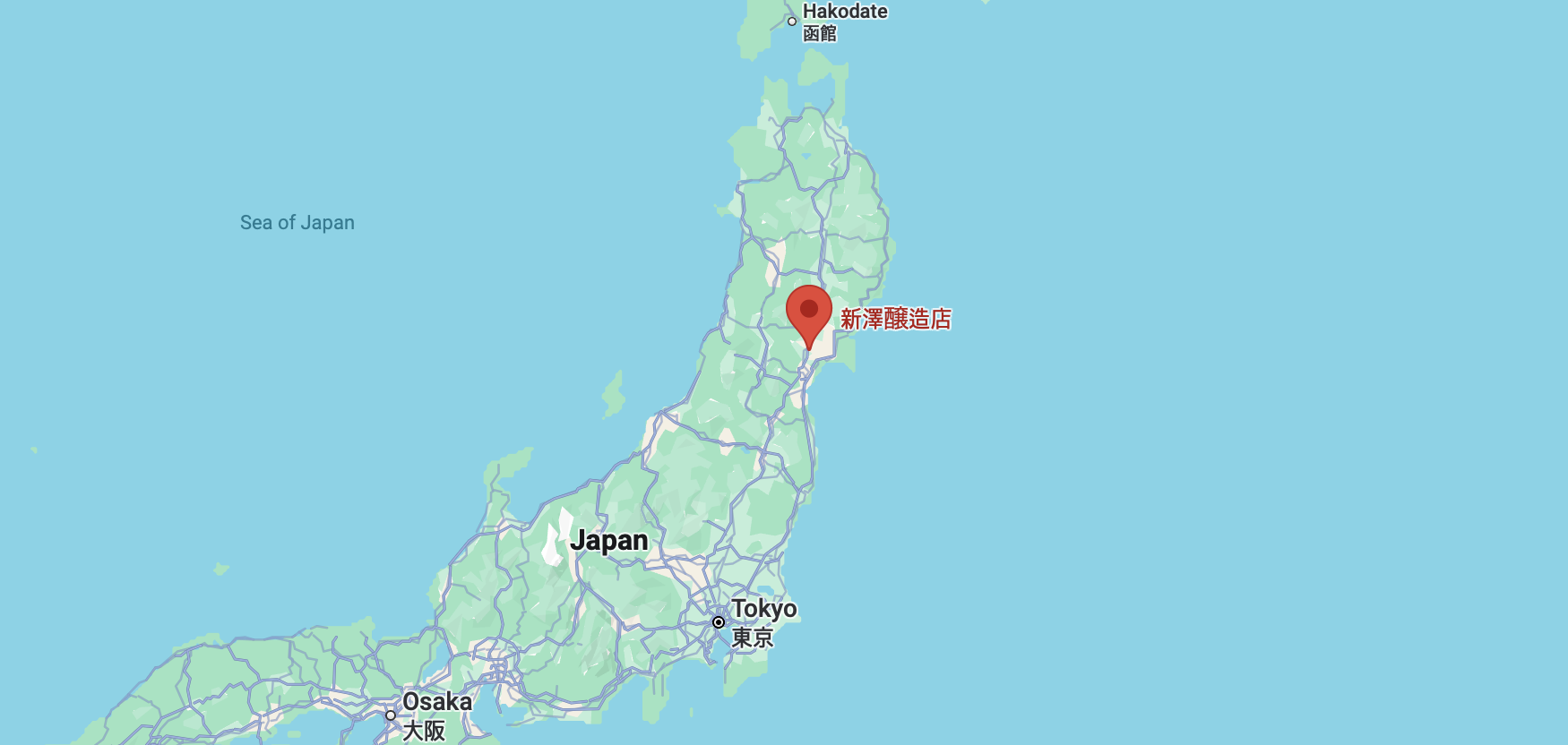
Founded in 1874 in Ōsaki City, Miyagi Prefecture, Niizawa Brewery is the producer of the sake I want to introduce today, Hakurakusei.
Now led by its fifth generation, the brewery has a clear philosophy. They describe their sake as aiming to become the “ultimate food-pairing sake.”
Through years of consistent effort toward that goal, Hakurakusei has already earned a strong reputation among nihonshu enthusiasts and is widely recognized as one of the most representative styles of sake meant to be enjoyed with food.
The purpose of this article is simple.
I hope that one day, when you walk into a sake shop and see Hakurakusei on the shelf, this story comes back to mind and helps you reach for the bottle.
More than that, I hope you can enjoy Hakurakusei not only through its taste or aroma, but by thinking about the story and ideas behind it, allowing the experience to become more meaningful and memorable.
The fifth-generation head of Niizawa Brewery, Iwao Niizawa, graduated from the Faculty of Agriculture at the University of Tokyo.
Even before entering university, he was already aware of the serious challenges facing the family brewery. At the time, the brewery carried debts of 200 million yen, while annual sales were only about 20 million yen. His parents were not in a position to support his tuition, and he was only able to attend university by borrowing money from relatives.
After leaving Miyagi for Tokyo, Niizawa heard something that would later shape the future of Hakurakusei. At a bar in Tokyo, he learned that customers often ordered highly polished, premium sake such as ginjo or daiginjo, yet many stopped after a single glass because the sake did not pair well with food.
This experience later became the foundation for Hakurakusei’s development as a sake designed for drinking with meals.
In 1999, after graduating, Niizawa returned to the brewery and began working as its successor.
Three years later, in 2002, Hakurakusei was released.
Like many great trees that go unnoticed while still young, Hakurakusei did not receive much attention at first.
However, after being featured in the Japanese magazine dancyu, demand grew rapidly—not only locally but from across Japan.
Even then, Niizawa chose not to increase production suddenly. Instead, he prioritized existing customers and expanded distribution gradually and carefully. Production grew from 36 kiloliters to 270 kiloliters, and annual revenue rose to around 400 million yen, allowing the brewery to finally repay all of its debts.
Then, in 2011, the Great East Japan Earthquake struck.
Three sake storage buildings collapsed, and the family home was completely destroyed.
A brewery that had only just recovered from years of debt was once again brought to the brink.
Yet the reason we can still drink Hakurakusei today is because brewing never stopped. With support from around fifty breweries across Japan, Niizawa Brewery successfully rebuilt in Kawasaki Town, about 70 kilometers from Ōsaki City, and continued production.
From there, the brewery steadily regained momentum, winning numerous awards in sake competitions and firmly establishing Hakurakusei as one of the leading examples of food-pairing sake in Japan.
Niizawa Brewery considers Hakurakusei to be the “ultimate food-pairing sake.”
To achieve that ideal, they continue to invest both time and resources into refining their brewing.
A food-pairing sake is, simply put, a sake meant to be enjoyed alongside a meal. There can be many interpretations, but in the world of nihonshu, a truly good food-pairing sake is one that does not interfere with the flavor of the dish. Instead, it brings out the hidden potential of the food itself.
From the very beginning, Hakurakusei was created with this purpose in mind. It was born to be a sake that supports the food without overpowering it, allowing the person drinking it to naturally and easily sense the full character of the dish.
Curious about what an “ultimate food-pairing sake” might actually mean, I first tried Hakurakusei twice through direct import when I was living in Korea.
Buying it that way meant paying nearly twice the local price. Naturally, that raised my expectations, and it made me question more critically whether the sake truly lived up to the values the brewery claimed.
Even with that higher threshold in mind, Hakurakusei made its intention clear from the very first sip. It was easy to understand why it aimed to be the ultimate food-pairing sake—and how it had come to be recognized as one.
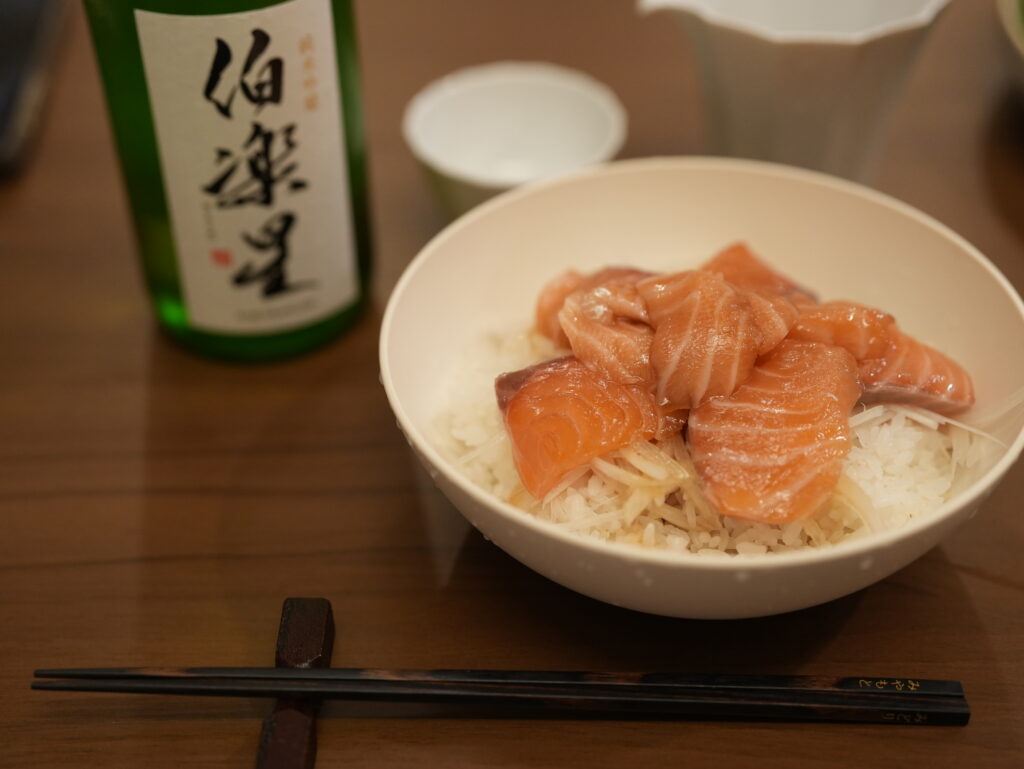
While writing this article, I once again tried Hakurakusei with a variety of dishes.
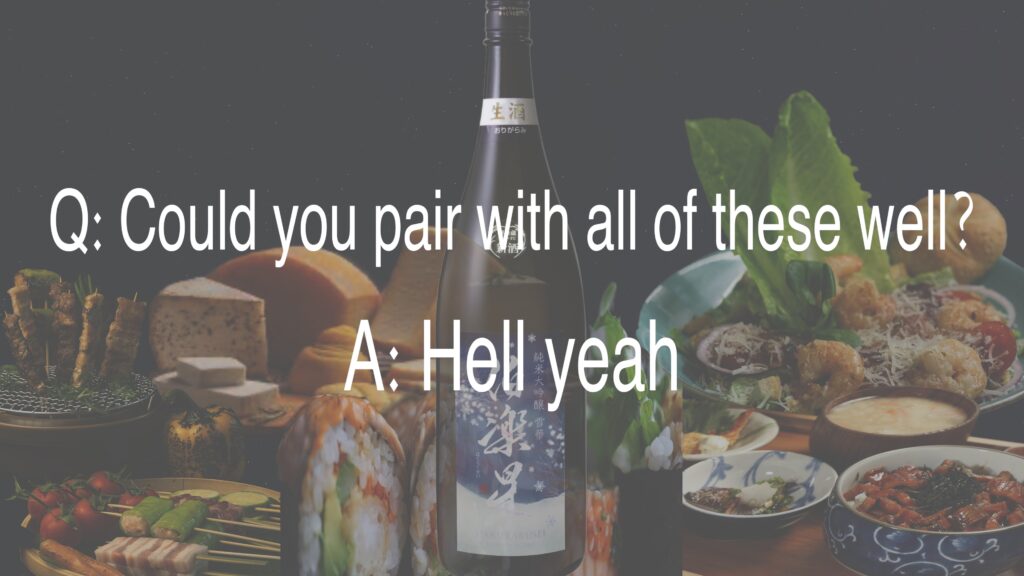
It paired naturally with everything I prepared.
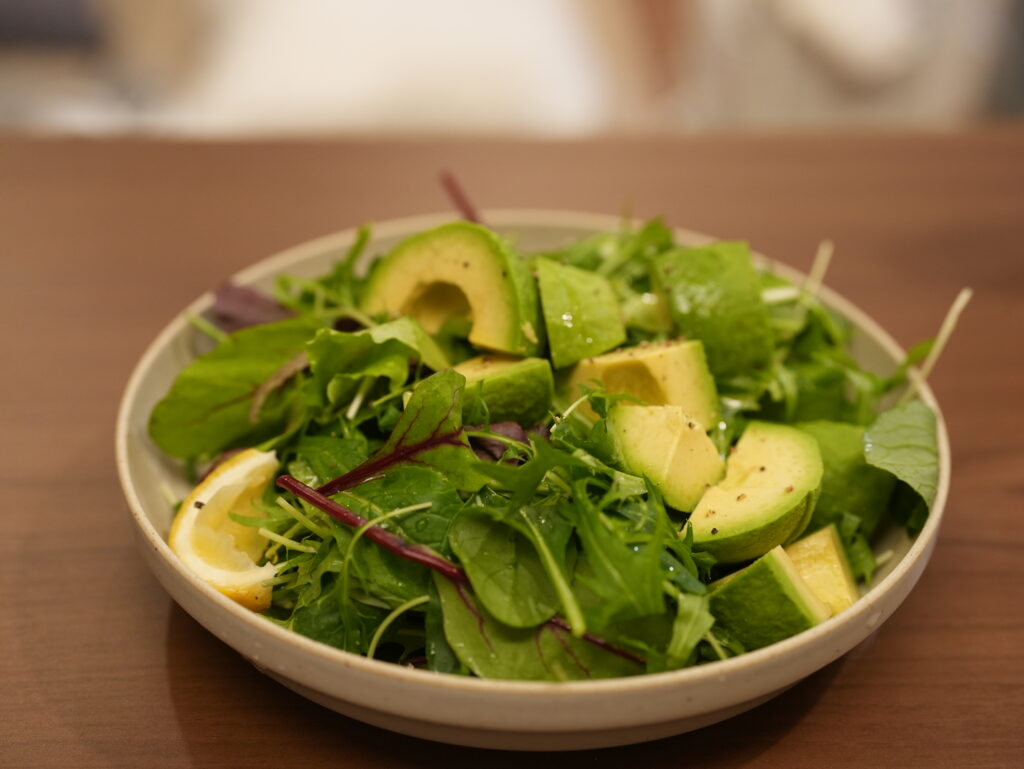
Avocado salad, salmon rice bowl, and even taco rice.
With the salad, the sake lifted not only the freshness of the vegetables but also their slight bitterness and aroma, while allowing the umami of the avocado to come through clearly. After finishing a bite of the vegetables and taking a sip, the lingering aromas of the greens and avocado rose again in the mouth, creating a moment where the food could be enjoyed once more.
At that moment, I felt that this was exactly what Hakurakusei, designed from the beginning as a food-pairing sake, was meant to express.
Since ancient times, people have been drawn to stories where the protagonist overcomes hardship and ultimately rises again.
Most heroic tales follow this structure, and it is also why people are fascinated by the stories of those who succeed.
Niizawa Brewery shares a similar story.
Iwao Niizawa, the fifth-generation head who began under a mountain of debt, created Hakurakusei and brought the brewery’s name to sake drinkers across Japan. Eventually, all debts were repaid.
Then came the earthquake—something no one could stop, and no one could prevent—bringing hardship once again.
“We lost our history to the earthquake. We lost the brewery. Only people remained, and through that, we discovered that we were not as weak as we thought.”
These were Niizawa’s words in a promotional video, recalling the 2011 disaster (around the 2 minute and 10 second mark).
Words carry weight when spoken by someone who has endured hardship.
And I believe the sake made by such a person carries a certain strength as well. Only after drinking it did I fully understand what they meant by the phrase “ultimate food-pairing sake.”
The third time I drank Hakurakusei became another good memory—one where delicious food simply tasted even better.
…
Hakurakusei is a sake that rose again after hardship, but it is also the result of a brewery that succeeded in turning its ideal into reality.
With a moderate alcohol level of 15%, a clean and balanced profile, and a first impression that immediately communicates its role as a well-crafted food-pairing sake, it leaves a quiet but lasting appeal.
The bottle of Hakurakusei Junmai Ginjo I drank this time was purchased at Todoroki Saketen in Fukuoka. It is a shop that carries many of the sake I personally enjoy, and it made me appreciate once again how fortunate it is to have such a good sake store nearby.
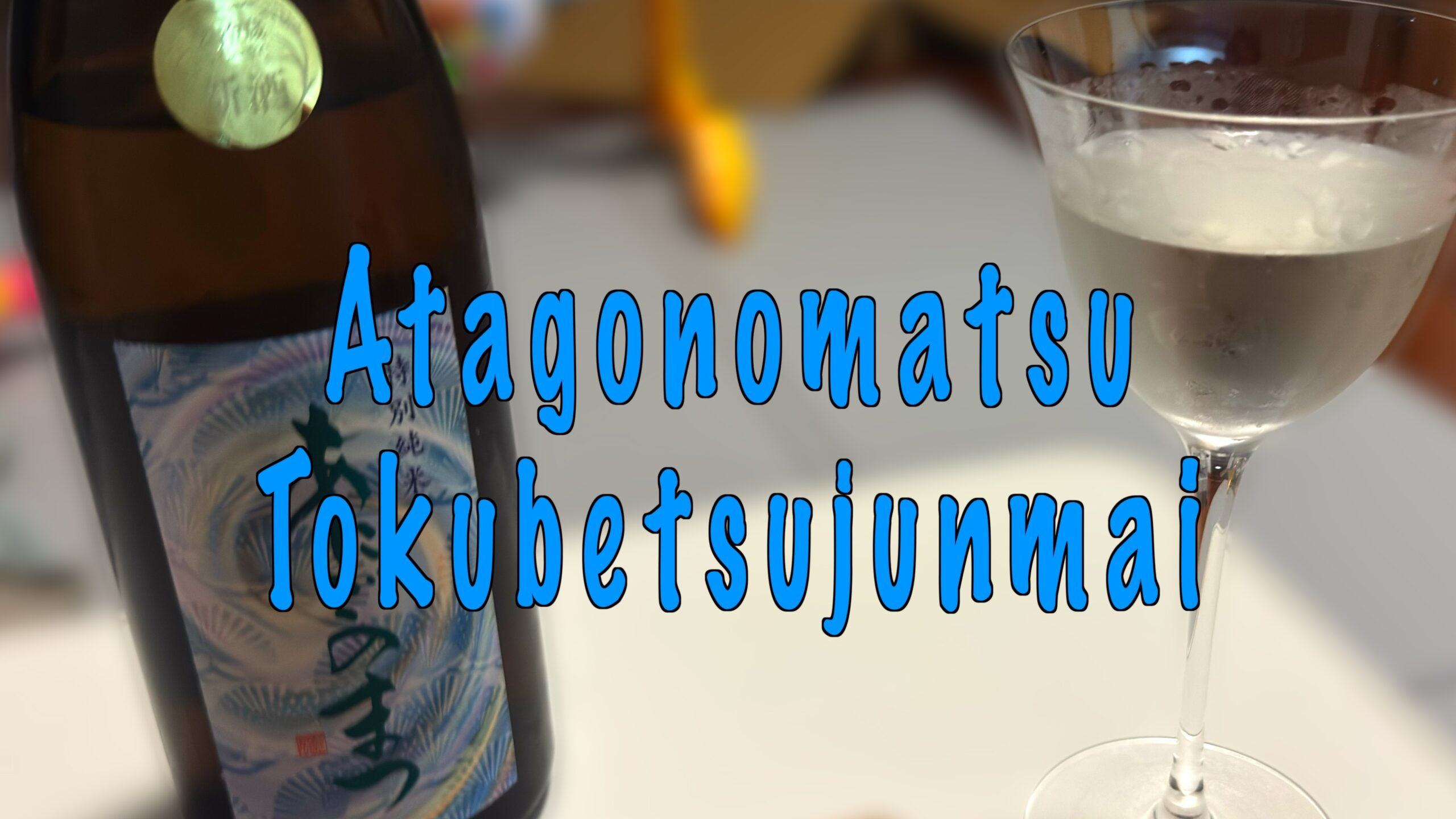
7.26 Updates
1. Trying Atago no Matsu, Another Brand by Niizawa Brewery
I bought it at Izumiya Saketen in Okinawa.
Most breweries don’t produce just one sake brand. They usually have a long-established lineup that has been sold locally for many years, along with newer brands that were developed more recently and have gained recognition across Japan.
Atago no Matsu, which I drank this time (July 26, 2026), is one such example.
The bottle I drank this time was Atago no Matsu Tokubetsu Junmai.
According to Niizawa Brewery’s website, it has pleasant aromas of melon and white peach. Personally, though, I couldn’t clearly pick up those notes.
Perhaps it would have been different in a wine glass, but I haven’t bought a new one since I broke mine, so I couldn’t find out.
Aroma (my impression):
There was a very faint alcohol aroma, but I barely noticed the koji aroma often found in dry sake, or the fruity and floral aromas that are common in easy-drinking styles.
Taste:
A very clean, crisp, slightly dry sake.
The mouthfeel is incredibly smooth, but right at the end a touch of alcohol gently taps the throat before disappearing.
That finish lifts the flavors and aromas of whatever food is still in your mouth, making it an excellent food-pairing sake.
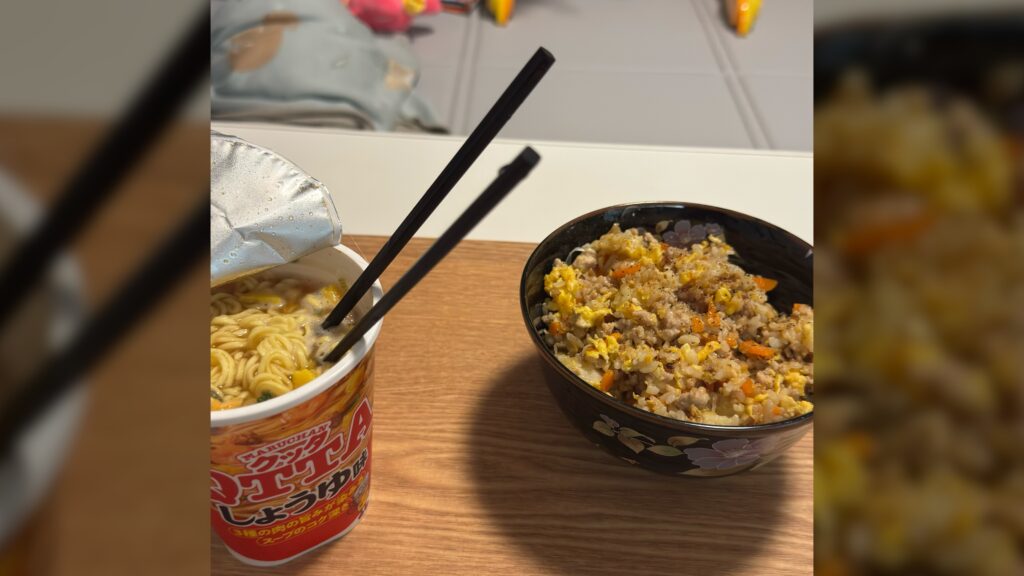
That day’s meal was Chinese fried rice and a cup of soy sauce-based instant ramen.
It paired surprisingly well with the rich, oily fried rice, and it also matched the ramen beautifully.
Neither Chinese fried rice nor instant cup noodles are particularly easy foods to pair with sake, yet Atago no Matsu handled both with ease.
Even after eating oily food, the alcohol seemed to rinse my palate clean while gently carrying the remaining oil and umami down my throat.
If it pairs this well with dishes like these, there’s hardly any need to mention how well it would go with sushi or sashimi.
Comparing It with Hakurakusei
I didn’t notice a major difference between Atago no Matsu and Hakurakusei.
Both are very easy to drink, with just enough alcohol presence to pair well with rich, oily dishes. Their clean, crisp finish also makes them a great match not only for simple salads but also for salads with dressing.
According to the brewery’s website, Atago no Matsu doesn’t change much even when served warm.
If that’s the case, I imagine it would also pair well with hot soups and nabe dishes.
That said, this next part is nothing more than my personal impression.
When I drank Hakurakusei, I remember thinking, “I could easily enjoy this even without any food.”
I didn’t quite have that same feeling with Atago no Matsu.
To be honest, I’m not sure why.
Maybe I simply prefer Hakurakusei’s label and the expectations it creates, or maybe it was just my mood that day.
Either way, I think those little factors beyond the taste itself may have influenced how I perceived the two sakes.
2. My Thoughts (Members-only Content)
Source:
https://www.skurnik.com/iwao-niizawa-quiet-revolutionary-of-the-sake-world
https://niizawa-brewery.co.jp/en/about_en/
https://sakestreet.com/en/media/sakagura-niizawa-brewery-miyagi
https://niizawa-brewery.co.jp/item/173/