
Jikon: The Sake Inspired by Juyondai That Became Mie Prefecture's Finest
History
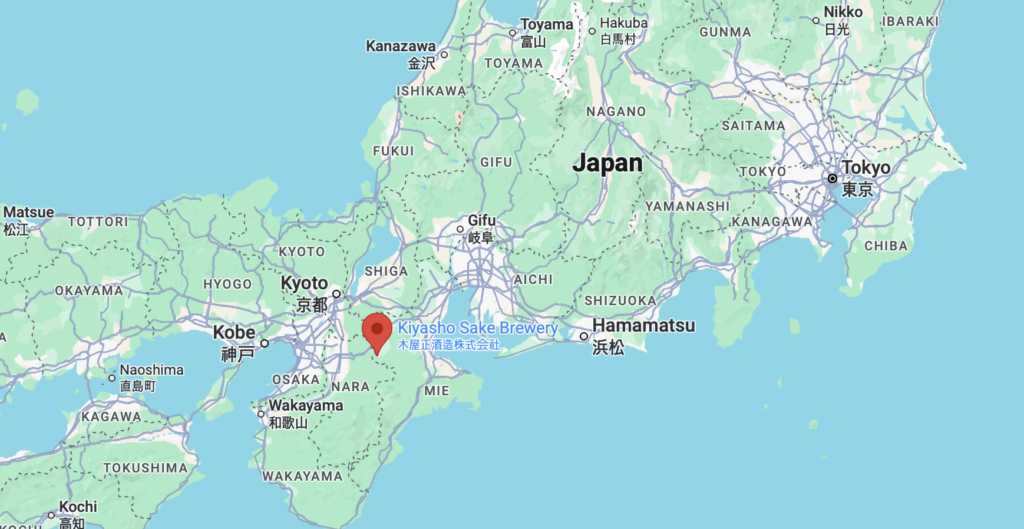
Kiyasho Shuzo (木屋正酒造), established in 1818 in Nabari City, Mie Prefecture.
Before “Jikon” was born, the brewery had been producing a sake called “Takasago (高砂).”
For approximately 200 years, it was a brewery that traded only within the prefecture — largely unknown to the outside world.
When the current kuramoto, Tadayoshi Onishi, returned to the brewery at the age of 27, it was producing only about 1,800L of sake per year. (By comparison, the massively popular Dassai produces approximately 5,400,000L annually.)
Onishi tried various approaches to promote the brewery, but nothing yielded meaningful results — and that continued all the way through 2003.
Turning Point
The turning point for Kiyasho Shuzo came after Onishi experienced Juyondai.
He began to believe that what would truly revive the brewery wasn’t pouring energy into external activities or marketing — it was making exceptional sake, the way Juyondai had done.
And so, Kiyasho Shuzo made a decisive shift: they discontinued their main product, futsushu, and committed to brewing something better.
But with no money to pay employees, Onishi had no choice but to do everything alone. And so, in 2005, the sake he crafted entirely by himself became what we now call “Jikon.” (The name Jikon means Carpe diem — don’t let this present moment slip away.)
Perhaps because it was born under the influence of Juyondai, Jikon also distributes exclusively through a small number of select retailers nationwide. (As of 2018, around 30 locations.)
And just like Juyondai, the underlying principle is the same: quality comes absolutely first, which means production volumes are never increased lightly.
This Is How Jikon Was Born. And Takasago Was Reborn.
- As mentioned above, Kiyasho Shuzo was a small brewery operating only within its local area, with futsushu as its main product and annual production of just 1,800L — a brewery with very little demand.
Wanting to spark a major change but unable to hire staff, Tadayoshi Onishi — the 6th-generation kuramoto and toji — took on every task himself: washing the rice, making the koji, and monitoring the entire fermentation process.
Throughout all of this, he approached brewing with near-perfectionist precision, guided by scientific data and meticulous measurement.
“When sprinkling the koji spores, Onishi ensures the rice is exactly 30.5°C, then cools it to 29.8°C before bringing it back up to 30.5°C, maintaining a constant 43.0°C overnight. To achieve this level of temperature control, he manages even the moisture content of the rice — measuring water down to the milliliter and timing the soaking process with a stopwatch.”
This passage, from a 2018 article, offers a glimpse into the mindset Onishi brings to his craft. It reflects his relentless effort — grounded in rigorous scientific calculation — to minimize variation in flavor across seasons.
- Around the time Jikon entered the world, Kiyasho Shuzo halted production of futsushu — and with it, Takasago also disappeared. However, in 2017, to commemorate the brewery’s 200th anniversary, Takasago was reborn, this time brewed using kioke-jikomi (aged and stored in wooden barrels) and the kimoto brewing method.
Takasago is also not easy to get your hands on, but perhaps if you visit Mie Prefecture, you might just find it — that’s what I like to think.
If I ever make it to Mie Prefecture, I’ll make a point of tracking it down. (I want to drink straight from the bottle..)
Closing Thoughts
With Jikon, I’ve now explored the background of all three premium nihonshu — Juyondai, Jikon, and Aramasa.
They are now the most celebrated names in Japanese sake, yet every single one of them has a past that nearly ended in closure.
Each time, it was a kuramoto with an unshakeable personal conviction who stepped in and took over.
When Juyondai was born, the kuramoto was reportedly working around the clock — so exhausted he ended up in the hospital. Aramasa went through the dissolution of a long-standing brewing team, only to start again with an entirely new crew. And Jikon’s kuramoto had no money to pay a single employee, so he brewed alone.
Behind the brilliant reputations these sakes carry today — the names every guest at a nihonshu izakaya reaches for first — each one has at least one or two defining moments of sheer determination.
None of them, in the moments just before releasing their sake to the world, could have imagined that what they were making would become the sake most beloved by nihonshu fans around the globe in 2026.
Miracles always exceed what we dare to imagine.
When we drink Juyondai, Aramasa, and Jikon, we can pause and think about the moment each kuramoto first sent their sake out into the world. How far did their imagination stretch? How much of this future could they actually see?
When I come across premium sakes being resold on Rakuten or Mercari, I often think — that’s expensive. But at the same time, I’m struck by how remarkable it is that certain labels have climbed to that level. The fact that a price determined purely by market forces — five times, ten times the retail price — is still accepted and paid for, says everything.
Fin
- nippon.com | History of Kiyasho Shuzo & the Birth of Jikon https://www.nippon.com/en/guide-to-japan/gu002012/
- That’s Life Gourmet | Takasago https://www.thatslifegourmet.com/jikon-takasago-products/takasago-junmai-daiginjo
- Saketime | Takasago https://www.saketime.jp/brands/4956/