


Who can be against Cup Sake - they're strongest. (菊水)
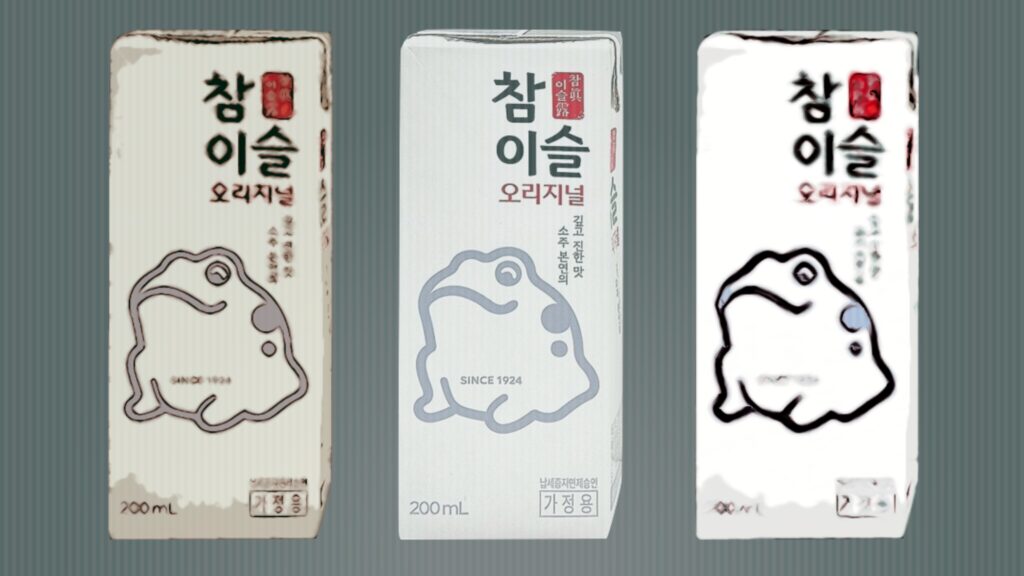
Soju — Korea’s representative drink. It’s the most popular alcohol that virtually every Korean has tried at least once. If a Korean says “I only drink Chamisul,” nobody around them finds it strange.
But there’s a magic phrase that makes someone sound like an alcoholic: just put the word “pack” in front of soju.
“I only drink pack soju.”
To a Korean ear, that’s roughly equivalent — with some exaggeration — to saying “I’m an alcoholic.”
That’s the image pack soju carries.
But personally, I think Japan has something similar.
It’s “cup sake.”
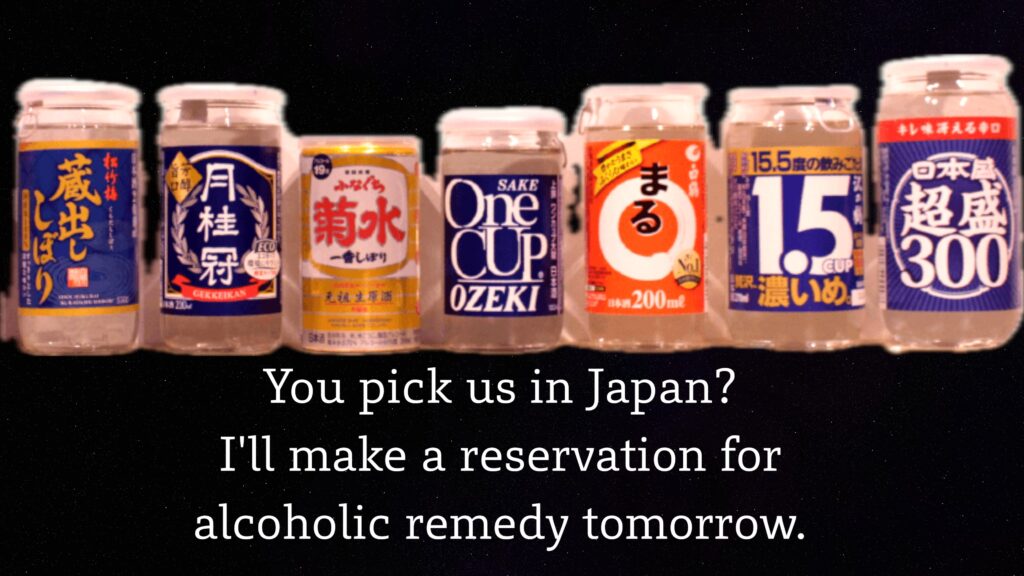
Cup sake you can find at any convenience store nationwide. The main examples are One Cup, Maru, Tsuki, and…
Today’s hero. Funaguchi.
However, recently a Kikusui tasting event was held at the Hankyu Department Store in Hakata Station, and I had the chance to try about five varieties at once. Except for the super-dry (chokara-guchi), the umami depth of the rest was outstanding.
And just like that — I became an alco (alcoholic).
Today’s sake is that very “Kikusui.” Let’s dive in, from its history to the story that makes Kikusui uniquely itself.
The History of Kikusui (From Founding to the Present)
Kikusui Brewery was founded in Niigata Prefecture in 1881. Starting from the Takasawa family, it is now carried on as a fifth-generation family business — making it a relatively young brewery by Niigata standards.
Niigata Prefecture has the highest number of breweries in Japan. (In terms of production volume, Hyogo Prefecture leads.)
The defining characteristic of Niigata sake is “tanrei karakuchi” — dry and clean. It’s so distinctive it’s called “Niigata Tanrei”: a style that’s crisp, light, easy to drink, and easy to pair with food. Kikusui is a textbook example. The reason comes down to Niigata’s regional characteristics:
- It’s the birthplace of Gohyakumangoku, the sake rice ideally suited to producing this flavor profile — and indeed the main rice used at Kikusui.
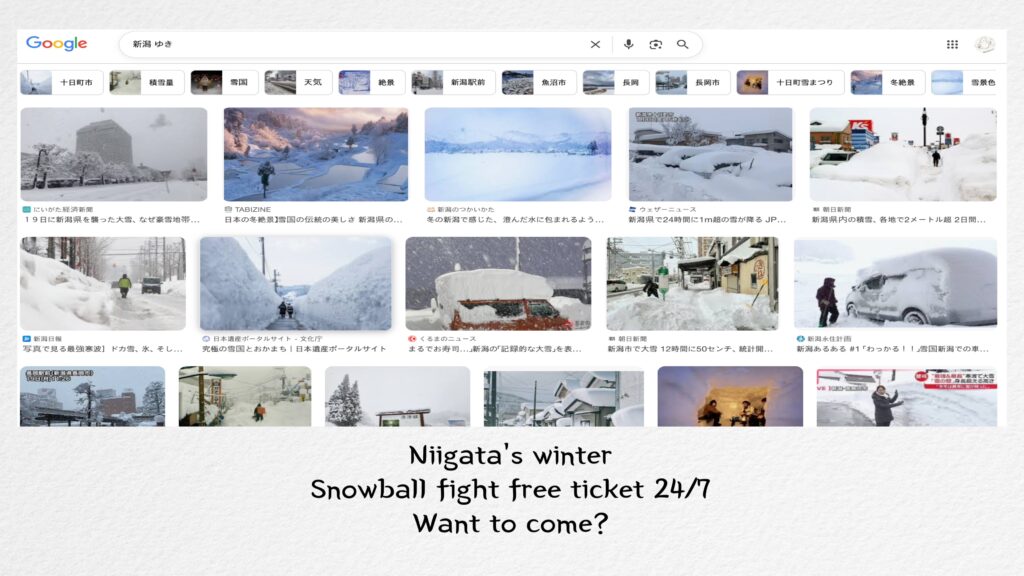
- Niigata has cold, heavy-snow winters perfect for slow, low-temperature maturation. Come spring, snowmelt seeps underground and becomes “soft water” (軟水) — low in calcium and magnesium — which is ideal for brewing.
After the brewery was established, Japan passed through many eras. War. Rice shortages. Legal restrictions on sake production. But the brewery’s greatest crises came in 1964, and then again in 1966 and 1967.
In 1964, a magnitude 7.6 earthquake struck Niigata Prefecture. With the weak earthquake-resistance standards of the time, it sent shockwaves across the entire region.
Buildings toppled as if yanked from the ground. Before a full recovery was even possible, catastrophic floods hit in the summers of 1966 and 1967, sweeping the brewery away entirely.

Not damaged enough to rebuild — literally washed away.

The fourth-generation kuramoto (brewery head) at the time, Eisuke Takasawa, made a pivotal decision in 1969: relocate the brewery to its current site, abandon the traditional wooden barrel (kioke) aging and storage that had been maintained for generations, and dissolve the toji system as well.
Then, in 1972 — Funaguchi was launched for nationwide distribution. As a namazake.
Namazake — unpasteurized sake — is the freshest and most delicious form of sake, but it comes with a critical flaw: it’s extremely sensitive. Exposure to light or prolonged heat causes the enzymes inside to continue fermenting, oxidizing the sake, and degrading the flavor the brewery worked so hard to create — before it even reaches the drinker.
Kikusui’s bold solution: package their flagship product in aluminum cans.
The aluminum blocks out light, and filling the can completely minimizes air contact, preventing oxidation.
It may lack the elegance of a bottle, but it made fresh namazake available at convenience stores across the entire country.
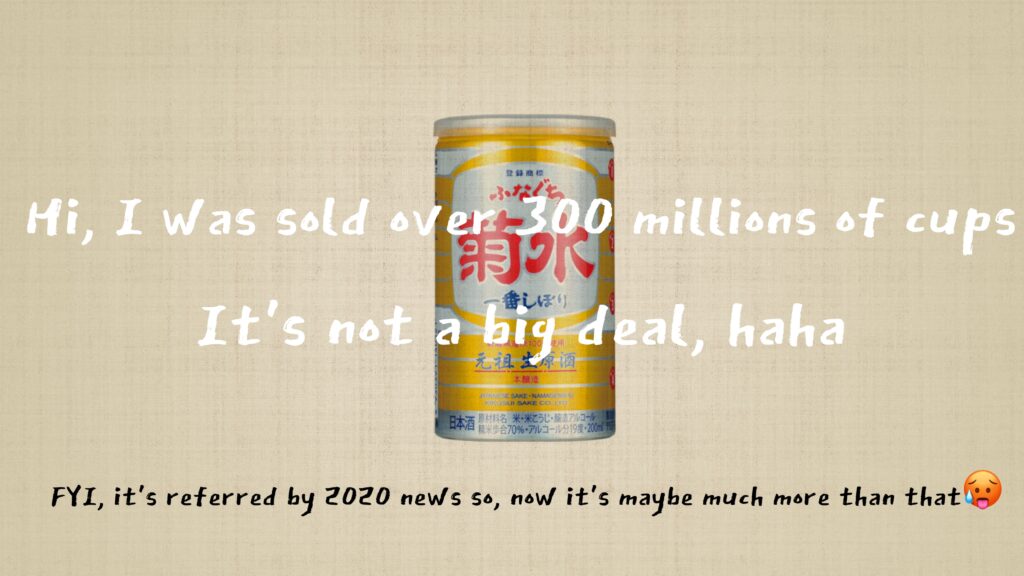
Today, Kikusui Brewery has grown into a nationally distributed brand on the scale of Dassai. Revenue in 2024 stood at ¥4.1 billion. Their most basic product, Funaguchi Ichiban Shibori, reportedly sold 300 million cans as of 2018.
Quite the trajectory.
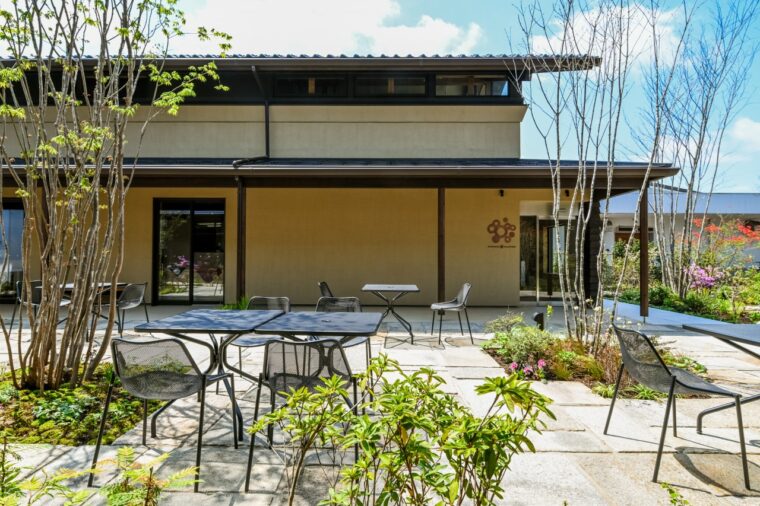
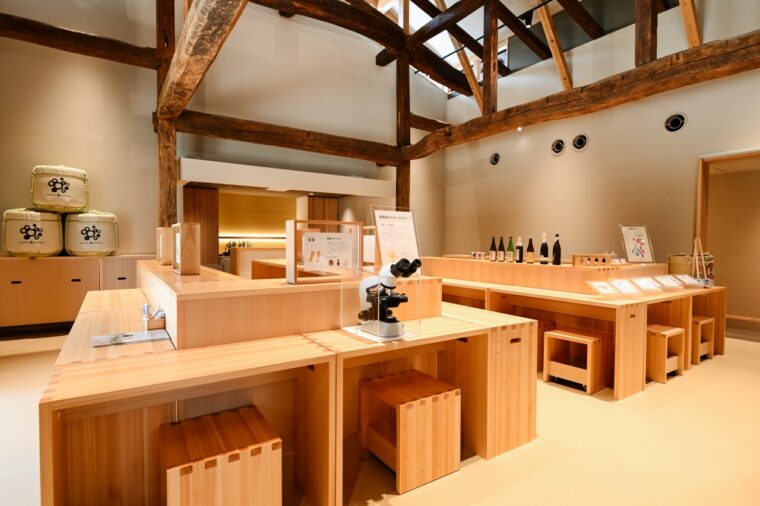
The brewery also puts serious effort beyond brewing itself — visit the grounds and you’ll find a garden and café run by the brewery. They had also been publishing a web magazine, though I discovered during my research that it ended in 2024, which is a shame.
Still, if I ever make it to Niigata, I’d like to take Midori and the baby for a stroll through Kikusui’s garden.
Closing Thoughts
+) Continuing from the pop-up store
At the Kikusui pop-up store I mentioned in the introduction, there was an opportunity to taste the brewery’s entry submitted to the National New Sake Awards (Zenkoku Shinshu Kanpyokai).
Naturally, the competition entry came in a bottle, not a can.
Perhaps because it was a competition-grade sake, the flavor was remarkably intense. The umami was far stronger than any ordinary sake — even after swallowing, it lingered on the palate and in the throat.
This isn’t the kind of sake you sip leisurely alongside sashimi, salad, or grilled vegetables — the light food pairings you’d reach for with tanrei karakuchi or gentle sweet styles. If anything, it felt like a sake made for steak, or rich sauce-heavy dishes with real weight to them.
(It’s still sitting in my fridge.)
I’ve been cutting back on drinking lately, so once my liver gets a proper rest, I’m thinking of opening it alongside yakiniku.
(For the record, I recently drank a bottle of Kinsuzume and it was so good I finished the whole thing in one sitting. Hence the rest.)
+) A Minor Sake
Kikusui is nationally recognized, but I don’t think it’s a brand that inspires devoted passion among hardcore nihonshu fans.
In Korea especially, the number of people who actually know Funaguchi’s flavor is overwhelmingly smaller than those who know Dassai or Kubota — at least that’s my personal impression.
Part of it is the can-sake image. Sake in bottles is the standard image for most people, so the barrier to entry feels higher than it actually is.
Ironically, Funaguchi is simultaneously major and minor.
And that minor-ness is what makes Kikusui kind of fun.
It’s like how among anime fans, saying you love One Piece, Kingdom, or Spy x Family gets you a polite nod — but citing something from a more obscure corner of the medium reads as deeper knowledge. Or how among Radiohead fans, name-dropping “Creep” marks you as a casual, while a deep cut from an underappreciated album signals real devotion. Or how a ramen fanatic proves their credentials by loving the pungent, full-throttle tonkotsu over the mild crowd-pleaser version. Or how refusing to eat pho without cilantro is practically a declaration of authenticity.
Finding myself genuinely thinking that can sake tastes great — it gives me the odd sensation that, as someone who loves nihonshu, I’m moving into a deeper level of appreciation.
Kikusui is the sake that gave me that feeling.
That’s all!