


Kudoki Jozu: A Brewery That Makes Sake Good Enough to Win Over Both Dry and Sweet Sake Drinkers

The movie Crazy, Stupid, Love has two main characters.

One is Ryan Gosling, and the other is Steve Carell.

Steve Carell’s character is served divorce papers by his wife—the woman who was both his first love and the person he truly loved. Lost and heartbroken, he spends his nights wandering into the same neighborhood bar.

The problem is that he has no idea how to talk to women. Whenever a woman sits next to him, he ends up talking endlessly about his divorce—something nobody really wants to hear—and more often than not, he is left alone at the bar.

After watching this for a long time, Ryan Gosling’s character decides to transform him from A to Z. He changes everything: his appearance, his confidence, and most importantly, the power of conversation—the ultimate weapon when it comes to attracting women.

As a result, Steve Carell finds himself dating and sleeping with multiple women for the first time in his life.

Through that journey, he eventually discovers what real love actually means.

It’s a wonderfully made film, and if you don’t mind comedy or romance, I’d recommend it to anyone—especially because it stars one of my favorite actors, Steve Carell.

That was a rather unexpected movie recommendation, but there’s a reason I brought it up.

Just as Steve Carell learns to win people over with words, the Japanese verb kudoku (口説く) means to persuade, charm, or win someone over through conversation.

And the sake I’m introducing today is called Kudoki Jozu (くどき上手)—literally, “someone who is skilled at persuasion” or “a smooth talker.”1

You could think of it like this:

“Just get them to take a sip. I’ll handle the persuasion from there.”

kudoki

History

kudoki loca

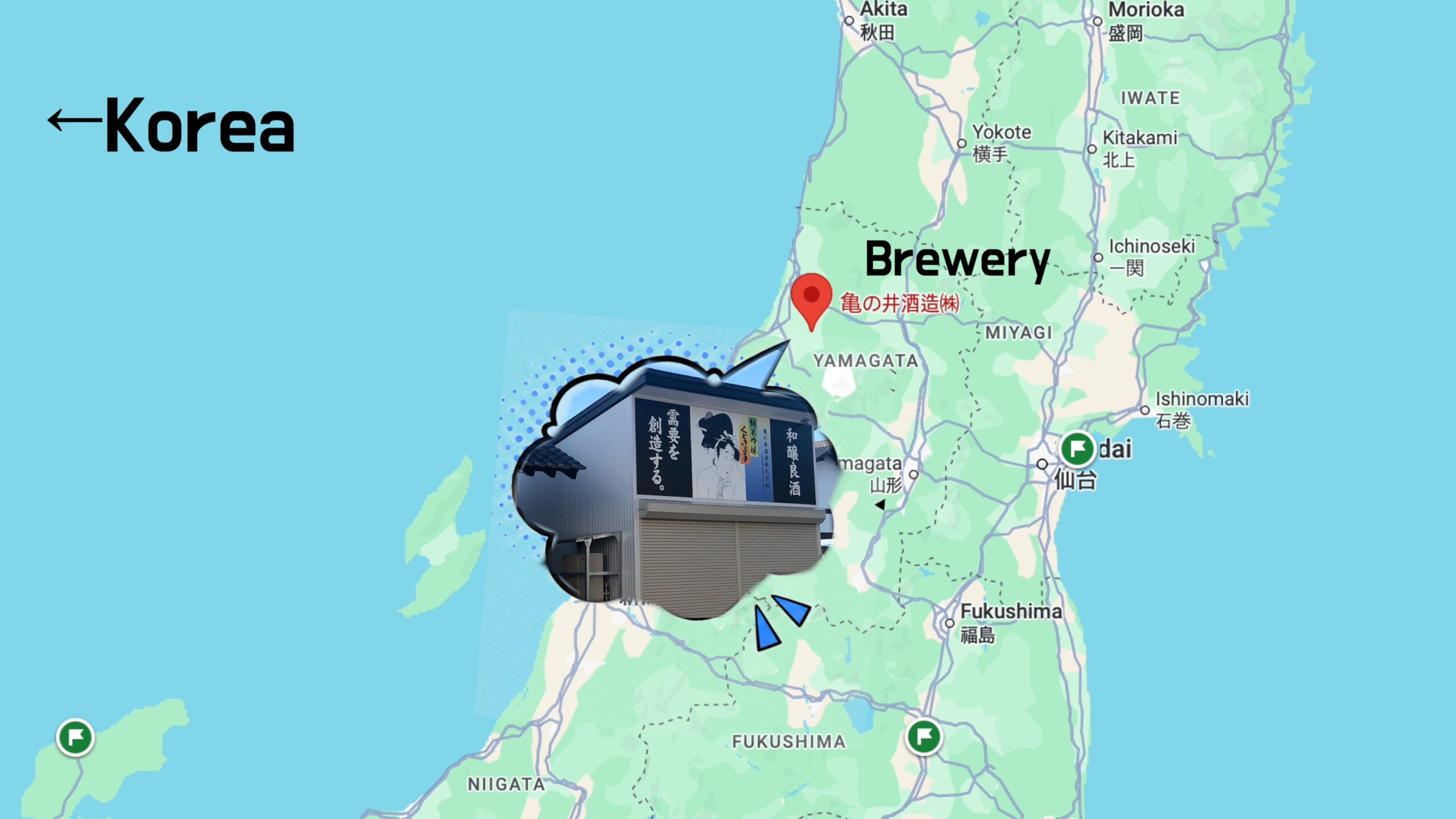
Founded in 1875 in Tsuruoka City, Yamagata Prefecture, Kamenoi Brewery began its journey long before Kudoki Jozu existed.

Back then, the brewery produced a sake simply called Kamenoi, named after the brewery itself.

Although the brewery is now around 150 years old, not much historical information remains. Still, its story can be summarized roughly like this.

Since its founding, the brewery has been forced to suspend operations twice.

The first time was due to a major fire.

The second was during World War II, when government controls on businesses forced the brewery to halt production.

After the war, brewing eventually resumed. Then, in 1983, fourth-generation kuramoto Shunji Imai created Kudoki Jozu for the first time.

In 1985, the brewery launched the Kudoki Jozu Junmai Ginjo line with Tokyo as its primary target market. The brand gradually gained recognition there before spreading across Japan.

Behind the creation of Kudoki Jozu was another important piece of the story.

Shunji Imai had studied ginjo brewing techniques at Meiri Shurui in Ibaraki Prefecture.

(Meiri Shurui is famous for developing Kyokai No. 10 Yeast.)

The first sake he released using that yeast was none other than Kudoki Jozu.

Not much information is available about the brewery itself.

And that’s okay.

There doesn’t seem to be a dramatic brewery story capable of captivating people on its own.

Even so, there is a reason why Kudoki Jozu became one of my favorite sake brands.

It’s because of one thing above all else:

The taste.

Taste of Kudoki-Jozu

Kudoki Jozu generally produces sake with a clean, crisp finish.

From the moment it touches your palate, you can sense its aroma-driven sweetness and fragrance. Since many of their sake are made with highly polished rice, they tend not to have the pronounced koji aroma or heavy body that people often associate with traditional sake.

Considering that the average rice polishing ratio of all sake produced by Kamenoi Brewery is below 50%, it’s fair to think of most of the Kudoki Jozu lineup as being at a Junmai Daiginjo level of polishing (under 50%).

Some bottles go far beyond that, with polishing ratios of 11%, 15%, or 22%. Sake made from rice polished over extremely long periods of time make up a significant portion of the lineup.

So if you enjoy delicate and refined flavors, I would recommend trying the Junmai Daiginjo range of Kudoki Jozu.

That doesn’t mean the dry-style Kudoki Jozu labels lack flavor.

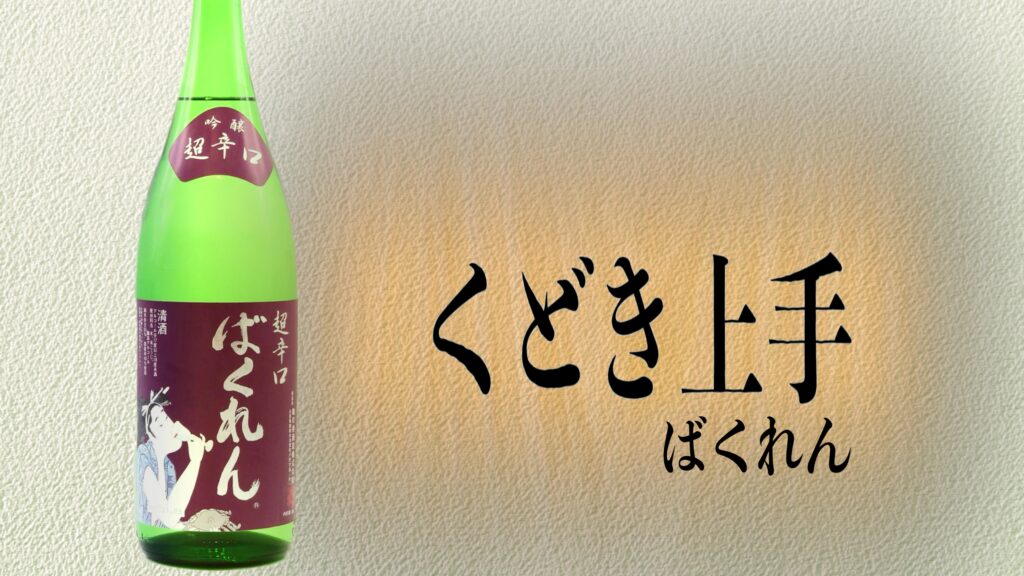
On the contrary, ultra-dry offerings such as Bakuren pair exceptionally well with Japanese cuisine.

I think Kamenoi Brewery is an all-rounder that brings out the appeal of sweet sake when making sweet sake, and the appeal of dry sake when making dry sake.

That said, the reason I personally became a fan of Kudoki Jozu comes from a different experience.

It began with a bottle of Kudoki Jozu Jr. that I purchased online in Korea.

About Kudoki-Jozu Jr.

The Kudoki Jozu lineup can be broadly divided into three main series.

The first is the standard line: Kudoki Jozu.

くどき上手1 

This series mainly consists of approachable Junmai Ginjo and Junmai Daiginjo sake built around highly polished rice, typically falling into the slightly sweet (yaya amakuchi) or slightly dry (yaya karakuchi) category.

The second series is Bakuren, Kudoki Jozu’s ultra-dry lineup.

バクレン

It is a lineup that Kamenoi Brewery has developed with ambition, focusing on a clean, sharp, and crisp style of sake.

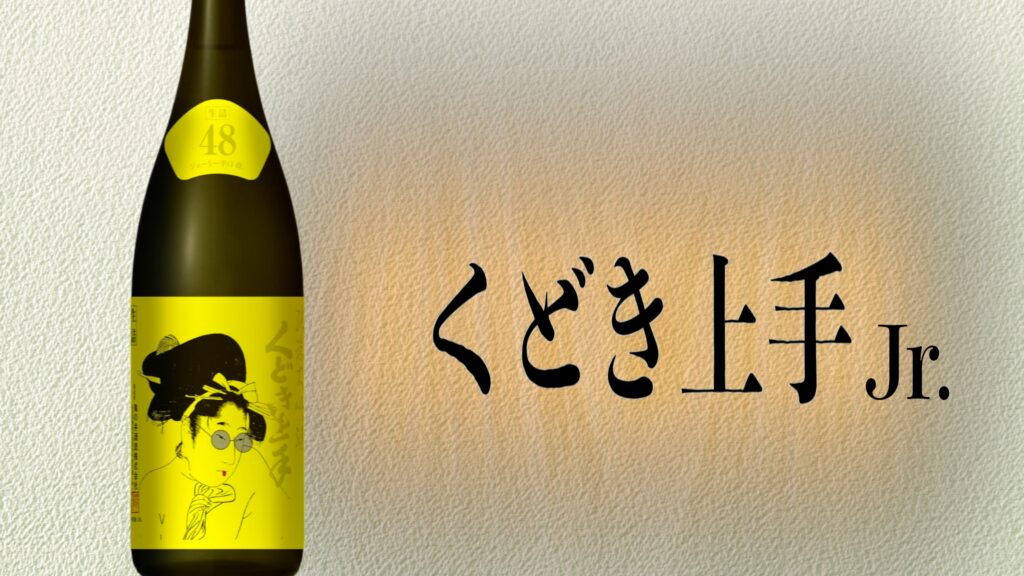
The third series is Kudoki Jozu Jr., my personal favorite among all of Kamenoi Brewery’s offerings.
kudoki jrr

Kudoki Jozu Jr. is a new series created by Toshinori Imai, the current fifth-generation kuramoto. His goal was to go beyond the Kudoki Jozu that his father had created and release a version of Kudoki Jozu that reflected his own vision.

While the name is simply “Kudoki Jozu” with a “Jr.” added to it, the philosophy behind the lineup is clearly different.

Kudoki Jozu Jr. includes more full-bodied and sweeter styles of sake, and many of them are designed to be enjoyed on their own, flowing as easily as a good white wine.

Another defining characteristic of the series is its experimental nature.

While many labels return year after year, the brewery also regularly releases sake built around new ideas and brewing experiments.

One example is Fushigi-chan (不思議ちゃん), a label within the Kudoki Jozu Jr. lineup with a rice polishing ratio of 45%.

Following that release came Maka Fushigi-chan (摩訶不思議ちゃん). It was brewed under the exact same conditions as Fushigi-chan, with only one difference: the rice polishing ratio was reduced by a single percentage point.

The purpose was to demonstrate how much impact just 1% of additional polishing can have on the final character of a sake.

Another example involves Hakutsurunishiki, a sake rice variety that has gained attention as a potential alternative to Yamada Nishiki, whose cultivation has become increasingly difficult due to unusual weather conditions.

The release of Kudoki Jozu Jr. Hakutsurunishiki, brewed with this rice, is another example of the experimental spirit behind the Jr. series.

However, experimentation alone is not enough to become widely recognized.

A brewery must earn recognition for its flavor as well.

Only then does it deserve a lasting place in the market.

For that reason, Kudoki Jozu Jr. is not a new lineup that survived solely because of its willingness to experiment.

It is a lineup that delivers on taste as much as innovation.

Personally, I think Toshinori Imai’s achievement is remarkable. He succeeded in creating sake that moves in a completely different direction from traditional Kudoki Jozu while still offering a flavor profile that consumers genuinely appreciate.

Closing Thoughts


Thank you to everyone around the world who loves Nihonshu and has visited Sakagura Miyamoto. Sakagura Miyamoto was created to make Nihonshu more than just a drink with good taste and aroma — but something that lives in your memories. For those who want to turn Nihonshu from a simple alcoholic beverage into a medium that brings back moments and stories, and for those who want to describe Nihonshu in a deeper, more dimensional way, we invite you to join the Sakagura Miyamoto membership. The content below is for members only. Thank you.