


They've got through all things because they are together! - Miyakanbai (宮寒梅)
Whenever my wife, Midori, and I visit a sake shop or a sake izakaya, there are a few bottles we always look for first.
One of them is the sake I’m introducing today—a true representative of Miyagi Prefecture’s local sake, brewed by a husband-and-wife-run brewery.
It’s Miyakanbai.
Years ago, when my wife visited Miyagi with a friend, she tried Miyakanbai for the first time as part of a sake tasting set at a local izakaya. That one experience was enough to make it one of her favorite sakes to this day.
Later, I tried it in Okinawa on her recommendation and immediately fell in love with it. Since then, it has become one of those sakes I know I’ll never regret ordering.
What makes this brewery even more special is the incredible story behind it. Through the strength of a husband and wife, and the support of their family, they overcame an enormous hardship.
It’s simply impossible not to admire this brewery.
This sake is the result of a genuine passion for brewing and the unbreakable bond between a husband and wife.
I hope that after reading this article, you’ll feel a little excited every time you spot a bottle of Miyakanbai at an izakaya.
And that’s exactly what I hope to accomplish today.
Let’s begin.
History
1. Beginning of the Brewery
In 1918, Kanbai Brewery, the brewery behind Miyakanbai, was founded in Osaki City, Miyagi Prefecture.
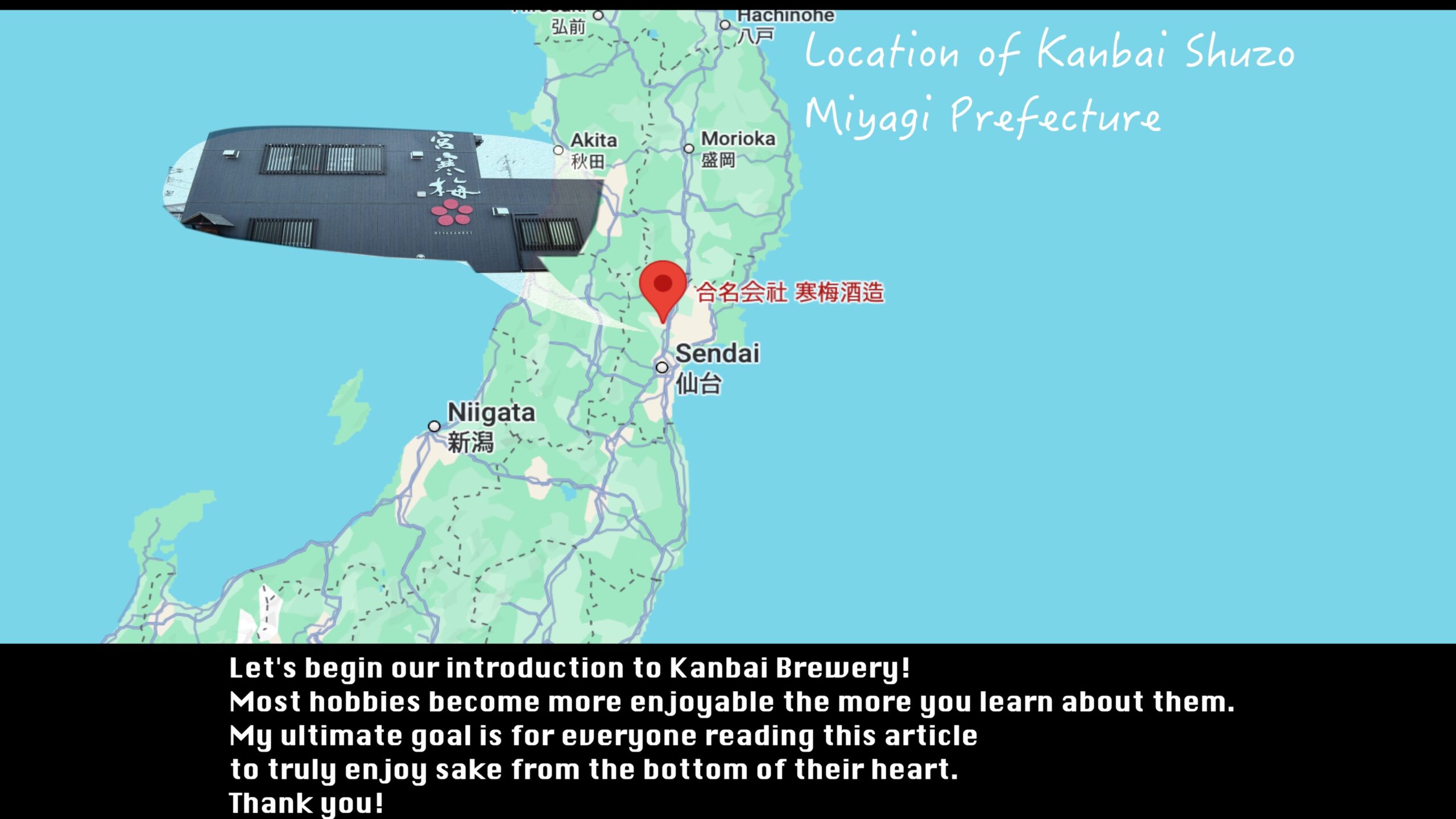
At the time, it was not called Kanbai Brewery. Instead, it was known as Iwasaki Brewery, named after its founder, Mr. Iwasaki, and produced sake under the label Homare no Takagawa.
Mr. Iwasaki was not originally a brewer. He was a major landowner in the Osaki Plain, one of Japan’s most famous rice-growing regions, and used rice harvested from his own fields to make sake.
However, as rice became scarce during World War II, the brewery was forced to suspend production. Years later, in 1956, it was revived under the name Kanbai Brewery.
Today, the brewery is led by fifth-generation kuramoto Mana Iwasaki and her husband, Kenya Iwasaki.
Interestingly, neither of them originally planned to take over the family business. Mana eventually inherited the brewery because none of her three older sisters wanted to succeed it. Kenya also admitted that when he joined the brewery with his wife, he wasn’t driven by a strong sense of responsibility—his attitude was simply, “Let’s give it a try.”
When they took over the brewery in 2007, it was producing around 100 different sake labels.
With such a large lineup, it was impossible to devote enough attention to every product, and unsold inventory continued to pile up year after year.
At the time, the brewery lacked a clear business strategy. So in 2011, four years after officially joining the company, Kenya and Mana worked together with the brewery staff to redesign both their sales strategy and their approach to improving quality.
It was time to transform the brewery.
2. It Wasn't the Change They Had Planned For — The Great East Japan Earthquake (2011)
The year they were finally ready to put their new plans into action was 2011.
Instead, like virtually every brewery in the Tohoku region, they were struck by one of the most devastating disasters in Japanese history—the Great East Japan Earthquake.
Fortunately, no one at the brewery was killed or injured.
However, the damage to the brewery itself was catastrophic. The sake stored in the fermentation tanks was lost, and the 2,000 to 3,000 bottles kept in refrigerated storage were thrown to the ground and shattered.
The earthquake struck on March 11, and by the end of the month, the city government officially declared the brewery a total loss.
In other words, the authorities determined that the brewery had been so severely damaged that it could no longer function as a brewery.
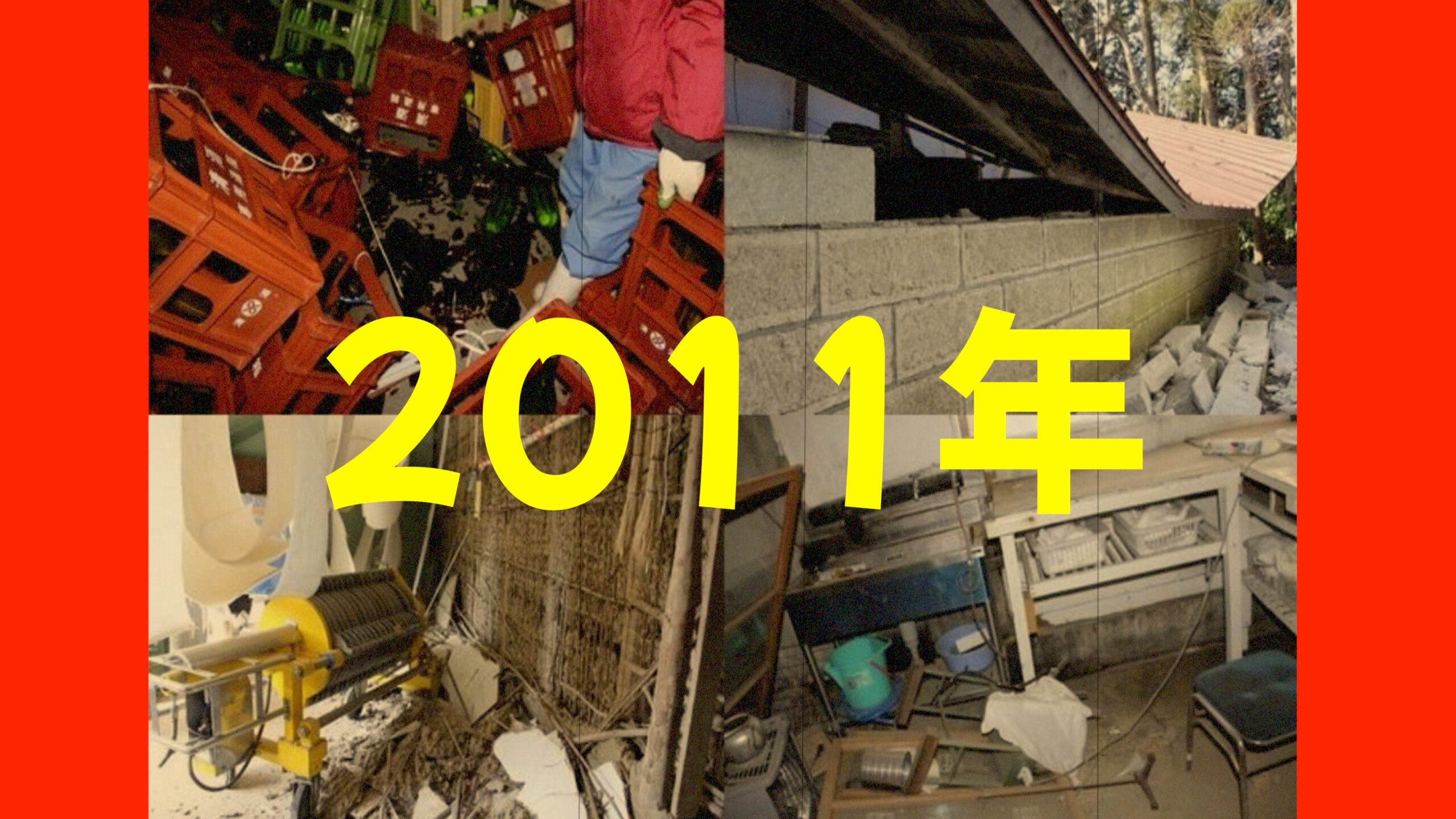
Whether to give up brewing or find a way forward.
That decision rested on three people: Kenya Iwasaki, Mana Iwasaki, and Mana’s father, the fourth-generation kuramoto.
Supported by countless messages saying, “I want to drink Miyakanbai again,” the three decided to stand up once more after seeing their 100-year-old brewery collapse.
The successful motivational speaker and entrepreneur Zig Ziglar once described hope like this:
Hope is the fundamental force behind change. It gives you confidence in your actions, fuels you to live in the present, and gives you a vision of a better future. It is an essential foundation for personal success and overcoming adversity because it is rooted in the belief that you can improve your situation.
The three chose to act with hope.
Since all of the sake in the brewery had been destroyed, they were able to clear out the large inventory of slow-selling labels that had troubled the business for years. At the same time, they were able to replace the old brewery with new facilities and equipment without hesitation.
They also changed their strategy by reducing their lineup of around 100 labels to only Junmai Ginjo and Junmai Daiginjo, while redesigning the labels to appeal to younger drinkers.
After experiencing the historic earthquake in March 2011, they successfully rebuilt the brewery within the same year.
By November 2022, sales had grown to more than five times what they had been immediately after the disaster.
In 2024, the brewery won first place in the Junmai Sake category at the Tohoku Sake Appraisal.
Today, Miyakanbai has earned a reputation as an excellent sake among enthusiasts throughout Japan and in Korea as well.
And in the end, it became the brewery that won over both my wife and me.
Good to Know
1. From Rice Farming to Brewing: An All-in-One Brewery
Kanbai Brewery is located in the heart of the Osaki Plain, the most famous rice-growing region in Miyagi Prefecture.
Because of this, the brewery grows some of its own sake rice and uses it in its brewing.
Among the varieties they cultivate are Miyama Nishiki, Hiyori, and Aikoku.
These rice varieties are then blended—much like a blended coffee—to create the brewery’s sake.
According to the brewery’s official website, they also release a seasonal sake called Miyakanbai Sanmai Hasshi, which is brewed with three different rice varieties to express eight layers of umami.
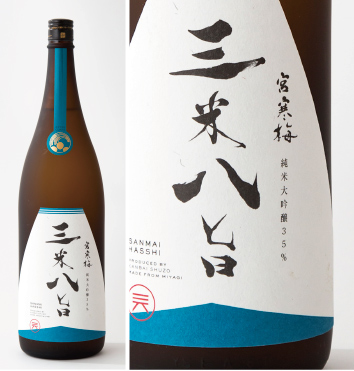
What’s even more interesting is the story behind these rice varieties.
Miyama Nishiki was first planted by the fourth-generation kuramoto himself, who personally began cultivating it.
Meanwhile, the current kuramoto, Kenya Iwasaki, searched extensively for seeds of Aikoku. He finally managed to obtain just 132 grains to begin with.
After three years of careful cultivation, he was finally able to harvest enough Aikoku rice to use in sake brewing.
2. The Overall Taste Profile of Miyakanbai
Of course, this applies to almost every brewery, but the taste can vary greatly depending on the specific label.
However, every brewery has its own direction and philosophy when it comes to the style of sake it wants to create. So here, I would like to talk about the overall characteristics commonly found in Miyakanbai’s most representative labels.
First of all, Miyakanbai belongs to the “slightly sweet” (yaya amakuchi) category.
It has exactly the kind of taste I personally love—a sake that keeps going down smoothly even without any food.
That is Miyakanbai.
It pairs beautifully with fruit, but it also works surprisingly well with juicy dishes full of rich flavors.
However, it usually does not leave behind a heavy, lingering sweetness after swallowing.
The finish is generally clean and refreshing.
Because of this balance, Miyakanbai has many labels with the charm of making you want to pour another glass without getting tired of the taste.
According to the brewery’s official website, the kind of sake they aim to create is “a sake that is delicious from the first glass.”
Their philosophy is to fully bring out the umami of the rice and deliver the unique character and flavor that only sake can provide.
Closing(My thought)
Thank you to everyone around the world who loves Nihonshu and has visited Sakagura Miyamoto. Sakagura Miyamoto was created to make Nihonshu more than just a drink with good taste and aroma — but something that lives in your memories. For those who want to turn Nihonshu from a simple alcoholic beverage into a medium that brings back moments and stories, and for those who want to describe Nihonshu in a deeper, more dimensional way, we invite you to join the Sakagura Miyamoto membership. The content below is for members only. Thank you.