

Nose
ko ko ko ko...
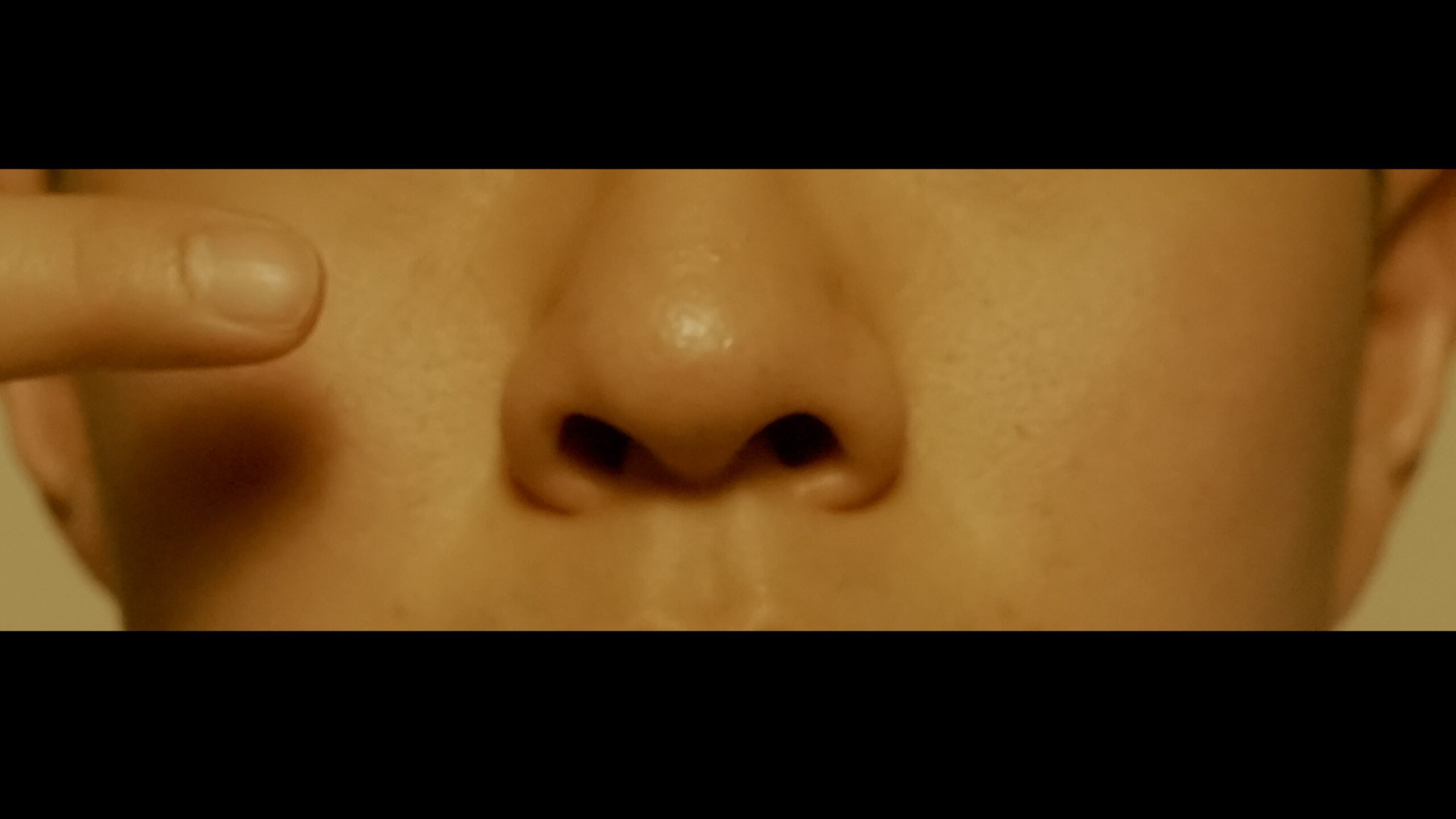
When I was young, one of the games I often played with my mother was a game using the “nose.” The caller would keep saying “ko, ko, ko…” (it means Nose in korea) and then suddenly shout a random body part while pointing at a different one with their hand.
For example, shouting “Eyes!” while pointing at the mouth, or shouting “Nose!” while pointing at the eyebrows. If the other person followed the part being pointed at instead of the part being spoken, they would receive a penalty. If they touched the part that was said out loud, then the caller lost.
I remember it being quite fun, and I would recommend trying it if you have children. Even for adults, it is not as easy as it sounds.
The reason I bring up this old story is simply because today’s topic is related to the nose.
The nose is the organ that allows us to smell. Through smell, we have been able to filter out things that could harm our bodies—such as spoiled bread or meat—without actually having to eat them.
The same applies to unpleasant odors like fart. People who frequently eat greasy or highly processed foods, or whose gut health is poor, often produce stronger and harsher smells. Drinking excessive alcohol can have the same effect.
Whether someone chooses to ignore or accept these signals is up to them, but at the very least, smell allows us to recognize simple warnings sent by our bodies.
Furthermore, smells that are truly harmful to the human body tend to feel more unpleasant. Anyone who has smelled ammonia during a school science class will remember how overwhelming it is—strong enough that continuing to inhale it for even thirty more seconds would feel unbearable.
The smell of something burning during a fire is similar, becoming so harsh that breathing itself becomes difficult. Prolonged exposure to these smells can be fatal or cause permanent organ damage. Our sense of smell helps distance us from such dangers.
But not only bad smells help us—pleasant ones do as well.
When you return home and are greeted by the smell of good food, your mood improves the moment you walk through the door. You might naturally say something kinder to your wife, and
Thank you to everyone around the world who loves Nihonshu and has visited Sakagura Miyamoto. Sakagura Miyamoto was created to make Nihonshu more than just a drink with good taste and aroma — but something that lives in your memories. For those who want to turn Nihonshu from a simple alcoholic beverage into a medium that brings back moments and stories, and for those who want to describe Nihonshu in a deeper, more dimensional way, we invite you to join the Sakagura Miyamoto membership. The content below is for members only. Thank you.
At a purely functional level, the nose is simply an organ that detects smells.
But fragrance has the power to strike memory again and again, leaving impressions that last far longer than the moment itself.
Throughout human history, fragrance-centered experiences have existed in many forms, and the more complex and enjoyable those fragrances were, the more closely they became associated with aristocratic culture. There were clear reasons for this popularity, many of which still make sense today.
Fortunately, modern society has built an infrastructure where experiences once limited to nobility are now accessible to the middle class with only a small amount of courage. If you want to make fragrance part of the way you enjoy life, it is worth taking that step.
Whether watching a film at home or drinking coffee in the morning, scent has the remarkable ability to transform the mood of a moment.
And, of course, it helps to pair those aromas with a good glass that allows the fragrance to fully open and express itself.
Fin