
syaraku

I've never met anyone who dislikes this sake. Sharaku (寫楽) from Fukushima.

There is a sake shop in Fukuoka called “Hisaya.”

If you like sake, whether you’re Japanese or Korean, it’s a shop you’ve probably heard of. It is one of the sake shops with an excellent lineup, carrying many well-known sake from all over Japan.

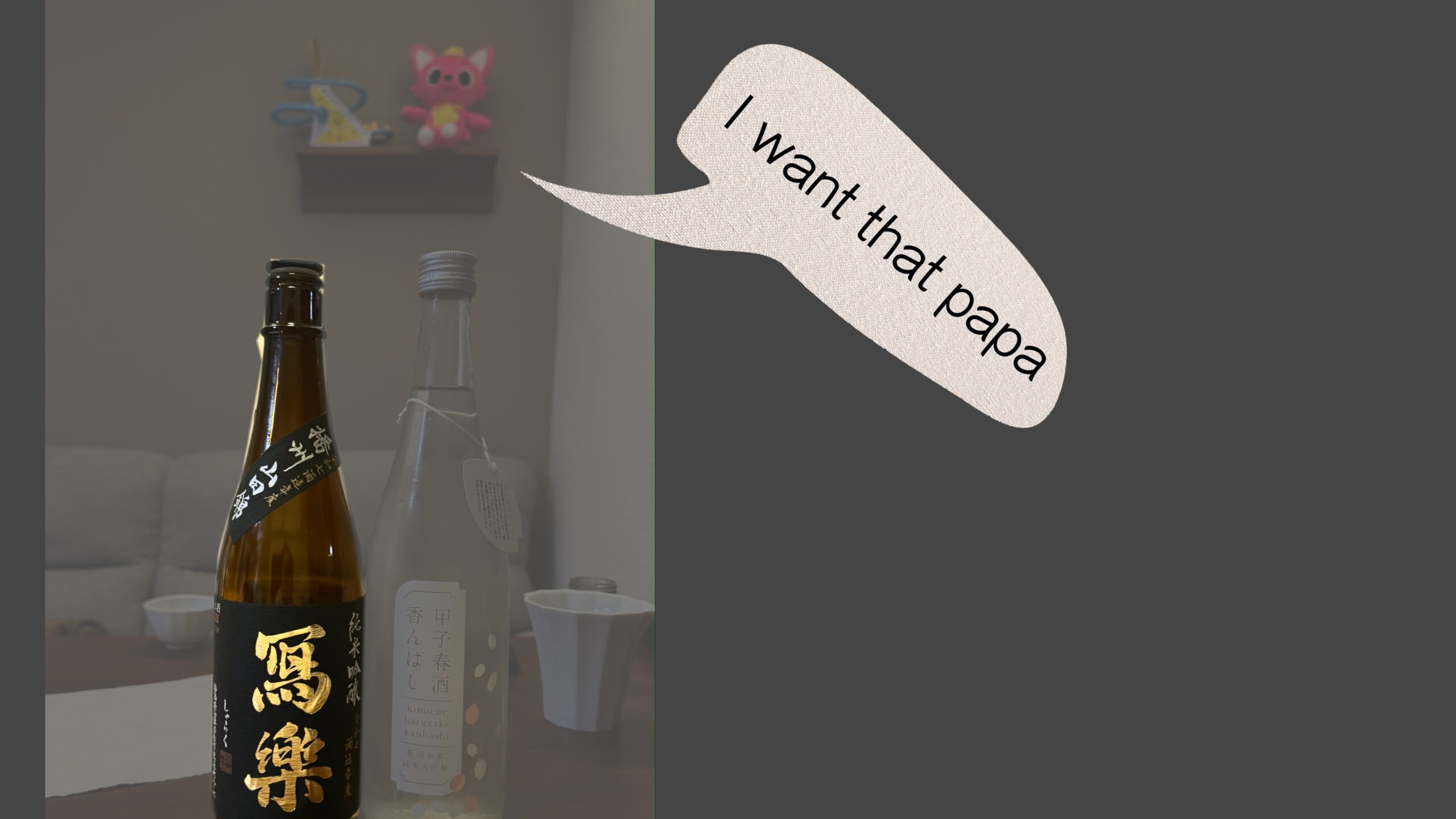
Recently, I bought Sharaku from Fukushima and Kinoene from Chiba there.

Kinoene was my first time trying it, and it was very good, so I’d like to try a few more labels before writing about it.

As for Sharaku, I had tried several labels while working before. Since I was working, I don’t remember the details very well, but overall it wasn’t a strong-tasting sake and paired well with food. Overall, it reminded me of Hakurakusei. I remember it being a little stronger than Hakurakusei.

However, the Sharaku Banshu Yamada Nishiki I drank this time had a slight fizz and a reasonably full body, so it paired surprisingly well with the motsunabe I had with it. I almost finished the whole bottle in one meal, but I managed to stop myself so I could enjoy the rest the next day.

I was happy that I could find a sake like this on my first visit to Hisaya. Living in Fukuoka, and having Hisaya not far away (it’s at just the right distance for a run), made it even better.

Sharaku is, of course, a delicious and famous sake.

However, if you visit Hisaya, you’ll also find rare sake that almost every sake fan knows, such as Senkin, Akabu, Denshu from Aomori, and Aramasa. Even so, the reason I chose Sharaku was quite simple.

  1. Because it’s a sake from Fukushima.
  2. Because it was a label I had never tried before.

Fukushima is a region that anyone interested in Japan would know as the area that suffered the greatest damage during the 2011 Great East Japan Earthquake.

After the nuclear power plant accident, the region developed a negative image both inside and outside Japan. For sake, where water is one of the most important elements, such an event must have had a significant negative impact on its brand image.

In fact, sales dropped by 66% in the month the earthquake struck.

However, about 15 years later, Sharaku has become one of Fukushima’s representative sake. For the past few years, it has grown into one of the well-known sake not only among tourists but also at sake bars, where it’s commonly ordered whenever it’s on the menu.

What kind of journey did they go through to become this strong?

History

1. Before Sharaku

First, Sharaku was not originally a brand created by its current brewery, Miyazumi Meijo (宮泉銘醸).

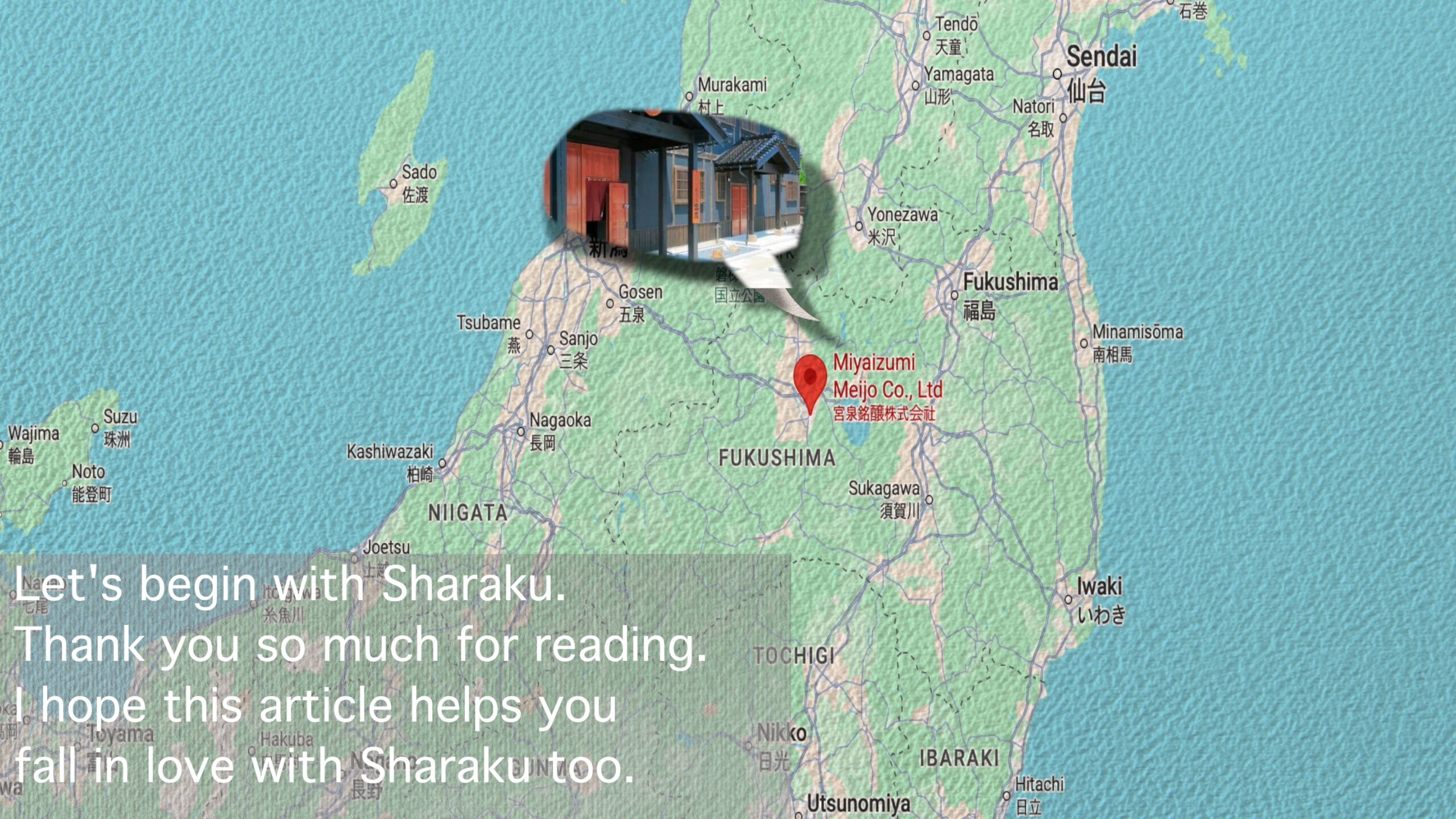
Miyazumi Meijo was founded in 1955 in Aizuwakamatsu, Fukushima Prefecture, which is relatively recent for a sake brewery.

Location of Miyaizumi Meijo

Since its founding, the brewery had continued producing only “Miyaizumi,” a sake named after the brewery itself. It was a local sake that was not known nationwide, being sold only within Fukushima Prefecture or directly to visitors at the brewery.

The turning point came when the fourth-generation owner and toji, Yoshihiro Miyamori, joined the brewery.

After graduating from a private university in Tokyo and returning to take over the family brewery, Miyamori found it burdened with hundreds of millions of yen in debt. The brewery sold only one label, Miyaizumi, and its distribution channels were limited, leaving it in a very difficult situation.

Around that time, Higashiyama Shuzo, another brewery that had branched off from the Miyamori family, went out of business. As a result, the rights to the name “Sharaku” were passed on, and the brand came to Miyazumi Meijo.

(However, the brewery acquired the name on the condition that everything—including the brewing method and distribution channels—would be rebuilt from scratch. As a result, the new Sharaku was destined to become a completely different sake that simply shared the same name.)

Looking for a new breakthrough for the brewery, Miyamori declared before the toji and brewery staff, who had spent their entire careers brewing only Miyaizumi, that he wanted to create Sharaku entirely in his own style.

2. The Birth of Sharaku

Since the brewery was on the verge of closure, Miyamori wanted to focus on producing sake with quality as the highest priority. However, the brewing site was controlled by the long-serving toji, and some employees began leaving because they could not accept Miyamori’s direction. As a result, creating Sharaku was not an easy process.

Even so, Miyamori faced the situation head-on and stood by his vision for Sharaku.

And in 2007, Sharaku was born from just one single tank among the many tanks in the brewery.

From the year of its birth, Sharaku received recognition at sake competitions in Sendai. Then, in 2014, it won first place in both the Junmai Ginjo and Junmai categories at the SAKE COMPETITION. With such a successful debut, Sharaku’s reputation has continued to grow ever since.

3. The Brewery During the 2011 Great East Japan Earthquake

Four years after releasing Sharaku, on March 11, 2011, a historically massive earthquake struck the Tohoku region.

At the time of the earthquake, Miyamori was in Miyagi Prefecture to visit a business partner’s brewery. After checking into his hotel, he felt the earthquake, escaped to higher ground, and witnessed the tsunami sweeping through the city. He was deeply shocked by what he saw. No one answered the phone calls he made to the brewery.

What happened in Fukushima afterward is something we all know.

Aftershocks continued, and fear that another tsunami could come spread throughout the entire prefecture. On top of that, the nuclear power plant accident created concerns and distrust toward everything coming from Fukushima Prefecture. This situation was a major blow to the brewery and became another challenge they had to overcome.

Even while aftershocks continued, Miyamori took the wheel himself. The place he headed to in the middle of the night was the brewery.

What he saw upon arrival was hundreds of broken bottles of sake. Just like the stories from many breweries in Miyagi Prefecture after the disaster, the scene before him looked as if everything had been destroyed and recovery was impossible.

Looking back on that moment, Miyamori said:

“There was nothing else we could do except what we could do at that moment. Make the best sake possible.”

With an unbreakable spirit, and with sake made by pushing forward with their backs against the wall, Miyazumi Meijo won first place at the Sendai Sake Competition in the same year the earthquake occurred.

The awards and recognition they received at that time greatly helped their recovery after the disaster.

In order to create Sharaku, they had made many detailed changes, causing many of the existing employees and key members to leave the brewery.

Then, a disaster that would remain in Japanese history struck the brewery.

Ironically, despite everything, Sharaku achieved third place before the earthquake and took first place after the earthquake.

Others

The relationship with another famous Fukushima sake, Hiroki (飛露喜): It wasn't because he fell in love with the taste!

Before Miyamori finished his studies and returned to the brewery, he had the opportunity to try various sake from all over Japan. There is a behind-the-scenes story that he was inspired by Hiroki (飛露喜), another sake from Fukushima that left a strong impression on him.

It is often said that he was inspired by Hiroki’s taste, but Miyamori himself says that, more accurately, he was impressed by “the quality of the sake produced by Hiroki Brewery.”

Perhaps because of this, Miyazumi Meijo places great importance on quality control throughout the brewing process.

After producing and bottling sake, they immediately place it in refrigeration to minimize unintended fermentation as much as possible.

Especially for namazake, their level of management is extremely strict. Even for pasteurized sake, once the heating process is completed, they quickly move it into refrigeration to prevent further fermentation.

Today, Miyazumi Meijo and Hiroki Brewery have become rivals with similar reputations within Fukushima Prefecture.

Kenji Hiroki, the head of Hiroki Brewery, once said about Miyazumi Meijo:

Screenshot 2025-05-20 at 9.26.53 AM.png

If you happen to find Sharaku at a sake shop, I recommend checking whether they also carry Hiroki. And if Hiroki is available, I hope you will buy both and compare them.

Discovering the differences between these two sake, which have continued to inspire each other, will surely become another enjoyable part of your journey with nihonshu.

2. About the Sharaku Banshu Yamada Nishiki I Drank This Time

I think I may have tried the black-labeled “Sharaku Banshu Yamada Nishiki” at a sake bar before. However, I usually drink at sake bars until I get drunk, so I don’t remember the details clearly.

That is why this was my first time drinking it from a full bottle. Every time I drink sake by the bottle, I think the same thing: to truly analyze sake and to become more immersed in enjoying it, drinking a full bottle at home is definitely the best way.

Miyazumi Meijo uses rice from the area where the brewery is located. When they use rice from outside the prefecture, they choose rice from regions that are especially famous for brewing rice, such as Banshu in Hyogo and Bizen in Okayama.

The Sharaku I drank this time was made using rice from the Banshu region of Hyogo Prefecture.

Bizen is famous for Omachi, while the Banshu region is famous for Yamada Nishiki. After tasting it, I could understand why they specifically put “Banshu Yamada Nishiki” on the label. It was a sake that perfectly matched both my taste and my wife’s taste.

I want to drink it again.

Drinking a sake that I have never experienced (by the bottle) is always exciting and enjoyable.