

I finished half the bottle of this Yamaguchi Sake in no time. 貴(Taka).
The first time I came across Taka was at a yakitori restaurant near my home.
Its dry profile didn’t get in the way of the chicken’s flavor, while a gentle sweetness from the rice emerged at the finish. Even after a few drinks, when my palate was already a little dulled, it still made me think, “This pairs incredibly well with yakitori.”
The pairing that day was simply excellent.
To be honest, the label design wasn’t really my style, so although I’d seen it many times at restaurants and sake shops, I’d never actually tried it.
But in the end, sake speaks for itself through its taste.
It was enjoyable on its own, but with moderately fatty yakitori, it made me want to drink a whole bottle.
And so, on July 4, 2026, I drank Taka.
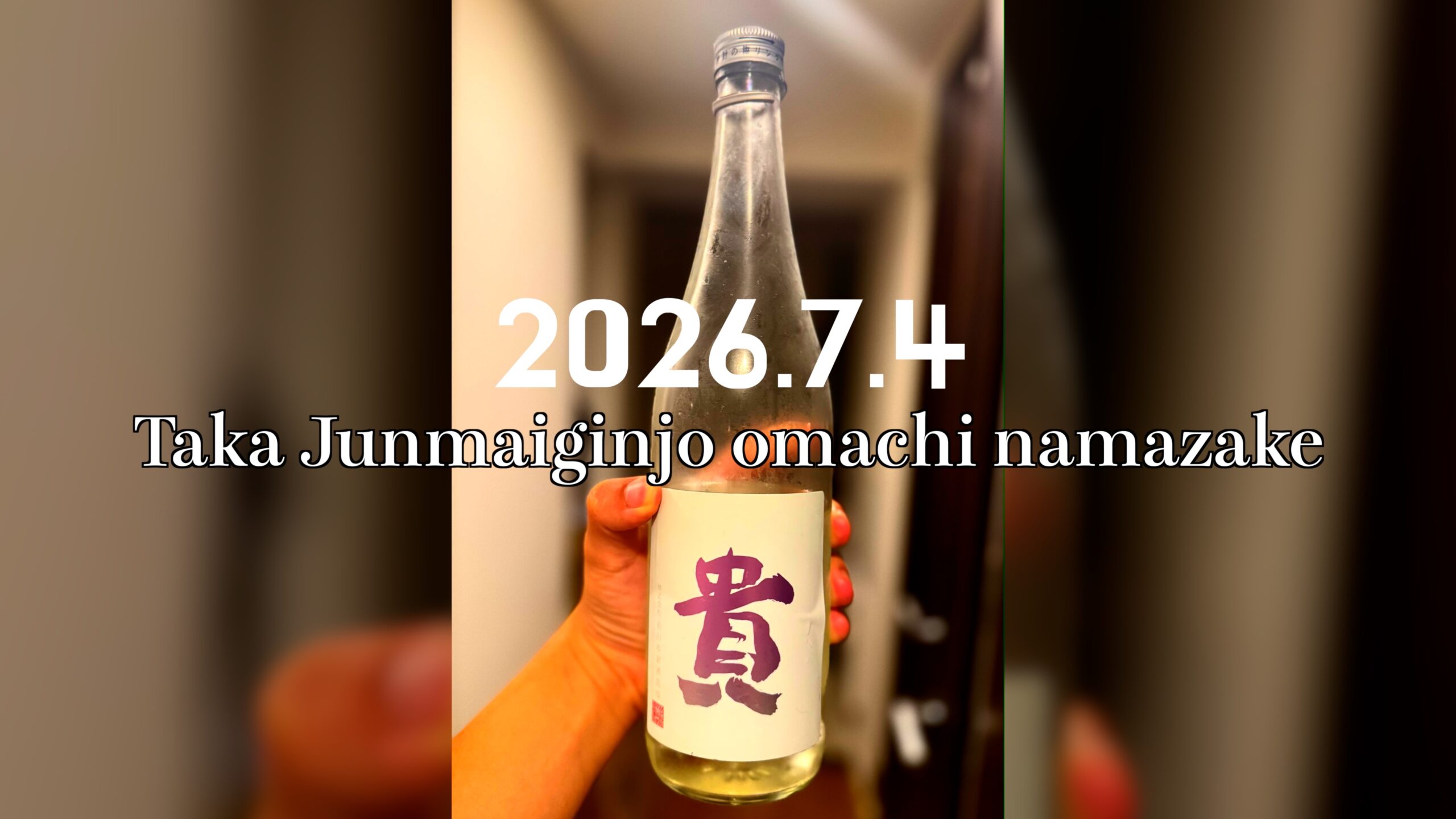
There were no snacks to go with it, but before I knew it, I’d happily finished my daily limit of half a bottle.
The moment I took the first sip, the first thing that came to mind was the absence of something to pair it with.
It was the night that made me crave yakitori more than any other in recent memory.
History
1. The Story Behind the Birth of Taka.
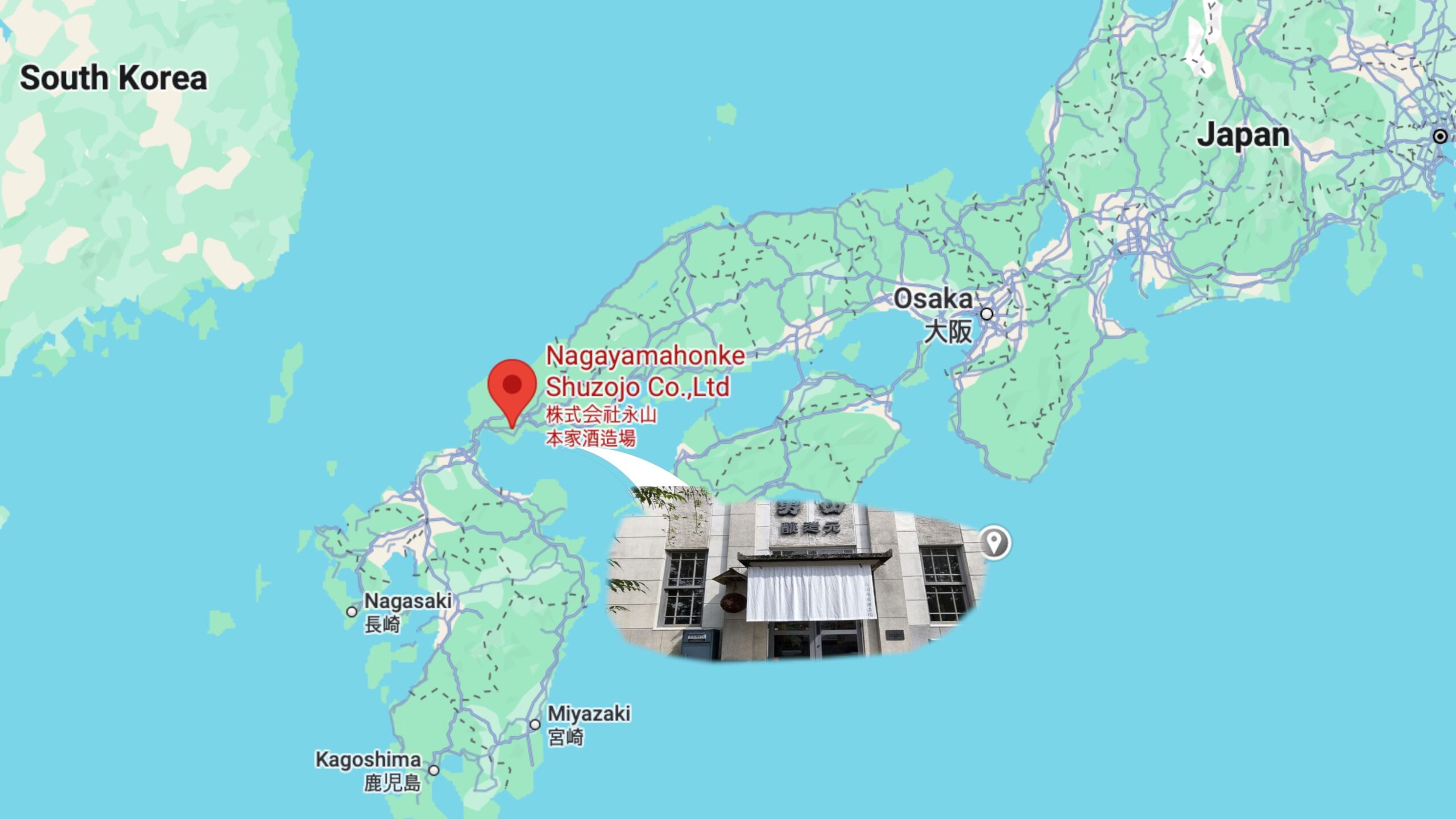
Taka is brewed at Nagayama Honke Brewery, founded in 1888 by Kitsutaro Nagayama in Ube City, Yamaguchi Prefecture.
At the time, there were four breweries in the area. However, Nagayama Honke Brewery happened to be located near the highway and was the most centrally positioned of the four. You could say it was fortunate. As a result, it became the brewery that has survived to this day.
In the past, this area was a mining town, and the brewery’s main customers were miners. After finishing work, many of them would stop by for a drink, so like many breweries of the time, its flagship product was “Otokoyama,” a sake made with added brewing alcohol. (Taka had not yet been created.)
For more than a century, Otokoyama remained a beloved local sake. However, as the mining industry declined and the sake market began losing ground to wine, whisky, beer, and other alcoholic beverages from the 1970s onward, the brewery found itself in an increasingly difficult position.
Up until the fourth-generation kuramoto, Otokoyama was the only sake the brewery produced, so it was unable to break away from this trend.
So what was Takahiro Nagayama, the man who would later create “Taka” and become the fifth-generation kuramoto, doing during this time?
The truth is, he never intended to take over the family brewery.
He wanted to pursue a different career and spent two years living and studying overseas.
However, when he returned home, he found the brewery in far worse condition than he had expected.
Realizing that the family business might not survive, he decided to join the brewery and help save it.
But making that decision was only the beginning. At the time, he felt he lacked the knowledge needed to run a brewery. If he stepped into management unprepared, he feared he might only accelerate its decline.
So he chose to study at the National Research Institute of Brewing (NRIB) in Hiroshima Prefecture.
After learning that he could study brewing there, he spent the next three years developing his knowledge of sake production.
While studying brewing techniques, he naturally deepened his understanding of sake. At the same time, he also had the opportunity to study wine—the world’s most successful fermented beverage.
After classes, it was common for someone to bring a bottle of wine, and everyone would taste it together and exchange opinions. Through those experiences, he came to realize firsthand just how much the quality and character of the grapes shape the final taste of a wine.
That realization naturally led him to think about sake in the same way.
He began focusing on rice and envisioned a new line of junmai sake, rather than continuing with “Otokoyama,” the brewery’s existing lineup made with added brewing alcohol.
Around this time, two experiences gave even greater momentum to the vision and dream he had been building.
The first boost.
When Takahiro was planning a new junmai sake lineup, the sake industry as a whole was in decline. Yet one sake was defying that trend, creating a sensation in Tokyo and becoming the hottest topic in the industry. It was “Juyondai” from Takagi Brewery, a name familiar to every sake lover today.
Takahiro later said that, at the time, “Juyondai and Takagi Brewery were the hope of the sake industry.”
Back then, the sake most highly regarded by enthusiasts was traditionally made by highly skilled toji. However, hiring an exceptional toji required considerable financial resources. As mentioned earlier, the sake market itself was shrinking, making it difficult for many breweries to afford such talent. As a result, many kuramoto ended up brewing the sake themselves.
Against this backdrop, Takagi Brewery relied on Mr. Takagi’s outstanding sense of taste, his remarkable palate, and his own unique style to create Juyondai. It quickly earned widespread acclaim and became one of the most sought-after sake in Japan.
It’s easy to understand why Takahiro saw Takagi Brewery as a lighthouse that had already illuminated the path he hoped to follow.
The second boost.
At the time Takahiro was developing his junmai sake concept, about 95% of the sake on the market contained added brewing alcohol.
Because of that, he had no way of knowing whether a junmai sake would be accepted by the market.
However, he had the opportunity to visit a sake shop in Hiroshima Prefecture called “Sakesho Yamada.” The shop had long specialized in junmai sake, and through conversations with Mr. Yamada there, he instinctively became even more convinced of the potential of junmai sake.
After completing three years of training at the National Research Institute of Brewing, he had already drawn a clear blueprint for the junmai sake he wanted to create.
But turning the dream shaped by his knowledge and imagination into reality required the technical skills to match.
He then spent three years learning sake brewing under Mr. Minami, who was the brewery’s toji at the time, before becoming an independent toji himself. It was 2002.
2. The First Year as Toji
In his first year as toji, Takahiro created the junmai sake he had envisioned for years, using nothing but rice, the brewery’s hard water, and koji.
At the time of its release, the sake still didn’t have a name, so he once again turned to Sakesho Yamada in Hiroshima Prefecture for help.
The name they came up with was “Taka” (貴), taking the first character from Takahiro’s given name.
Twenty-four years later, that very sake is now sitting in my refrigerator.
Character of Taka
1. Flavor
The flavor varies greatly from one label to another, and even the same label can taste different depending on the vintage.
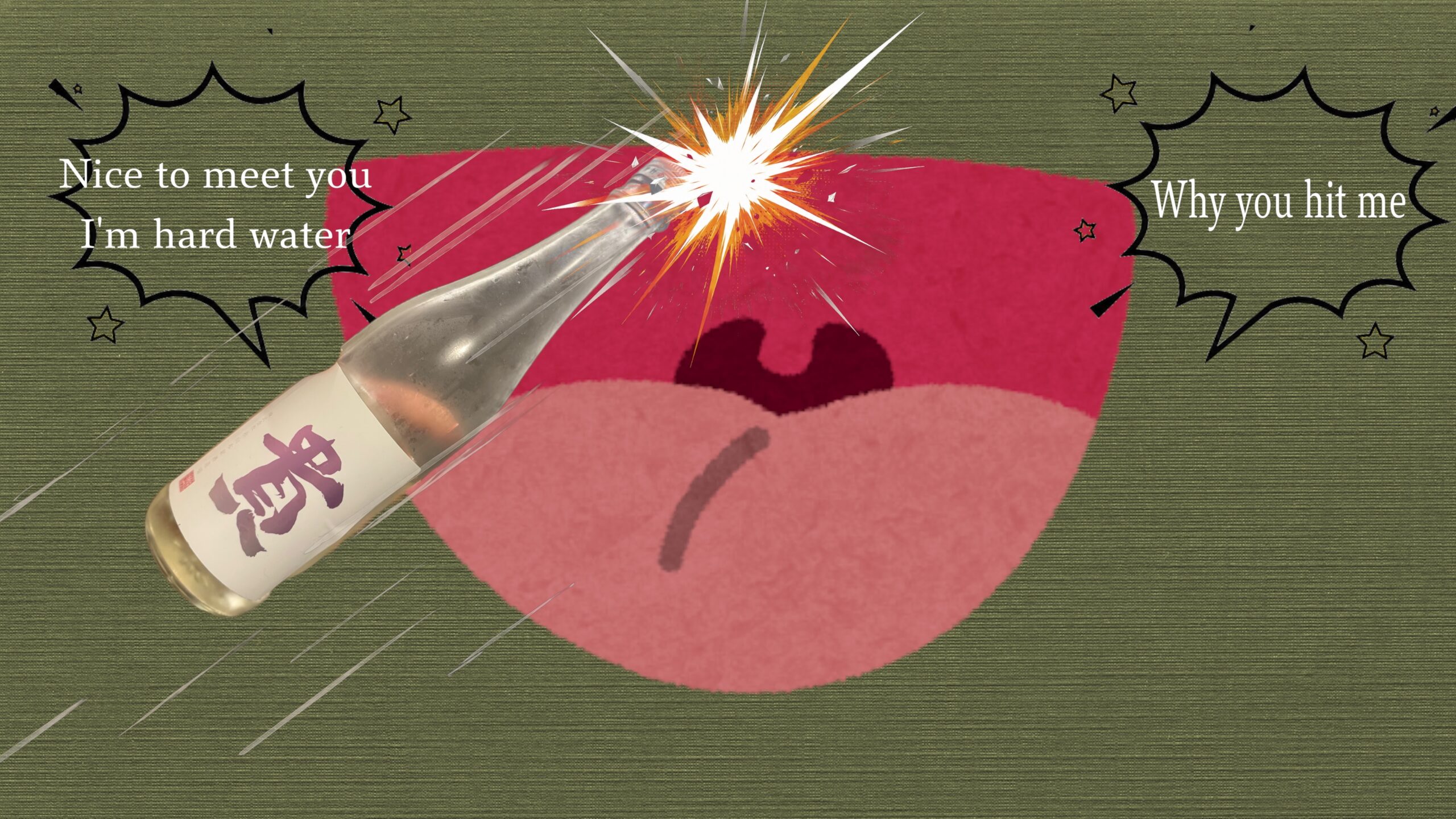
That said, each label generally follows a consistent style. In my experience, Taka isn’t the kind of sake that glides down effortlessly. Instead, its dry character makes a firm impression as it passes through the throat, leaving a lingering finish on the palate.
One reason for this is that it’s brewed with hard water, which contains a relatively high level of minerals.
Since most water in Japan is soft water, and soft water is used for many sake, the difference is often quite noticeable when you drink a sake made with hard water.
Ippaku Suisei is also brewed with hard water from Akita Prefecture, so it has a similarly textured mouthfeel as it goes down.
Both also have a moderate acidity, making them excellent food sakes. They pair well not only with rich, fatty dishes, but also with lighter foods such as sashimi and salads, as well as boldly seasoned pickles.
2. Magazine Debut
In 2003, just two years after its debut, Taka was selected as one of the “Hidden Local Masterpieces” by dancyu, one of Japan’s most well-known food and beverage magazines.
Here’s the story behind how it happened.
The dancyu editorial team visited Hiroshima Prefecture in search of outstanding but little-known sake. As part of their research, they stopped by the famous sake shop Sakesho Yamada.
(Yes, the same shop that played a major role in the birth of Taka.)
When they asked if there were any hidden gems they should know about, the answer was simple: “Taka.”
However, Taka was a sake from Yamaguchi Prefecture, and since they were covering Hiroshima, they asked if there were any hidden Hiroshima sake they could feature instead.
Mr. Yamada gave exactly the same answer.
“Taka.”
“It’s a sake made by a young toji in Yamaguchi Prefecture. It’s only been on the market for two years, but it’s one of the most exciting sake around.”
And so, only two years after its release, Taka appeared in one of Japan’s most influential magazines, gaining even greater recognition.
Closing Thoughts (My Thoughts)
Thank you to everyone around the world who loves Nihonshu and has visited Sakagura Miyamoto. Sakagura Miyamoto was created to make Nihonshu more than just a drink with good taste and aroma — but something that lives in your memories. For those who want to turn Nihonshu from a simple alcoholic beverage into a medium that brings back moments and stories, and for those who want to describe Nihonshu in a deeper, more dimensional way, we invite you to join the Sakagura Miyamoto membership. The content below is for members only. Thank you.